
Short version: The 2010-2015 Gen 3 Prius (2ZR-FXE engine) has a well-documented head gasket weakness, with most failures between 130,000-200,000 miles—the classic tell is a rattle on cold startup plus unexplained coolant loss. Based on what we see in our shop, the root cause is a gasket material/coating defect, with water pump failure as a known contributing factor. Don’t keep driving it; we borescope the cylinders before recommending any repair.
A comprehensive guide from Atomic Auto, Portland’s hybrid specialists
What’s happening with Gen 3 Prius head gaskets?
The third-generation Toyota Prius (2010-2015) has a well-documented susceptibility to head gasket failure. This issue affects the 2ZR-FXE 1.8L engine found in the Gen 3 Prius, Prius V (2012-2017), and Lexus CT200h. While Toyota’s legendary reliability holds true for most components, this particular engine generation has a known weakness that owners should understand.
The 2010, 2011, 2012, and 2013 model years appear most frequently affected, with failures typically occurring between 130,000-200,000 miles—though some cases have been reported as early as 77,000 miles.
What are the symptoms of head gasket failure?
The classic presentation in a Prius is unmistakable:
- Morning rattle/shake on startup – Often called the “death rattle,” the engine sounds like it’s tearing itself apart when first started
- Engine runs rough then smooths out – The misfire clears once coolant burns off the spark plug
- Flashing check engine light – During the rough running phase
- Unexplained coolant loss – Reservoir drops without visible external leaks
- White exhaust smoke – Coolant burning in the combustion chamber
- Milky oil – Coffee-and-cream colored oil indicates coolant mixing with oil (severe cases)
Common diagnostic trouble codes
- P0300, P0301, P0302, P0303, P0304 – Random/cylinder-specific misfires
- P3190, P3191 – Engine does not start / poor engine power
- P0A0F – Motor electronics coolant temperature sensor circuit
Important note: The dramatic rattling noise is often louder than you’d expect because it’s not just the engine—the Prius hybrid torsion clutch amplifies any misfire into a significant mechanical noise. This is unique to hybrids. That said, a misfire and the rattle it produces have several common causes—not every one is a head gasket. When the head gasket is the culprit, the rattle is usually correlated with unexplained coolant loss, though not always. That’s why we confirm the diagnosis rather than assume it from the noise alone.
What actually causes the head gasket to fail?
There are several theories circulating online about why these gaskets fail. Based on what we actually see in our shop, we have some opinions about which explanations hold up—and which don’t.
Our leading theory: Head gasket material/coating defect
This is the explanation that best fits what we see. An engineer on PriusChat performed a detailed analysis of failed head gaskets and concluded that many failures are due to a material defect affecting the coating on gaskets installed in 2010-2012 Priuses.
The evidence is compelling. Toyota changed head gasket part numbers across model years:
• 2010-2012 Prius, 2012 Prius V: Part #11115-37051
• 2012-2015 Prius/Prius V: Part #11115-37060
• 2015+ Prius: Part #11115-37061
The significant jump in part numbers (37051 to 37060) suggests a design change, not just a minor revision. Importantly, head gasket failures in 2013+ vehicles are much rarer despite no changes to cylinder head torque specifications.
Examination of failed gaskets shows the coating worn away in areas where coolant contacts the gasket material. Old, acidic coolant may accelerate this deterioration on gaskets with the original coating formulation.
One experienced technician noted that head bolts on many Gen 3 engines “creak and pop” on removal in ways that suggest they may not have been properly lubricated at the factory. Clean, lubricated head bolt threads are critical for proper clamping force. This points toward assembly issues on certain production runs.
Known contributing factor: Electric water pump failure
The Gen 3 Prius uses an electric water pump rather than a belt-driven mechanical pump. If this pump fails or operates intermittently, the engine can overheat—and overheating is the classic cause of head gasket failure in any vehicle. As the Prius has no temperature gauge, the driver has no warning of the impending overheating event. This is why we recommend water pump replacement preemptively.
Water pump failure codes to watch for:
- P261B – Engine Coolant Pump “B” Control Circuit Range/Performance
- P261C – Engine Coolant Pump “B” Control Circuit Low
- P261D – Engine Coolant Pump “B” Control Circuit High
Toyota issued TSB 0143-10 addressing electric water pump issues and released an improved pump (part #161A0-39015). If you see any of these codes, take them seriously and don’t continue driving.
The subtle warning: When the water pump fails, the master warning indicator illuminates—but this is the same light that comes on for many issues. There’s a small thermometer icon that appears, but it’s easy to miss. Many owners don’t realize they’ve had an overheating event until it’s too late. By the time the owner drives it to the shop its been overheated and the damage is done.
A popular theory we don’t buy: EGR carbon buildup
You’ll find plenty of forum posts and shop websites claiming that carbon buildup in the EGR system causes head gasket failure. The theory goes that clogged EGR ports create uneven combustion temperatures across cylinders, which stresses the gasket until it fails.
Our experience doesn’t support this. If EGR clogging were the root cause, we’d expect to see a clogged EGR system on every (or nearly every) vehicle that comes in with a failed head gasket. We don’t. The EGR systems on most of the head gasket failures we see are not particularly clogged.
Additionally, when the EGR system does become significantly clogged, it typically sets its own diagnostic codes—most commonly P0401 (Insufficient EGR Flow). A vehicle experiencing head gasket failure symptoms without EGR-related codes stored in history is unlikely to have an EGR problem as the root cause.
Some shops have built a business model around preventive EGR cleaning every 50,000-100,000 miles. We’re not saying EGR cleaning is harmful—a clean intake is never a bad thing—but we don’t recommend it as head gasket failure prevention because the connection simply isn’t there in our experience. Instead, maintain your cooling system on Toyota’s recommended schedule, and plan to replace the water pump around 100,000 miles. Doing the pump at that point saves you paying to change the coolant twice—replacing the pump means draining and refilling the coolant anyway.
Our honest assessment
Based on the vehicles we’ve worked on, we believe the primary issue is the head gasket itself—either the coating, the material, or assembly inconsistencies at the factory. Some gaskets were simply defective from day one.
Water pump failure is a known contributing factor and may push an already-marginal gasket over the edge. But we’ve seen plenty of failures on vehicles with no history of overheating codes, no burnt smell in the oil, and nearly full coolant—which points back to an inherent gasket weakness.
The reality is that many Gen 3 Priuses go 300,000+ miles without head gasket issues, while others fail at 80,000 miles. This variability points toward manufacturing inconsistency on certain production runs rather than a universal design flaw or maintenance-related cause.
What can you do to prevent failure?
If the root cause is a factory defect, there may not be much you can do to prevent it entirely. However, you can avoid making things worse:
- Change coolant on schedule – Don’t exceed 100,000 miles on original coolant. Old coolant becomes acidic and may accelerate gasket coating deterioration on already-vulnerable gaskets.
- Don’t ignore warning lights – The master warning light with a thermometer icon means stop driving and investigate. Even brief overheating can doom a head gasket. Many owners miss this subtle indicator.
- Monitor coolant level – Check regularly. Any unexplained loss should be investigated immediately—don’t just keep topping it off.
- Address water pump codes immediately – P261B, P261C, and P261D codes indicate water pump issues. Don’t continue driving.
- Regular oil changes – Use quality 0W-20 synthetic and keep up with maintenance. A well-maintained engine handles stress better than a neglected one.
- Replace the water pump preemptively – We recommend replacement at 100,000 miles
What if my head gasket has already failed?
Do not continue driving. The Prius hybrid system creates a unique danger: the powerful electric motor (MG1) can bend a connecting rod if it tries to compress coolant that has accumulated in a cylinder overnight. A conventional starter motor isn’t strong enough to cause this damage, but the hybrid motor is. This turns a head gasket repair into an engine replacement.
How we approach diagnosis
Before we recommend a head gasket repair, we inspect the inside of the cylinders with a borescope. This lets us evaluate the overall condition of the engine before committing to an expensive repair.
The head gasket may be the immediate problem, but it’s not the only thing that matters. A high-mileage engine can have other issues that make a head gasket repair a poor investment:
- Bent connecting rods – From the hybrid motor trying to compress coolant in a cylinder. If we find this, head gasket repair is off the table. The unfortunate thing is that we cannot inspect for this until the engine is taken apart. So the client approves the head gasket job, we get the engine apart, and we have to make the phone call everyone hates and figure out what to do now that we have invested labor into an engine that is not repairable.
- Cylinder wall scoring – Often caused by carboned-up piston rings from deferred oil changes or oil consumption issues. Scored cylinders won’t seal properly even with a new head gasket.
- Excessive cylinder wear – Normal wear over 150,000-200,000+ miles. At some point, the bottom end of the engine is simply worn out. This is particularly the case with engines that have had 10,000 mile or more between oil changes over their lifespan.
- Other age-related damage – Issues unrelated to the head gasket that have accumulated over the vehicle’s life.
The honest truth is that doing major work on a high-mileage engine sometimes has diminishing returns. If we find significant cylinder damage during our borescope inspection, we’ll tell you—even though it means we won’t be selling you a head gasket job.
When we recommend engine replacement instead
In some cases, replacing the engine makes more sense than repairing the head gasket. This is especially true when:
- The borescope inspection reveals cylinder scoring or significant wear
- The engine has very high mileage and other components are marginal
- We find bent connecting rods
- The overall condition suggests the head gasket repair won’t provide lasting value
When engine replacement is the better path, we typically recommend a fourth-generation (2016+) Prius engine. These later engines use the updated head gasket design and don’t have the same failure pattern. It’s a way to solve the immediate problem while also eliminating the original design weakness.
We know this isn’t what anyone wants to hear. But we’d rather have an honest conversation about whether repair makes financial sense than sell you a head gasket job on an engine that has other problems waiting to surface.
What a proper head gasket repair includes
If the borescope inspection looks good and we proceed with repair, the job includes:
- Complete disassembly and inspection
- Checking piston heights to confirm no bent connecting rods
- Pressure testing the cylinder head for cracks
- Resurfacing the cylinder head (recommended even without visible warping—surface imperfections as small as 0.0005″ can cause the new gasket to leak)
- Using the updated gasket part number (11115-37061)
- Replacing the water pump (labor is included since it must be removed anyway)
- New spark plugs, and incidentals required to get the best results long term.
Head gasket repair costs typically vary depending on the shop and what additional work is needed. Engine replacement costs more but may be the better long-term investment depending on the condition of your original engine.
When a head gasket repair is appropriate—caught early, no bent rods, cylinders in good shape—these vehicles can go another 100,000+ miles with the updated gasket. We haven’t seen repeat failures on vehicles repaired with the newer part number.
Frequently Asked Questions
Do 2010-2015 Prius models have head gasket problems?
Yes. The third-generation Prius (2010-2015) is well known for head gasket failures, particularly at higher mileage—most failures occur between 130,000-200,000 miles. Watch for coolant loss without any visible leaks, overheating, and white exhaust smoke.
How much does a Prius head gasket repair cost?
It’s a significant job, and costs vary with the shop and what additional work is needed—a costly repair. Get a proper diagnosis first to confirm the head gasket is actually the problem before committing to a repair this size.
What are signs of head gasket failure on a Prius?
Mysterious coolant loss, overheating under load, white sweet-smelling exhaust, bubbles in the coolant reservoir, and milky residue on the oil cap. On a Gen 3 Prius, the classic tell is a rattle on cold startup that smooths out within seconds.
Sources and further reading
The Car Care Nut – Most comprehensive explanation of this issue, showing cylinder bore damage: https://youtu.be/DxVdwwPp8kI?si=S9DCvtPqisov2pTv
Art’s Automotive – Comprehensive head gasket repair guide: artsautomotive.com/services/prius-head-gasket-repair
PriusChat – Head gasket failure analysis by ToyXW: priuschat.com/threads/2010-2012-head-gasket-failure-analysis
Torque News – What I Learned From Fixing The Headgasket On My 2010 Prius: torquenews.com
Toyota TSB 0143-10 – Electric Water Pump issues: toyoheadquarters.com
—
Atomic Auto
Portland’s Hybrid & EV Specialists
Specializing in Toyota/Lexus hybrids since 2005
Related reading
- Why Is My Prius Getting Bad MPG?
- 2016-2019 Toyota Prius Exhaust Heat Exchanger Failure
- 2016 Prius “Head Gasket” That Was Really a Warrantied Catalytic Converter
- How We Diagnose Toyota Hybrid Problems: The 6-Step Process
- Our Text-First Philosophy: Why We’ve Broken Up With the Phone
Photos from our shop
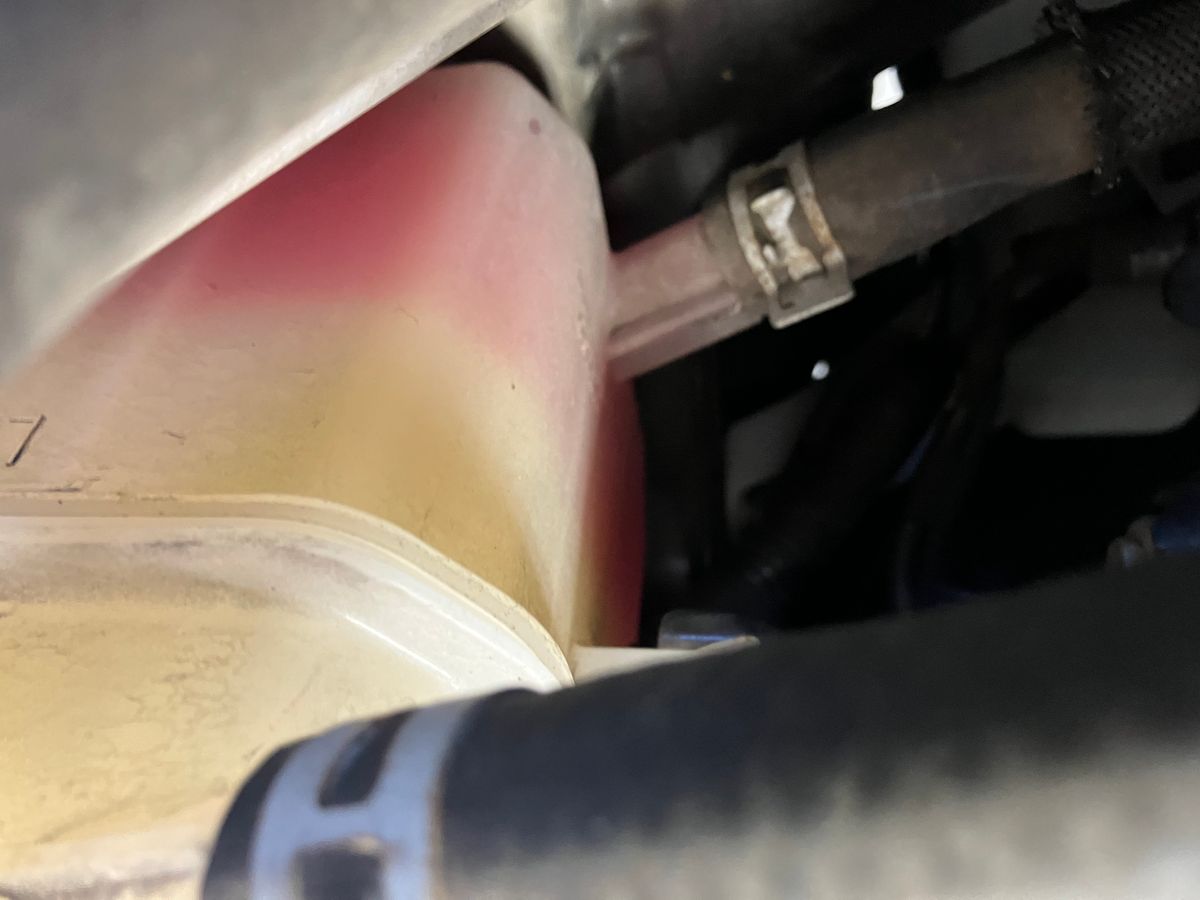
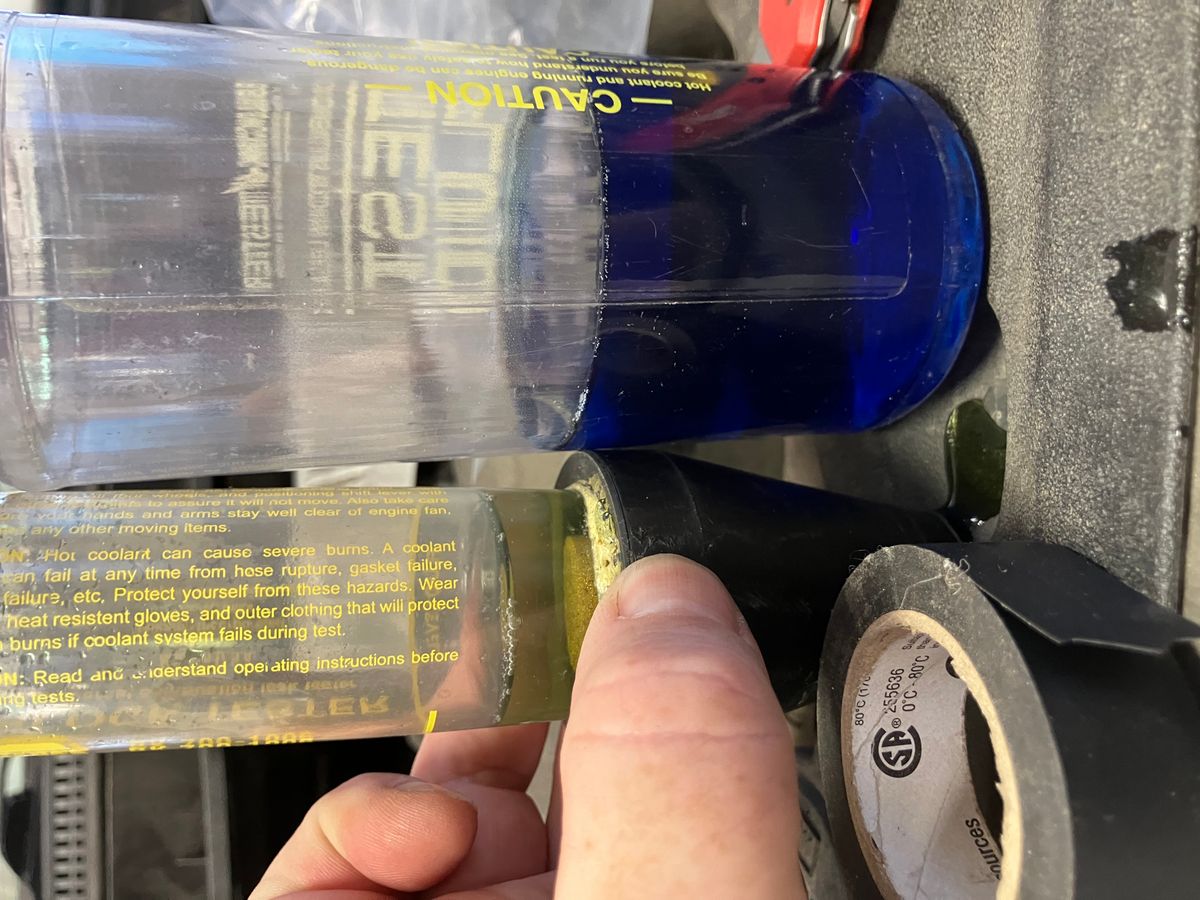
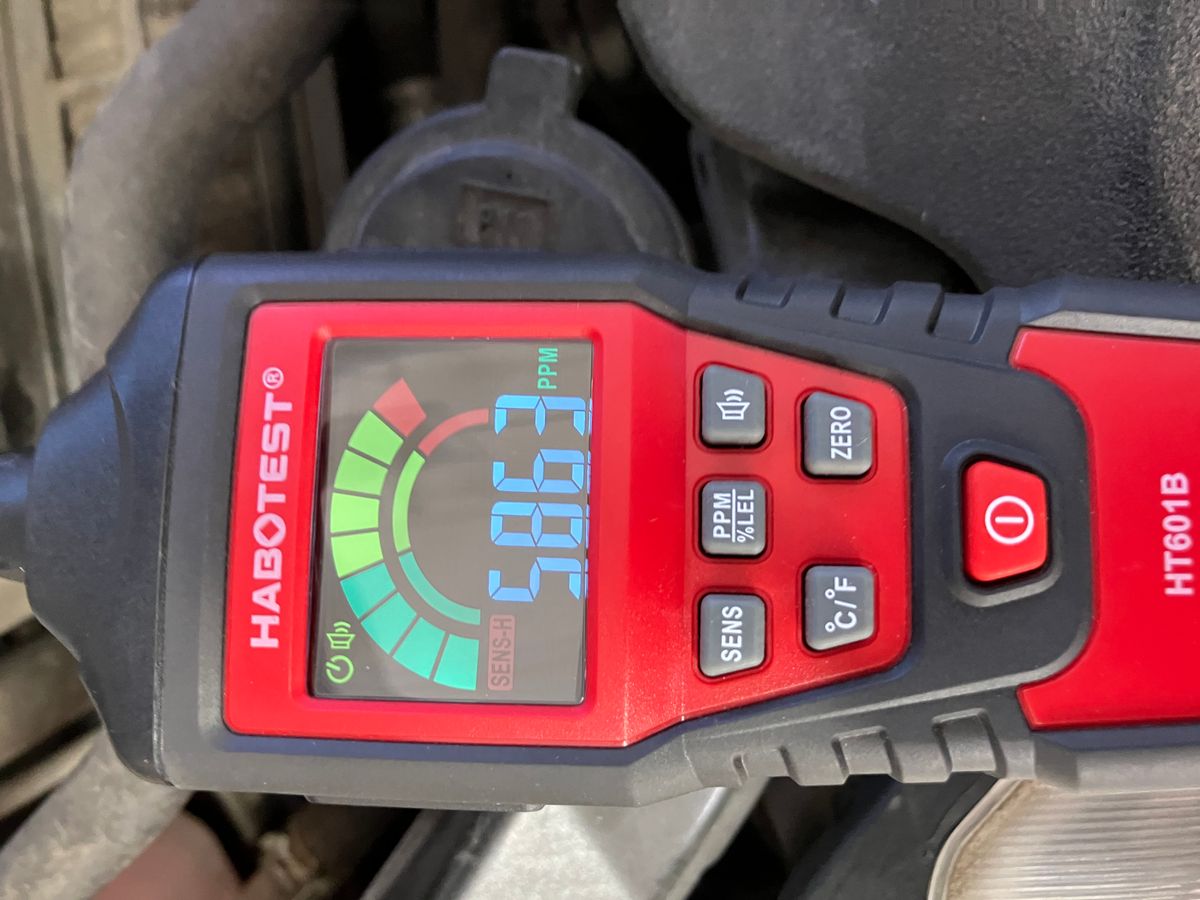
Questions about your car? Text us at 503-969-3134 — it’s the fastest way to reach us.
About the author: Travis Decker is the owner of Atomic Auto in Portland, Oregon, and an ASE Master Technician (L1, L3). Atomic Auto specializes in Toyota, hybrid, and EV service.