Short version: Mice get into Priuses, RAV4s, Subarus, Hondas, and EVs through the HVAC fresh-air intake, wheel wells, and firewall gaps, then chew wiring and nest in the cabin air filter housing. Watch for musty vent smells, reduced airflow, and random electrical glitches — a nest caught early is a minor cleanup, while weeks of chewing can mean major harness repairs. We clean out nests, replace contaminated filters, and repair chewed wiring.
Discovering mice in your Prius can be an unsettling and costly problem. Rodent issues in Prius vehicles have become increasingly common, with owners reporting serious damage to wiring, insulation, and other components. But it is not just the Prius. In our Portland shop we pull mouse nests and repair chewed wiring on RAV4s, Highlanders, Subarus, Hondas, and EVs too. This guide covers prevention, detection, and exactly what to do if you find rodent damage in your Toyota or any car.
Why is this a major problem for Toyotas?
Rodents causing havoc in vehicles is an industry-wide issue, yet mice in Prius models seem to cause more frequent and expensive damage than in other cars. Repairs can range from a few hundred dollars to over $8,000 for extensive wiring harness damage. If you drive a Prius, our Portland Prius repair page covers the other common issues we see.
Experts and owners continue to debate the root cause. Owners have filed multiple class-action lawsuits against Toyota and other manufacturers. These suits allege that the switch from petroleum-based wire insulation to soy-based (bio-plastic) materials has made vehicles more attractive to rodents.
Toyota disputes this claim, stating there is no scientific evidence that rodents are specifically attracted to soy-based wiring. However, one might deduce that rodents enjoy soybeans more than petroleum! The reality remains clear: mice, rats, and squirrels regularly chew through Toyota wiring. This happens with alarming frequency. Furthermore, Toyota does not cover the damage under warranty, classifying it strictly as “environmental damage.”
It is not just the Prius — what we see across the shop
The Prius family is the most common rodent victim we see, but it is far from the only one. In our own bays we have cleaned nests and repaired chewed wiring on the Toyota RAV4, Highlander, Tacoma, and Tundra, along with the Prius C, Prius V, and Prius Prime. Beyond Toyota, we have fixed rodent damage on the Subaru Outback and Impreza, the Honda Clarity and Accord, and the Chevrolet Bolt EV.
If it parks outside in Portland, mice will try it. The good news is that the entry points and the repairs are largely the same across all of these vehicles, so everything below applies whether you drive a Prius, a RAV4 Hybrid, or an EV. Not sure if your car qualifies? See our full Portland hybrid and EV repair services.
How do mice enter the vehicle?
Mice can squeeze through gaps as small as a quarter inch. Consequently, they have several options for entering your car. The most common entry points include:
- The HVAC fresh air intake: Located at the base of the windshield under the cowl, this vent draws outside air into your heating and cooling system. It acts as an open highway for mice directly to your cabin air filter and blower motor housing.
- Wheel wells and fender gaps: Mice climb up through wheel wells to find pathways into the engine bay.
- Pedal and firewall gaps: Wiring and cable pass-throughs from the engine bay to the cabin are not always fully sealed.
- Under the engine cover: The warm engine bay makes an attractive nesting spot, especially in cold weather.
The HVAC system creates a particular problem because mice don’t just pass through; they often nest there. The cabin air filter housing is dark, protected, and close to warmth. Once established, rodents venture out to chew wiring, shred insulation for nesting material, and leave droppings throughout your vehicle.
What are the signs of an infestation?
Early detection is vital to keeping repair costs down. Look for these common indicators:
- Musty or urine smell from vents: This is often the first sign, especially when running the heat or AC.
- Reduced airflow: A clogged cabin filter or debris in the blower can restrict air.
- Strange sounds: Listen for rattling or scraping from the dashboard area (debris in the blower motor) or scratching sounds.
- Electrical glitches: Random warning lights, sensors failing, or intermittent electrical issues are red flags.
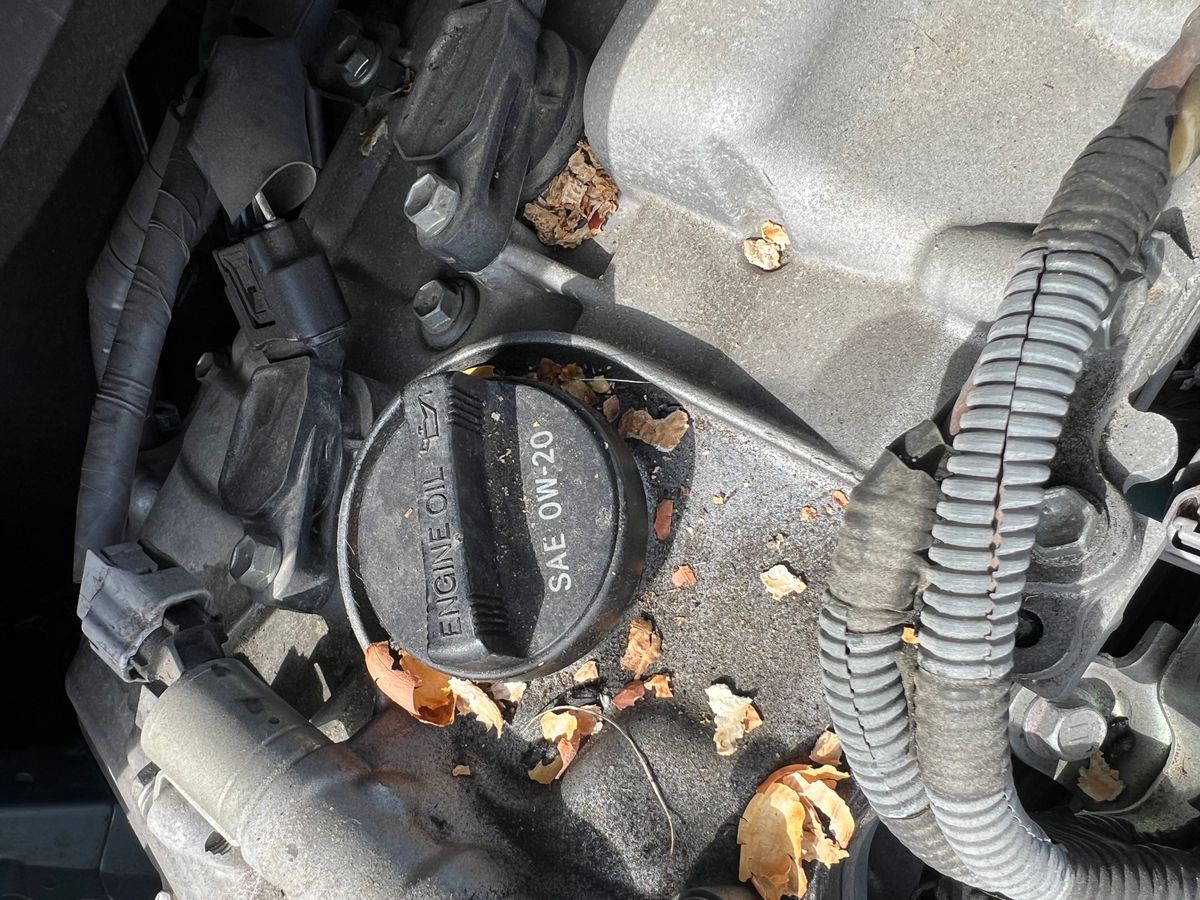
- Physical evidence: Look for droppings or nesting material in the engine bay, glove box area, trunk, or under seats.
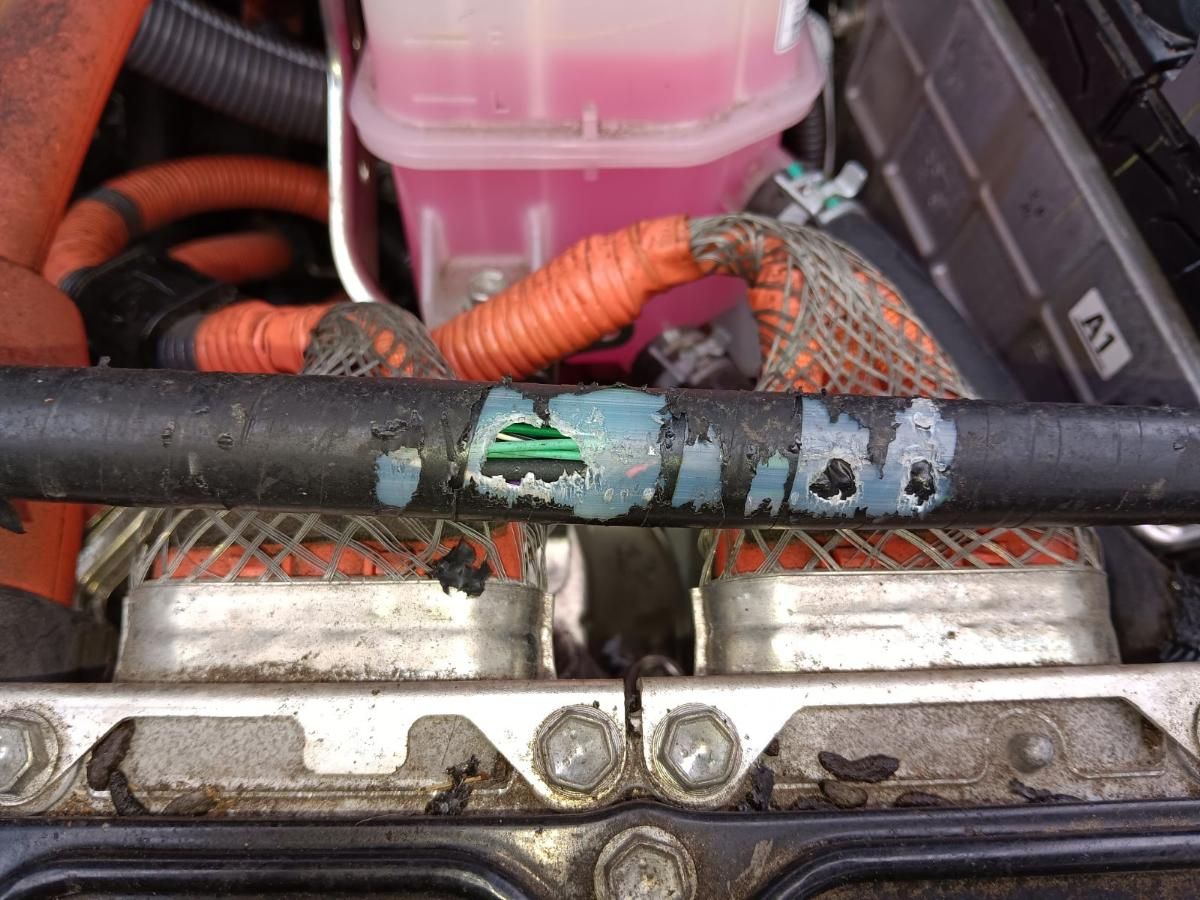
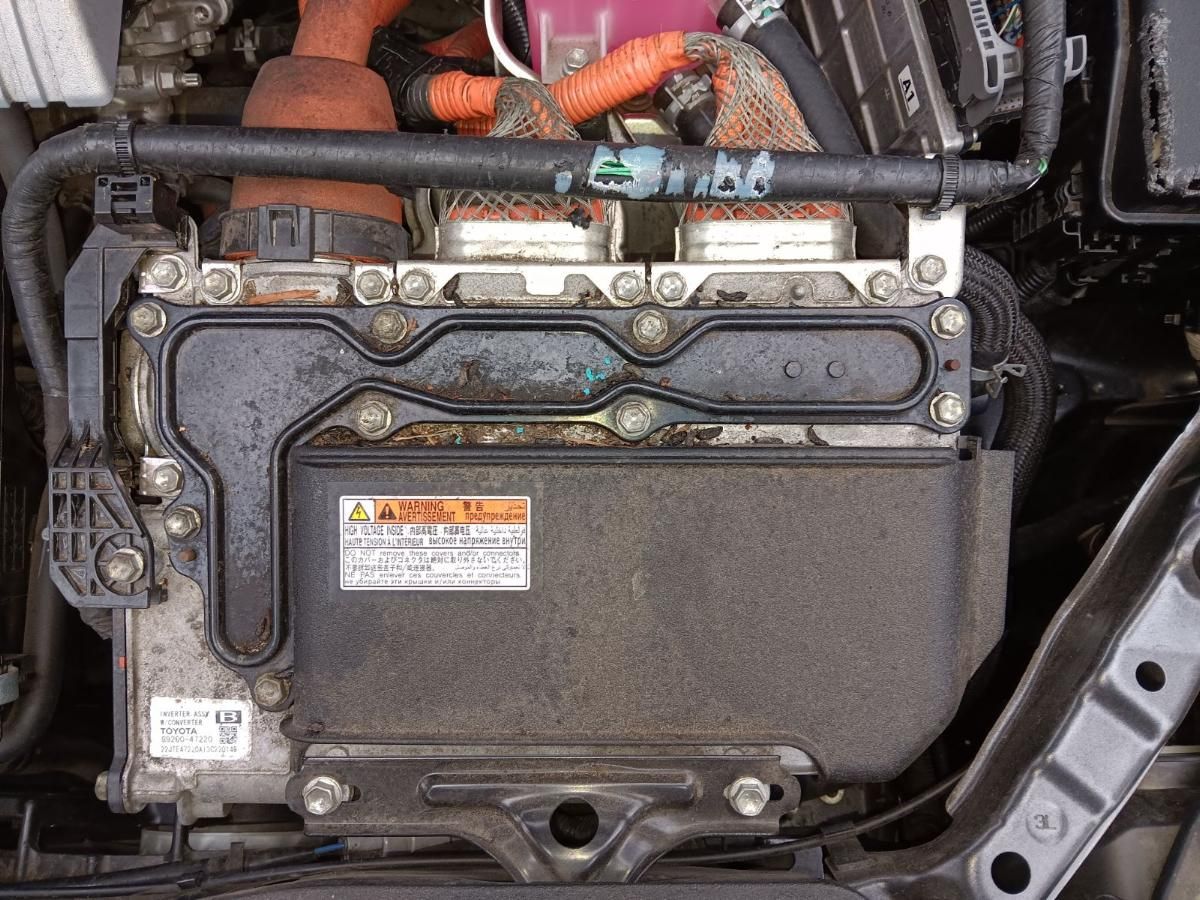
- Visible chew marks: Inspect wiring, hoses, hood insulation, or plastic components.
From the shop floor: The cheapest rodent jobs we see are the ones caught early — a single chewed signal wire, or a nest in the cabin filter. The expensive ones are the cars that drove for weeks with warning lights blinking on and off while a mouse worked its way through a harness. If your Prius or RAV4 starts throwing random, intermittent electrical gremlins in the fall or winter, check the glove box and the cowl before you assume the worst about the hybrid system.
What rodent damage actually looks like: real jobs from our bays
These are real repairs from our Portland shop. Names and plates left out, but the damage is exactly what walked through the door.
- 2023 RAV4 Hybrid — chewed fuel filler neck. Not wiring this time. A rodent chewed a hole straight through the plastic fuel filler neck. We confirmed the damage and advised on replacing the fill tube.
- 2018 Honda Clarity — chewed charging wiring. The car stopped accepting a charge. The owner found a pile of insulation sitting on top of the motor — a nest built from the firewall padding — with chewed wiring underneath. Another shop wanted to replace the entire onboard charger. We traced the fault to the chewed wiring.
- 2013 Prius V — one wire killed the turn signal. A single chewed wire between the inverter and the fuse box took out the turn signal. We repaired the wiring rather than replacing a whole harness.
- 2015 Prius C — dead mouse in the vents. A foul smell every time the vents ran. The culprit was a dead mouse in the vent system. More common than you would think, and unmistakable once you have smelled it.
- 2006 Subaru Impreza — engine bay chewing. Came in louder than normal. Under the hood we found multiple spots where rodents had chewed through wire coating and plastic.
Think a rodent got into your car? Text us at 503-969-3134 or book online. We inspect and test first, then tell you what is actually damaged before quoting anything — the same 6-step diagnostic process we use on every hybrid.
The “mysterious” P3191 no-start that usually isn’t
Here is a scenario we see every rodent season. A Prius owner takes the car in somewhere for a quick oil change or a free multi-point inspection. A day or two later the car will not start, the dash lights up with the red triangle and a Check Hybrid System message, and a scan shows P3191 — Engine Does Not Start (often alongside P3190, Poor Engine Power, or P0A0F, Engine Failed to Start). The owner panics, sure the expensive hybrid battery just died.
It usually has nothing to do with the hybrid battery. P3191 is a gas-engine problem — air, fuel, or spark — not a high-voltage failure. One of the most common triggers is a fouled mass air flow (MAF) sensor, and that is where the mice come in.
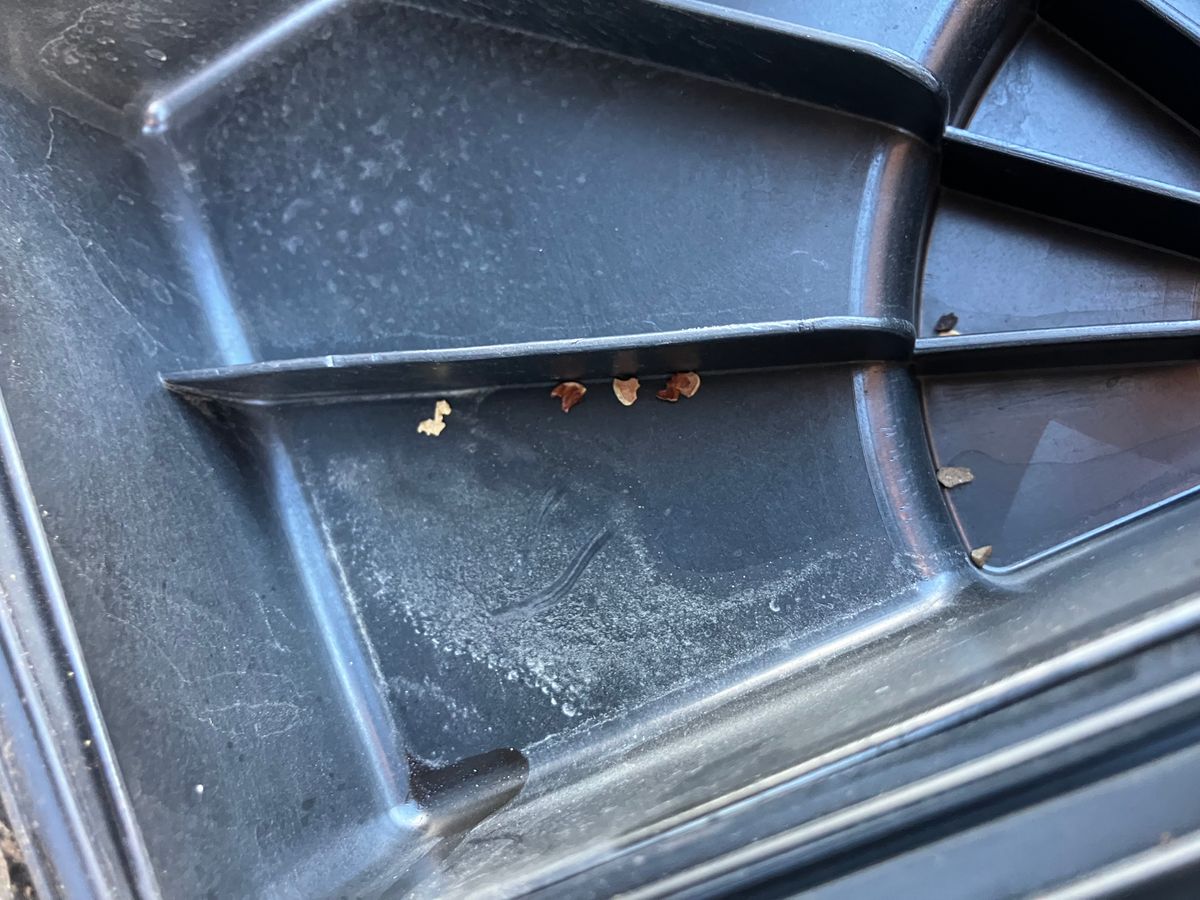
Mice leave droppings, seed hulls, and shredded nest material in the engine air filter box (look back at that first shop photo). When someone pops the air filter lid to check the filter and is not careful, that debris gets knocked downstream onto the MAF sensor sitting just past the filter. The MAF measures incoming air with a tiny heated wire, and a single speck of debris or a seed hull throws its reading off enough that the computer cannot start and run the engine. The car goes to ready-off and sets the code. It looks mysterious. It is not. Other Prius specialists see the exact same thing — in Minnesota they blame cottonwood fluff; here in Portland it is more often rodent debris.
The fix is usually simple: pull the MAF, clear the debris or clean the element with proper MAF cleaner, confirm the throttle body is clean, clear the codes, and the engine fires right back up. No hybrid battery required. One important warning if your Prius is doing this — do not sit there cranking it over and over. Each attempt spins the engine with the hybrid motor for about 15 seconds, and repeated tries will run the high-voltage battery down, turning a cheap fix into an expensive one. If your car died right after an oil change or air filter service, tell us that detail. It points us straight at the MAF before we chase anything costly.
DIY Guide: Inspecting the Cabin Filter
You should inspect the cabin filter area regularly. This is especially important if you park outside, near fields, or in areas with known rodent activity. On most Toyotas, the cabin air filter sits behind the glove box, and you can access it without tools.
Step-by-Step Inspection Instructions
- Clear the area: Open your glove box and empty its contents.
- Locate the stops: Find the plastic tabs or a damper arm on the sides that prevent the glove box from opening fully. On most Toyotas, you can push the sides of the glove box inward to clear these stops.
- Lower the door: Allow the door to drop down fully or remove it entirely.
- Find the cover: With the glove box out of the way, locate the rectangular plastic cover with tabs on each end. Squeeze the tabs and pull the cover toward you.
- Remove and inspect: Slide the filter out. Look for droppings, nesting material (shredded paper, grass, insulation), food caches (acorns, seeds), or urine staining.
- Check the housing: Use a flashlight to look into the filter housing and down toward the blower motor. Debris here indicates active mice.
- Listen to the blower: If you hear rattling or see significant debris, the blower motor likely requires removal for cleaning. We recommend a shop visit for this, as removing it from the heater box can be difficult.
Important Safety Note: Wear gloves and a mask when cleaning rodent debris. Mouse droppings and urine can carry hantavirus and other diseases. Therefore, work outdoors if possible and avoid stirring up dust.
How often should I check?
We recommend checking your cabin filter area at least every oil change interval—about every 5,000 miles. (We include this in our 5k/Intermediate Service.) Conversely, if you live in a rural area, park near vegetation, or have battled rodent issues before, check monthly during fall and winter. These are the seasons when mice are most likely to seek shelter.
Remember, early detection is key. A mouse nest discovered early results in a minor cleanup. However, a mouse nest discovered after they have spent weeks chewing your wiring harness becomes a major repair bill.
Do deterrents like peppermint oil work?
There are many home remedies and commercial products marketed as rodent deterrents. Common options include:
- Peppermint oil: Mice reportedly dislike the strong mint scent.
- Fox or coyote urine: Predator scents may trigger avoidance behavior.
- Capsaicin (hot pepper): This irritates mucous membranes. Honda sells capsaicin-treated tape for wrapping wires, though we have seen mice eat through it regardless.
- Mothballs: These release a strong chemical odor (naphthalene).
- Dryer sheets: The fragrance may mask scent trails.
- Ultrasonic devices: These emit high-frequency sounds (in our experience, these are ineffective).
The effectiveness of these methods varies highly. Some people swear by them; others find mice build nests right next to their peppermint-soaked cotton balls. Research suggests that no single deterrent works reliably on its own because rodents can become habituated to smells and sounds over time. Therefore, a multi-pronged approach combining deterrents with physical barriers and habitat modification tends to be most effective.
Does Atomic Auto apply rodent deterrents?
No, and here is the reason why: We do not want to be responsible for leaving your car smelling like fox urine, sriracha sauce, or mothballs. These products often leave persistent odors that some customers find just as offensive as the problem they are trying to solve. Additionally, there is the issue of allergic reactions. Some people are sensitive to essential oils, and mothballs contain chemicals that can be harmful in enclosed spaces.
Instead, we focus on remediation. We will clean out existing nests, replace contaminated filters, inspect for damage, and repair any wiring or components that have been chewed.
We recommend handling deterrent application yourself. This way, you control what products are used and can reapply them as needed. Many customers have success with cotton balls soaked in peppermint oil placed in the engine bay (away from hot components) and under the seats.
Proactive Prevention Tips
Beyond deterrents, you can change your habits to protect your vehicle:
- Drive regularly: Mice prefer undisturbed vehicles. If you have a car that sits for extended periods, start and move it every few days.
- Remove food sources: Even crumbs attract rodents. Vacuum regularly to keep the interior clean.
- Park in a garage: If possible, park indoors. However, make sure the garage itself is rodent-proofed.
- Clear vegetation: Mice dislike crossing open ground where predators can see them. Clear any tall grass around parking spots.
- Open the hood: Leave your hood up when parked. It sounds counterintuitive, but the open, exposed space deters nesting by making the engine bay less appealing as a shelter.
- Use traps: Set traps in your parking area. Reducing the local rodent population is more effective than trying to make your car unappealing.
- Install mesh screens: You can install hardware cloth (1/4″ mesh) over HVAC intakes and other openings. Note that this requires some DIY ability and research.
- Recirculate air: Set your HVAC to “recirculate” when parking. This closes the fresh air door, effectively blocking one major entry point.
Will insurance cover the damage?
Many comprehensive auto insurance policies do cover rodent damage, minus your deductible. However, coverage varies by insurer and policy. Some insurers may deny claims for repeat infestations or if they determine the damage resulted from neglect. We have seen this matter a lot on older cars — one owner of an ’06 Prius with chewed airbag (SRS) wiring worried the insurer would total the car rather than pay for the repair.
Check with your insurance provider before assuming you are covered. Also, keep in mind that filing claims raises rates for everyone. We generally do not recommend filing claims under $2,000 if you can afford to pay out of pocket. As mentioned previously, Toyota’s warranty does not cover this issue, as they classify it as “environmental damage” similar to flood or hail events.
Frequently asked questions
How much does rodent damage repair cost?
It depends entirely on what got chewed. A nest cleanup and a contaminated cabin filter is a minor job. A single chewed signal or sensor wire is an inexpensive repair. Damage to a wiring harness, charging system, or fuel components runs much higher — industry-wide, severe harness damage can exceed $8,000. We always inspect and test first so we can tell you exactly what is damaged before quoting anything.
Is it only the Prius that gets rodent damage?
No. The Prius family is the most common in our shop, but we have repaired rodent damage on the Toyota RAV4, Highlander, Tacoma, and Tundra, plus Subaru, Honda, and EVs like the Chevrolet Bolt. The entry points and repairs are similar across most vehicles.
My Prius won’t start and shows P3191 after an oil change or air filter service — what happened?
P3191 means “Engine Does Not Start,” and despite the Check Hybrid System warning it is usually a gas-engine issue, not the hybrid battery. A very common cause is debris knocked onto the mass air flow (MAF) sensor when the air filter was checked — and in a car with rodent activity, that debris is droppings, seed hulls, and nest material from the air box. Cleaning or clearing the MAF usually fixes it. Do not crank the car repeatedly, as that drains the high-voltage battery.
My car smells bad when the AC or heat is on — is that a mouse?
Often, yes. A musty or urine smell from the vents is one of the most common early signs of rodent activity, and a strong rotting smell usually means a dead mouse in the vent or blower system. Both are worth inspecting quickly.
Can you rodent-proof my car?
We focus on remediation — cleaning nests, replacing contaminated filters, and repairing chewed wiring — rather than applying scented deterrents that can leave lasting odors. We are happy to advise on physical barriers like mesh screening over intake openings.
Will my insurance cover it?
Many comprehensive policies do, minus your deductible, but coverage varies and Toyota’s warranty does not cover it. Check with your insurer before assuming you are covered.
Additional resources
- Consumer Reports guide to protecting your car from rodents: consumerreports.org
- CARFAX guide to keeping rodents out of your car: carfax.com
- iFixit cabin air filter replacement guide (Gen 3 Prius): ifixit.com
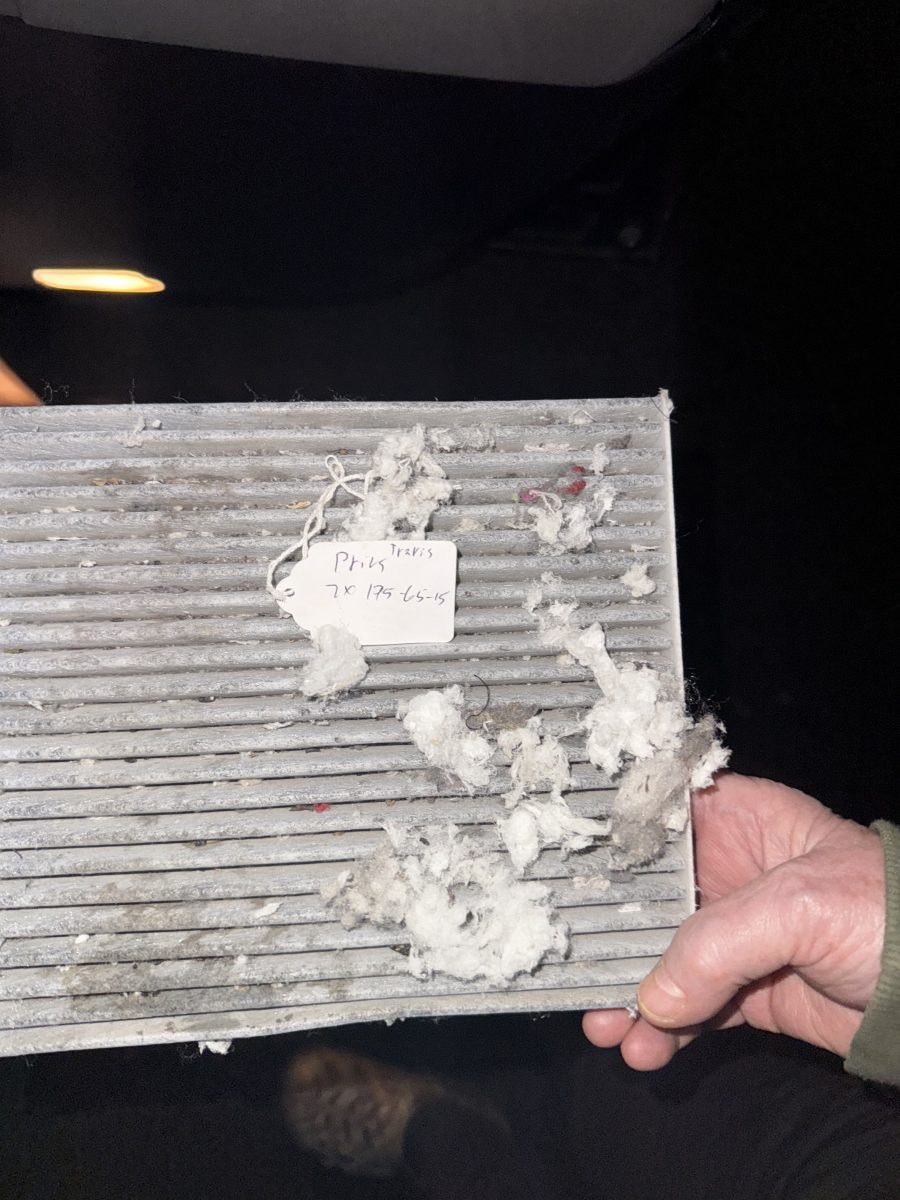
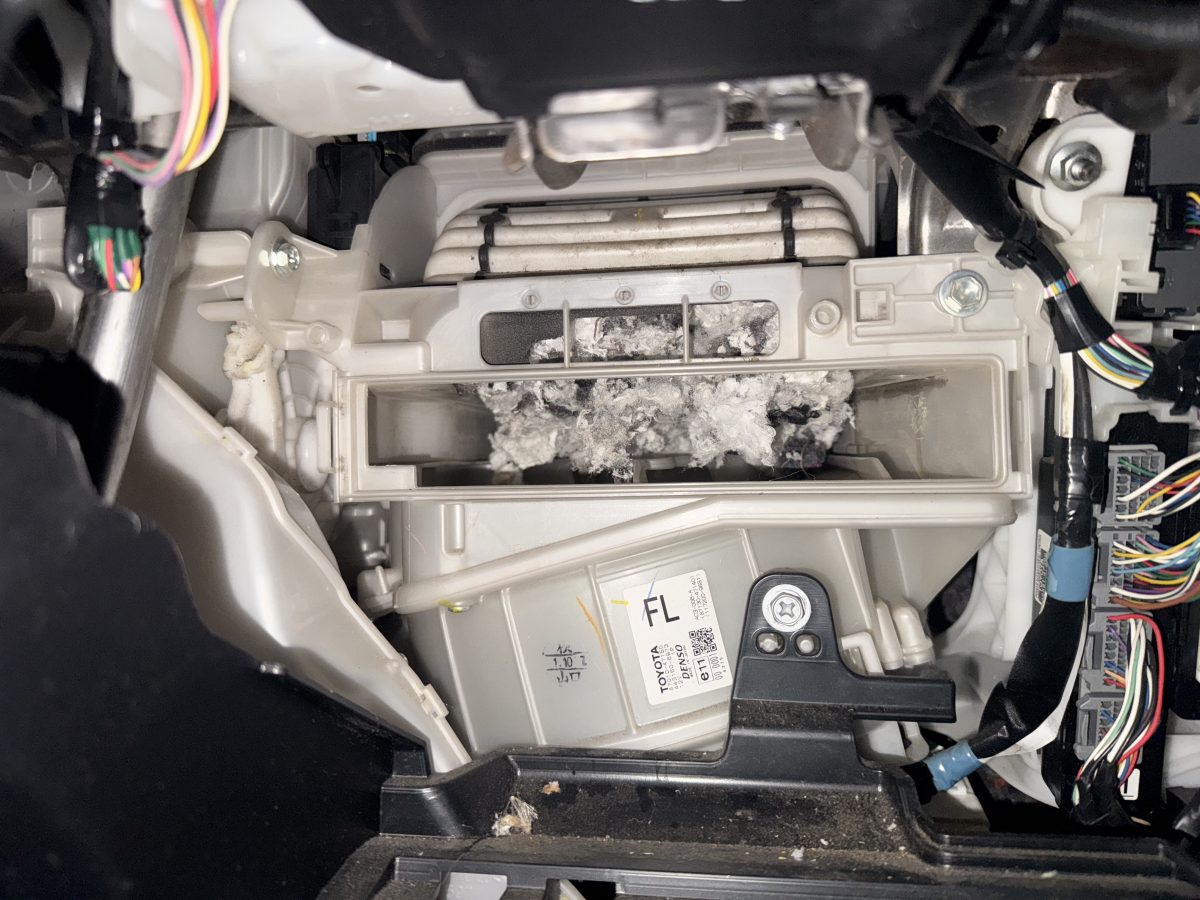
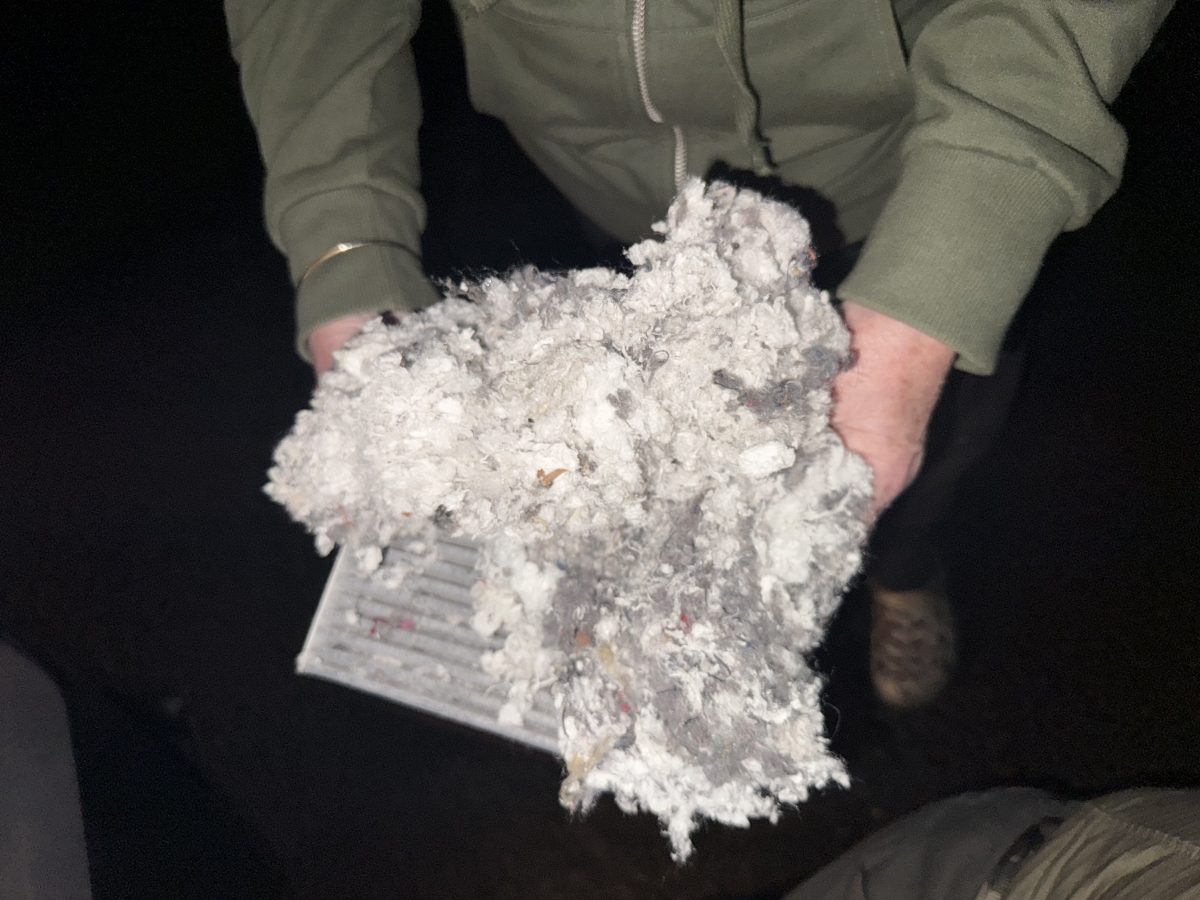
Real rodent damage from our bays
Related reading
- Portland Prius Repair — common issues we fix
- The 2004-2009 Prius Triangle of Death
- How We Diagnose Toyota Hybrid Problems: The 6-Step Process
- Toyota Oil Leak vs Oil Seep: How to Tell the Difference
- Why We Don’t Just Quote What the Other Shop Told You
Ready to get your car checked at Atomic Auto? Book online or text us at 503-969-3134.
Questions about your car? Text us at 503-969-3134 — it’s the fastest way to reach us.
About the author: Travis Decker is the owner of Atomic Auto in Portland, Oregon, and an ASE Master Technician (L1, L3). Atomic Auto specializes in Toyota, hybrid, and EV service.