
Why It Came In
The driver had already been down this road once. A previous mechanic pulled two codes, P0441 (incorrect purge flow) and P0455 (large evaporative system leak), and replaced the fuel cap and the purge solenoid valve. The check engine light came back on. Frustrated, the driver brought the car to a shop that specializes in Toyota hybrids for a second opinion. Those same two codes were still present, but when our technician pulled a full scan there were four additional fault codes the previous repair hadn’t touched: P0171 (engine running lean over time), P0505 (idle control system fault), P050A (cold-start idle performance fault), and P2196 (front air-fuel ratio sensor stuck reading rich). A fuel cap and a purge solenoid weren’t going to fix any of that.
What We Found
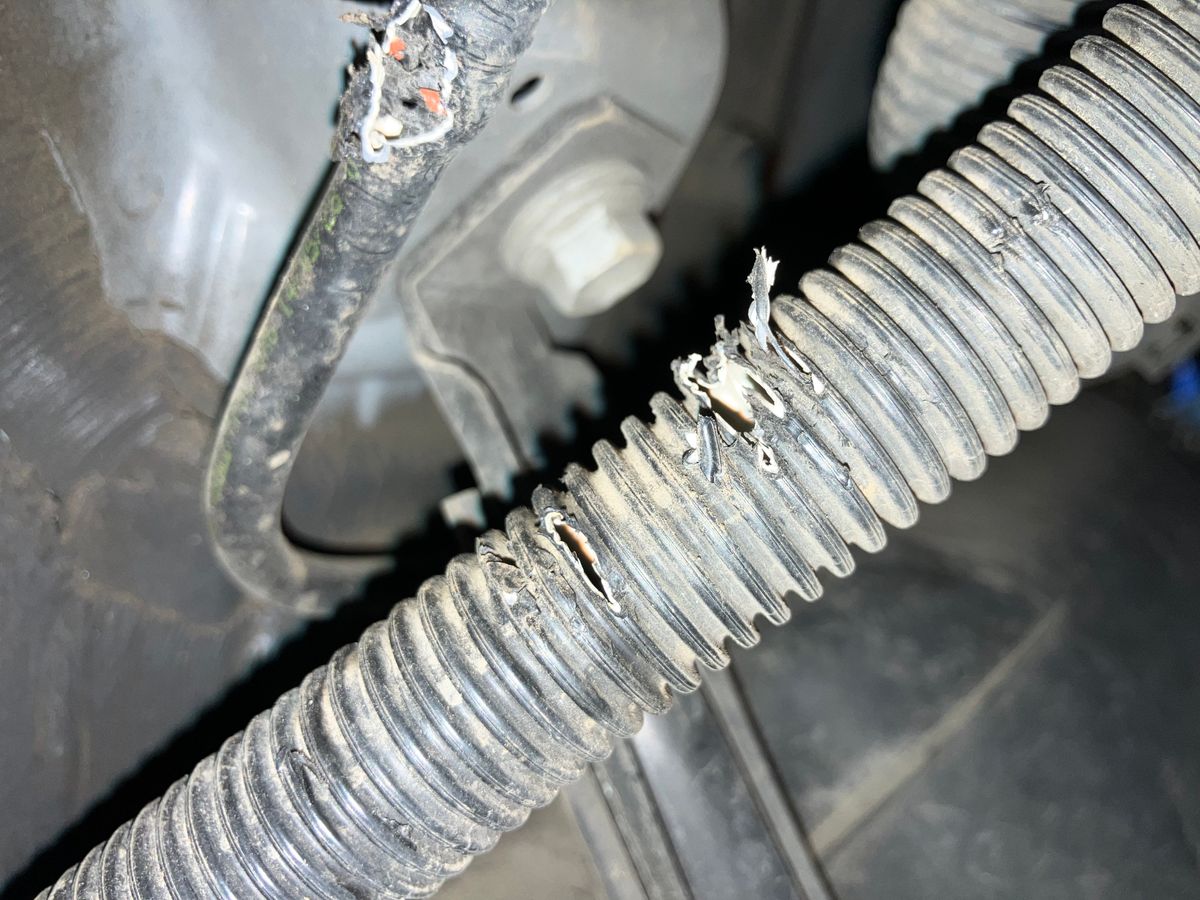
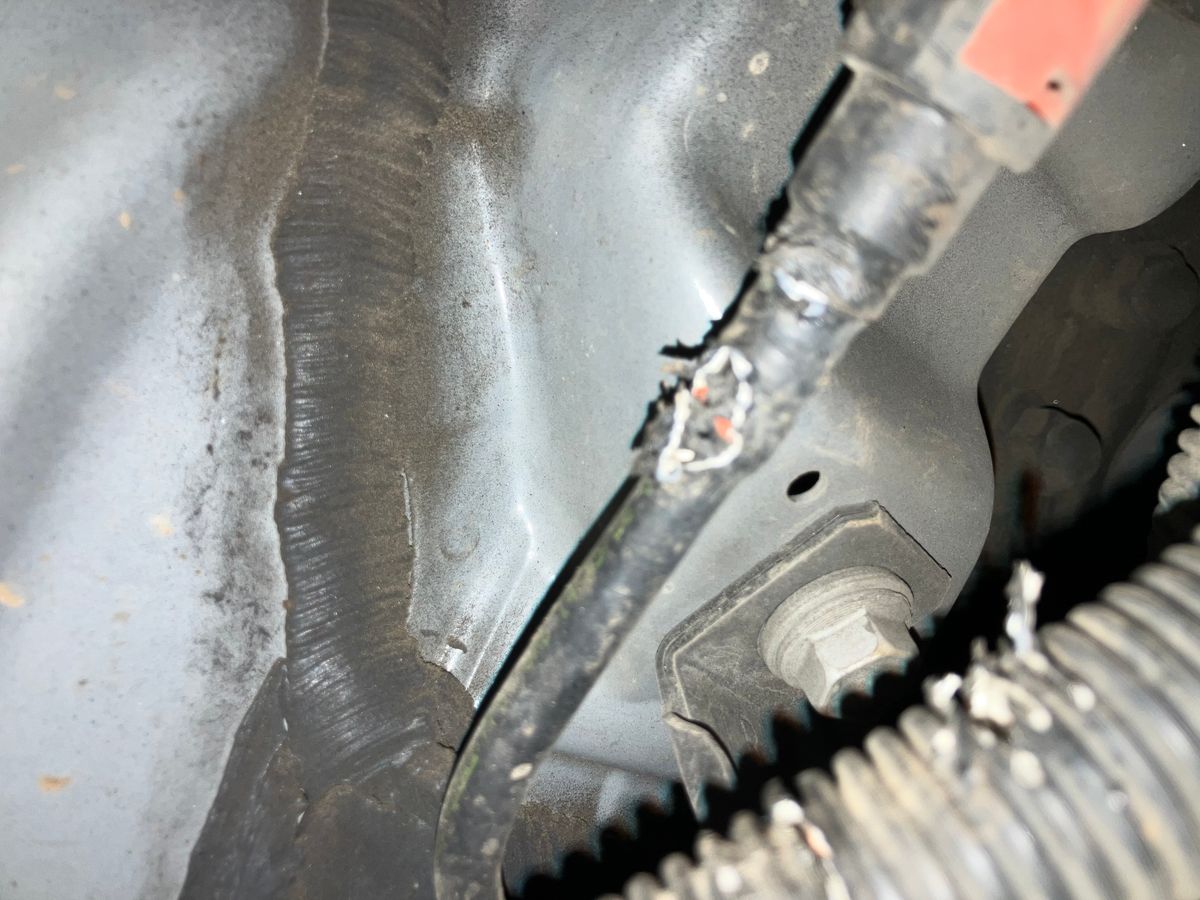
Our technician started with the evaporative emission system. On inspection, the hoses running from the fuel tank to the charcoal canister showed physical damage. The fuel tank would have to come out regardless, either to replace those hoses if they were available separately, or to replace the whole tank assembly if they weren’t.
Separately, the front air-fuel ratio sensor was flagged as stuck reading rich, which directly conflicts with the long-term fuel trim code showing the engine running lean. That kind of contradiction, where a sensor reports one thing while the fuel trim data says the opposite, usually points to a sensor that’s no longer reading accurately. The technician also noted that cleaning the mass airflow sensor and throttle body was the right first step for the idle-related codes before assuming anything more serious was wrong with those systems.
The Diagnosis
The evaporative emission codes and the fuel trim codes were separate problems running at the same time, which is part of why the earlier repair didn’t resolve anything. Replacing the purge solenoid addresses one component in the evaporative system, but if the hoses between the fuel tank and canister are damaged, vapor is still escaping and the system will keep failing its self-test.
The front air-fuel ratio sensor being stuck rich while the long-term fuel trim showed lean is a meaningful conflict. The engine’s control module relies on that sensor to adjust the fuel mixture in real time. If the sensor is sending a false rich signal, the module compensates by cutting fuel, which is what produces a lean fuel trim reading. The sensor was frozen at one value regardless of what the engine was actually doing, which is different from a sensor that drifts slowly or reads noisy.
The idle and cold-start codes were addressed conservatively first: clean the throttle body and mass airflow sensor, clear the codes, and see if the faults return before assuming a more involved repair is needed.
From the shop floor: When a Prius comes in with P0441 and P0455 after another shop has already replaced the purge solenoid, the next step is a smoke test with the vent valve actively commanded open using Toyota diagnostic software. That’s how you confirm whether the leak detection pump is passing or failing, because a weak pump won’t show up any other way.
The Fix
Our technician removed the fuel tank and installed a new tank assembly, transferring the necessary components over. The evaporative system test was performed and it failed again with the same P0441 and P0455 codes. That result ruled out the hoses as the sole source of the problem.
The technician ran a smoke test with the evaporative vent hose blocked off. No leaks appeared anywhere in the lines. The next step was to activate the vent valve using the Toyota diagnostic software and listen with a stethoscope. The valve sounded weak. With the smoke machine still connected and the valve commanded open, smoke was leaking past the leak detection pump. That’s the component responsible for pressurizing the evaporative system so the car can run its own leak test. A weak or leaking pump means the system can never hold pressure long enough to pass.
The leak detection pump and the charcoal canister were both replaced (the pump sits inside the canister assembly on this car, so the two come out together). The evaporative system test was run again and it passed.
Alongside the evaporative work, the front air-fuel ratio sensor and the rear oxygen sensor were replaced, codes were cleared, and the car was test-driven to confirm the fuel trims corrected. The throttle body and mass airflow sensor were cleaned to address the idle and cold-start codes.
What This Means for Your Car
On a 2014 Prius, P0441 and P0455 don’t always have the same root cause. Replacing the two most common components (fuel cap, purge solenoid) is a reasonable first move, but it’s not a diagnosis. When those repairs don’t clear the codes, the evaporative system needs to be pressure-tested and each component checked individually. On this car, the leak detection pump had been failing the system’s self-test all along, and that was only visible once the damaged fuel tank hoses were repaired and a smoke test was run with the vent valve actively commanded.
The fuel trim and sensor codes were real problems running in parallel. They weren’t noise and they weren’t caused by the evaporative system fault. A stuck air-fuel ratio sensor will actively mislead the engine’s control module, and that has effects on fuel economy and emissions even when the car feels fine to drive.
Throttle body and mass airflow sensor cleaning is something Toyota recommends at regular intervals on the Prius regardless of fault codes. When idle and cold-start codes appear, it’s worth starting there before assuming a more involved repair.
Frequently Asked Questions
I already replaced the fuel cap and purge valve for P0441 and P0455. Why is the check engine light still on?
Those two parts are the most common starting point for these codes, but they aren’t the only components in the evaporative emission system. If the hoses between the fuel tank and charcoal canister are damaged, or if the leak detection pump is failing, the system will keep setting the same codes regardless of what else has been replaced. A smoke test with the vent valve actively commanded is often the step that finally isolates the real source.
Does P0455 always mean a bad fuel cap on a Prius?
No. P0455 indicates a large leak in the evaporative emission system, and a loose or cracked fuel cap is just one possible cause. On this 2014 Prius, the actual source was a combination of damaged fuel tank hoses and a failing leak detection pump. The fuel cap was fine. The system simply couldn’t hold pressure because of failures further down the line.
Why were there so many other codes alongside the EVAP codes?
The evaporative emission codes and the fuel trim codes were independent problems happening at the same time. A high-mileage 2014 Prius can develop multiple unrelated faults simultaneously. The air-fuel ratio sensor failure and the idle system codes weren’t caused by the evaporative leak; they just happened to be present at the same time and needed to be diagnosed separately.
What does the leak detection pump actually do on a Prius?
The leak detection pump pressurizes the evaporative emission system so the car can run an internal self-test for fuel vapor leaks. If the pump is weak or leaking past its internal valve, the system can never build enough pressure to pass that test, which is why the evaporative codes kept returning on this vehicle even after other components were replaced.
Can a bad air-fuel ratio sensor cause a lean fuel trim code even if the sensor is reading rich?
Yes, and it’s a common source of confusion. If the sensor is stuck reporting a rich mixture, the engine’s control module responds by cutting fuel. The result is that the actual mixture runs lean, which is what shows up in the long-term fuel trim data. The sensor reading and the fuel trim appear to contradict each other, but the contradiction is itself the diagnostic clue. It points to a sensor that’s no longer reading accurately.
How often should the throttle body and mass airflow sensor be cleaned on a Prius?
Toyota’s general recommendation is every 30,000 miles. On this vehicle, buildup on those components was the likely contributor to the idle control and cold-start fault codes. Cleaning them at regular intervals is a straightforward preventive step that can head off those kinds of faults before they trigger a warning light.
Scan Reports from This Visit
Photos from This Visit
Need to get your car in for us to check it out? Book online or text us at 503-969-3134.