
Short version: A 2011 Prius wouldn’t detect either key fob after two shops and two locksmiths tried everything from a new fob to a $600 programmed key. The real failure was the certification (smart key) ECU, buried under an aftermarket security system spliced into the harness. We replaced the certification, power management, and transmission control ECUs as a matched set, and the car started.
A 2011 Prius came to us on a tow truck with one of the more thoroughly worked-over histories we’ve seen on a no-start. The owner’s car wouldn’t detect either key fob, so it wouldn’t start. Before it reached us, they had already replaced the 12-volt battery, bought a brand-new fob, and swapped the coin cell in the old fob. A repair shop spent six hours on it, called in their own locksmith, and finally said the ECM was probably fried. The owner then hired a second locksmith who charged $600, programmed a new key, said it was working, and still couldn’t get the car to run.
By the time it landed on our lift, two shops and two locksmiths had touched it and nobody could make the car see a key. Here’s what was actually going on.
Someone had been into the dash already
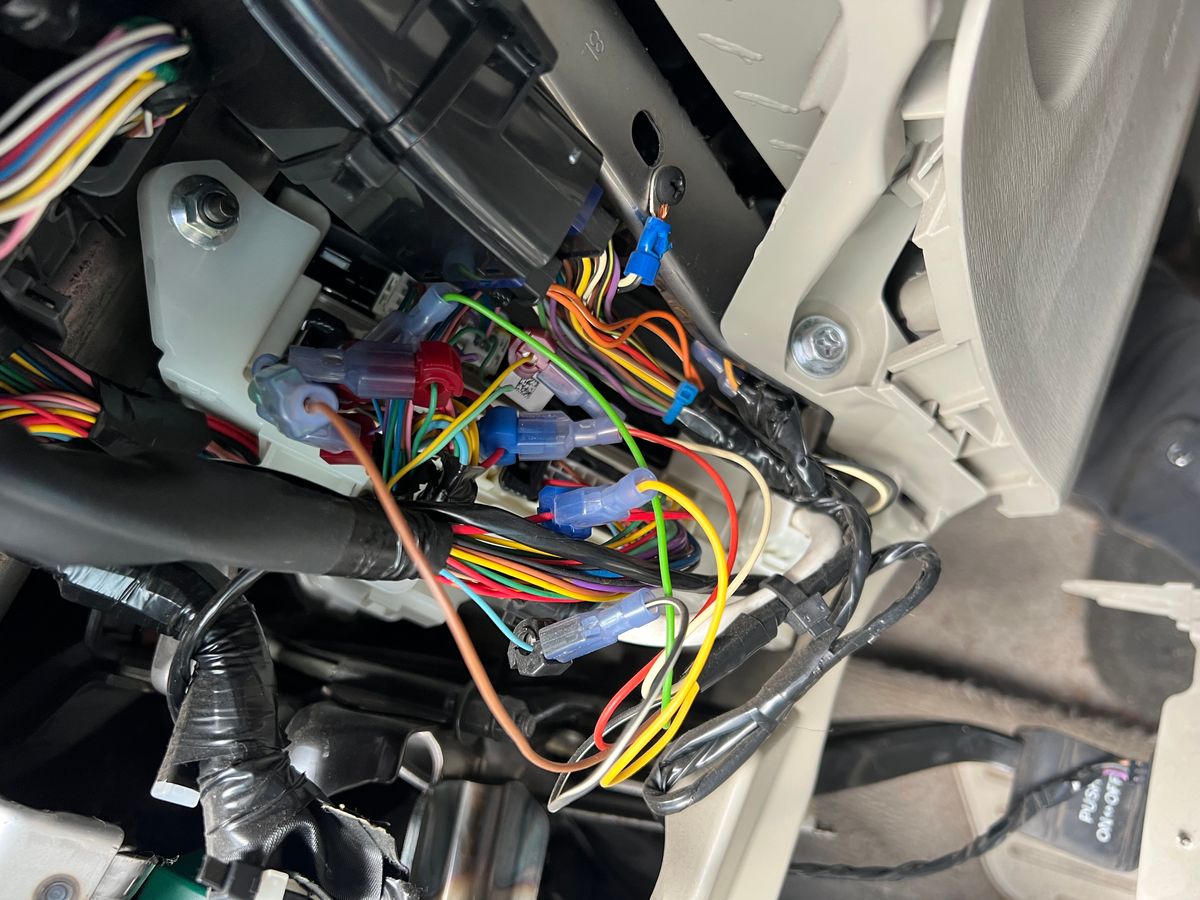
When we pulled the lower dash to get at the wiring, we found a mess. An aftermarket security system had been piggy-backed into the factory harness with a tangle of crimp-on splices tapping into the car’s own wiring. The owner told us it was a security system that came with the car, added at the dealership when they bought it used. They also mentioned the car had a history of 12-volt battery problems before the battery finally died for good.
That’s a meaningful clue. Anything spliced into a modern Toyota’s communication wiring is a prime suspect when the car starts having electrical gremlins, because those systems tap into circuits they were never engineered to share. So we removed the security system entirely to get the car back to a factory baseline.
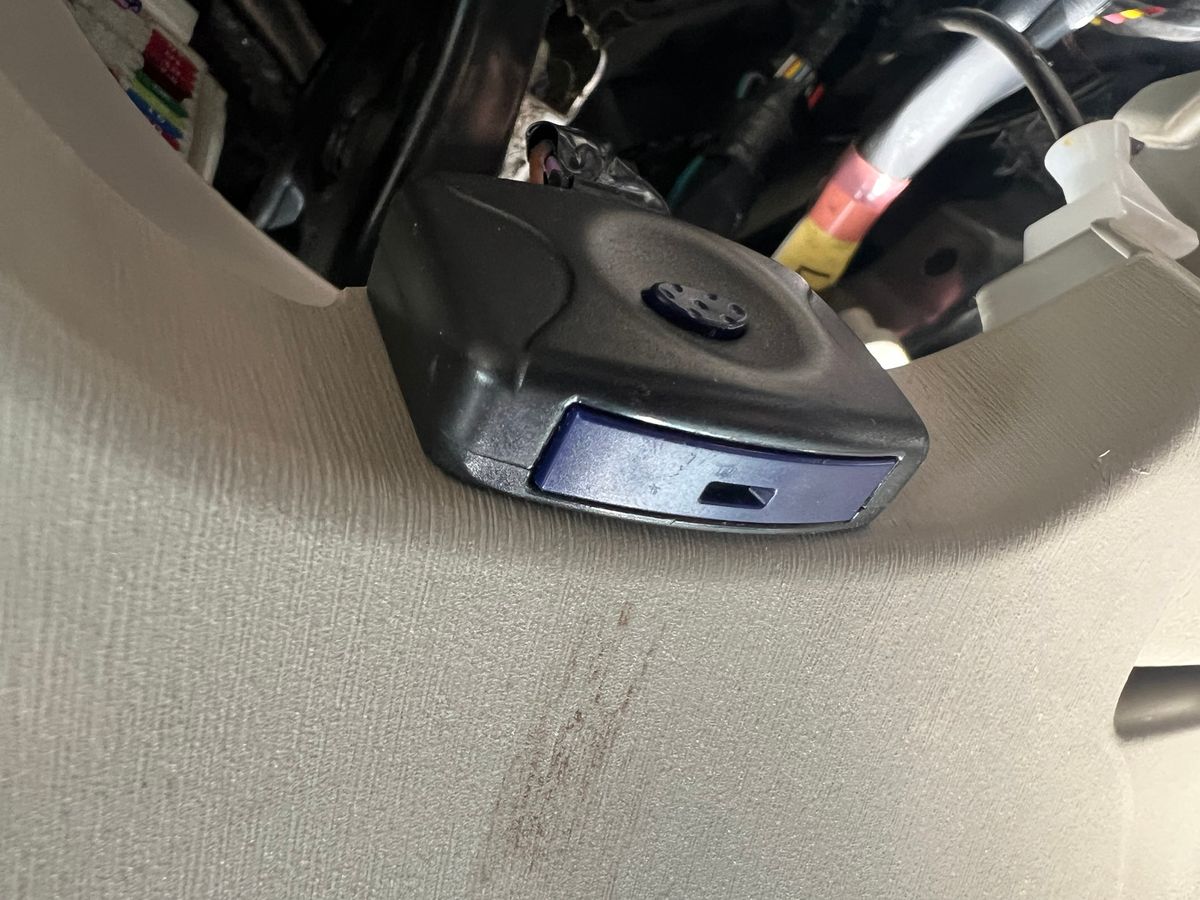
Removing it didn’t fix the car. We still couldn’t even get the dash to light up, and with no power to the dash there was no way to connect our Toyota scan tool (Techstream) to talk to the car. The alarm wasn’t the whole story, but getting it out of the picture meant everything we tested from there was the car’s own wiring, not somebody’s add-on.
Chasing the dead circuits
We went to the under-hood fuse box and tested for power at every fuse. Four of them were dead: PCU, IGCT No. 2, EFI No. 2, and IGCT No. 3. Three of those are fed by the IGCT relay, which is switched by the computer. We swapped in a known-good IGCT relay, a known-good EFI Main relay, and a known-good integration relay assembly, one at a time. No change with any of them.
Once we got the car awake enough to scan, three history codes told the story:
- B2784 — antenna coil open or short. This is the antenna that reads your key. If it can’t talk, the car can’t sense the fob.
- U0142 — lost communication with the main body ECU.
- U0155 — lost communication with the combination meter (your gauge cluster).
Two “lost communication” codes plus a key-antenna fault point at the network that ties the smart-key system together, not at one dead fob. We tested the TXCT and CODE wires between the power (start) switch and the certification ECU, which is the module that authenticates your key. Both wires ohmed out under 1 ohm and neither was shorted to ground, so the wiring was good. We swapped the power switch with a known-good one anyway. No change. We tried to re-register the keys to the car, and that failed too. Powers and grounds at the certification ECU all checked out.
From the shop floor: When a car comes in with a no-start and an aftermarket alarm or remote start spliced into the harness, get that system out before you condemn anything expensive. It’s not always the cause, but it muddies every test you run, and you can’t trust a diagnosis taken on top of someone else’s splices. Pull it, return the car to a factory baseline, and start your testing from there. It’s the difference between fixing the car and chasing a ghost.
The certification ECU was the heart of it
Good wiring, good power switch, good powers and grounds, and a key the car still wouldn’t recognize. That pointed straight at the certification ECU itself. This is the module that recognizes your key and authorizes the car to start. When it fails, no key works, the car won’t start, and to a lot of techs it looks exactly like a “fried ECM,” which is what the first shop landed on.
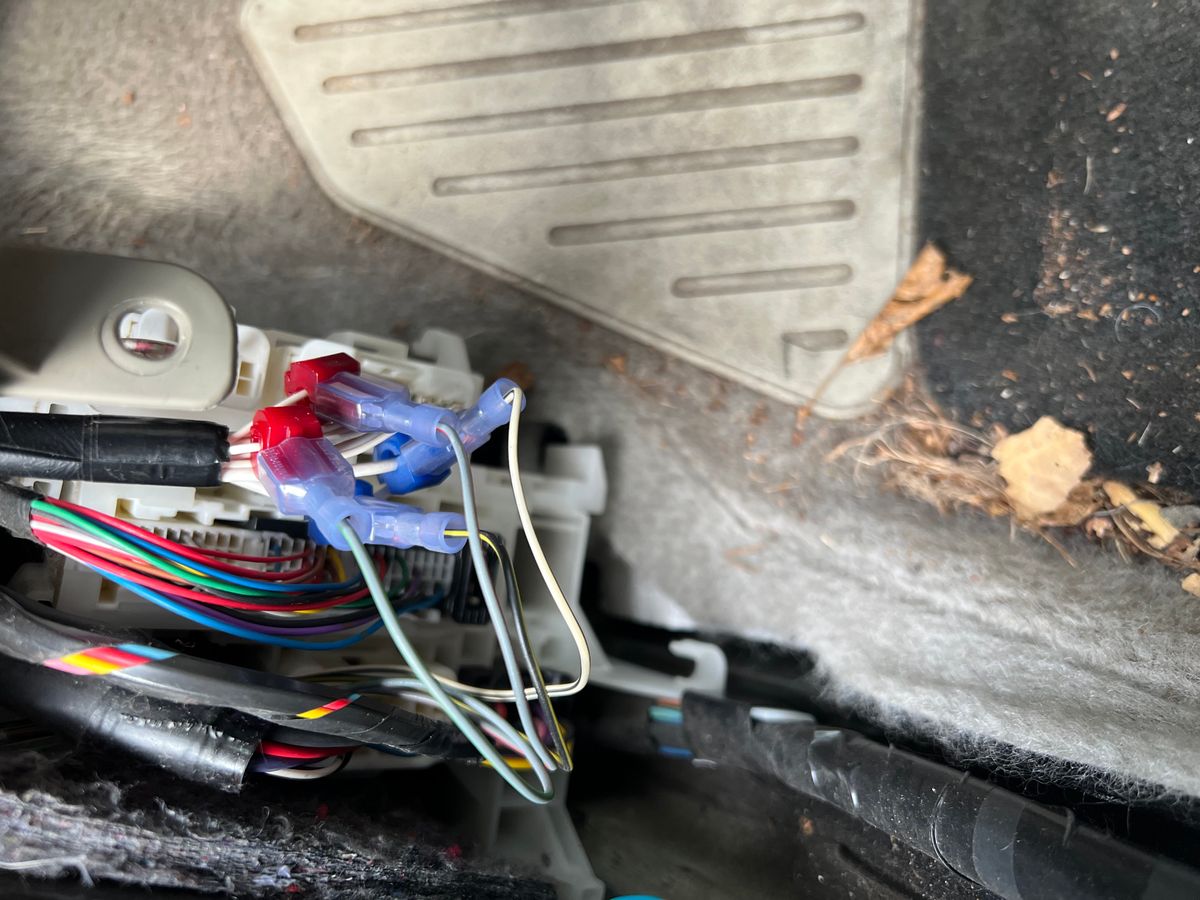
On these cars the certification ECU is married to the power management ECU and the transmission control ECU, and to the key itself, so you can’t just swap one in isolation. We replaced the certification ECU along with the power management and transmission control ECUs and a matching key, all from a donor car, as a registered set. The car started and ran normally. We also replaced the body control ECU, because the power windows were dead and that module runs them.
One detail worth calling out: the $600 key the second locksmith “programmed” was never actually registered to the car. Our scan tool showed only one key on file the whole time. After we installed the new ECU set, we registered that newer key to it, so the owner drove away with two working keys instead of one.
When the car first powered up, every brake warning light was on with codes for both front wheel speed sensors. Those almost certainly set while the car was being dragged onto a flatbed. We cleared them, road tested several miles, and nothing came back.
Why this took three tries to solve
It’s easy to look at this and pile on the first shop, but a key-detection failure is a genuinely nasty diagnosis. The symptom — “car won’t see the key” — can come from a dead fob, a dead 12-volt battery, a bad antenna, wiring, or the certification ECU, and on this car there was an aftermarket alarm sitting on top of all of it. The previous shop wasn’t crazy to suspect a module; they just stopped at “ECM” instead of proving which module. The locksmiths could program keys all day, but if the module that stores and checks those keys is bad, programming never takes. Methodically removing the variables — the alarm, the wiring, the switch, the relays — is what’s left when there’s no shortcut.
Frequently asked questions
Why won’t my Prius detect the key fob?
A few things can cause it: a weak or dead 12-volt battery, a dead fob battery, a failed key antenna, damaged wiring, or a failed certification (smart key) ECU. The fob itself is the cheapest and most common culprit, but if a known-good fob still isn’t detected, the problem is usually deeper in the smart-key system, not the fob. On this car it was the certification ECU.
Does a key-detection failure mean my ECM is fried?
Not necessarily, and “fried ECM” is often a guess when a shop runs out of road. A failed certification ECU produces the same no-key, no-start symptom but is a different module. The only way to know is to test the wiring, power, and the key antenna circuit and rule them out before condemning a computer. Replacing the wrong module is an expensive way to find that out.
Can an aftermarket alarm or remote start cause a no-start?
Yes. Aftermarket security and remote-start systems splice into circuits the factory never intended them to share, and on modern Toyotas that can disrupt communication between modules and cause intermittent or dead-stop electrical faults. When one is present on a problem car, removing it and testing from a factory baseline is the right first move.
A locksmith programmed a new key but the car still won’t start. Why?
If the module that stores and verifies keys — the certification ECU — is failing, key programming won’t stick. The locksmith can go through the motions, but the car never truly registers the key. On this Prius the scan tool showed only one key on file no matter what the locksmith did, because the ECU couldn’t hold the new one. Fixing the module came first; registering keys came after.
What is the certification ECU?
It’s the brain of the smart-key and immobilizer system. It recognizes your key, talks to the antennas that sense the fob inside and outside the car, and authorizes the car to start. When it fails, the car can’t confirm a valid key is present, so it refuses to start regardless of how many good fobs you have.
Why replace three ECUs instead of just one?
On this generation of Prius the certification ECU, power management ECU, and transmission control ECU are paired together and to the key as a matched set. They have to be replaced and registered as a group so the car recognizes the combination. Swapping a single module out of that set won’t let the car start.
Got a Prius that won’t detect the key or start, and nobody can pin down why? Book online or text us at 503-969-3134.
Related reading
- Prius keyfob not detected: how an aftermarket security system killed the car
- Why Your Prius or Toyota Hybrid Won’t Start: The 12V Battery Explained
- Prius water pump code wouldn’t clear: the other shop replaced the part but missed the wire
- 2016 Prius “Head Gasket” That Two Shops Couldn’t Fix Was Really a Warrantied Catalytic Converter
- 2007 Prius U0293: Why a New Steering Sensor Killed the Hybrid System
Questions about your car? Text us at 503-969-3134 — it’s the fastest way to reach us.
About the author: Travis Decker is the owner of Atomic Auto in Portland, Oregon, and an ASE Master Technician (L1, L3). Atomic Auto specializes in Toyota, hybrid, and EV service.