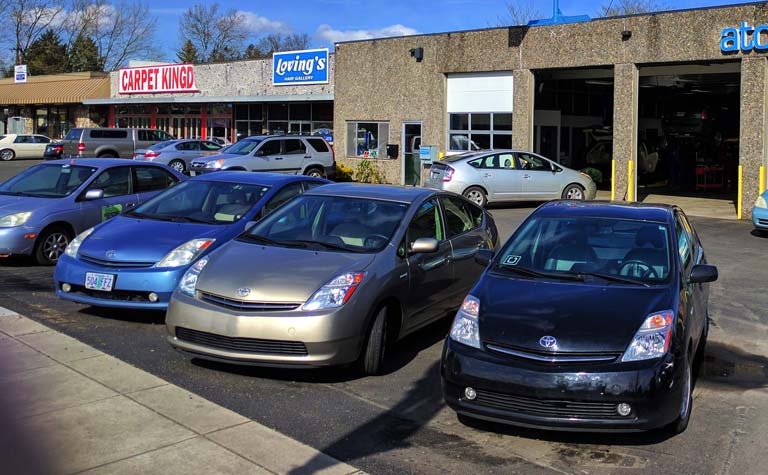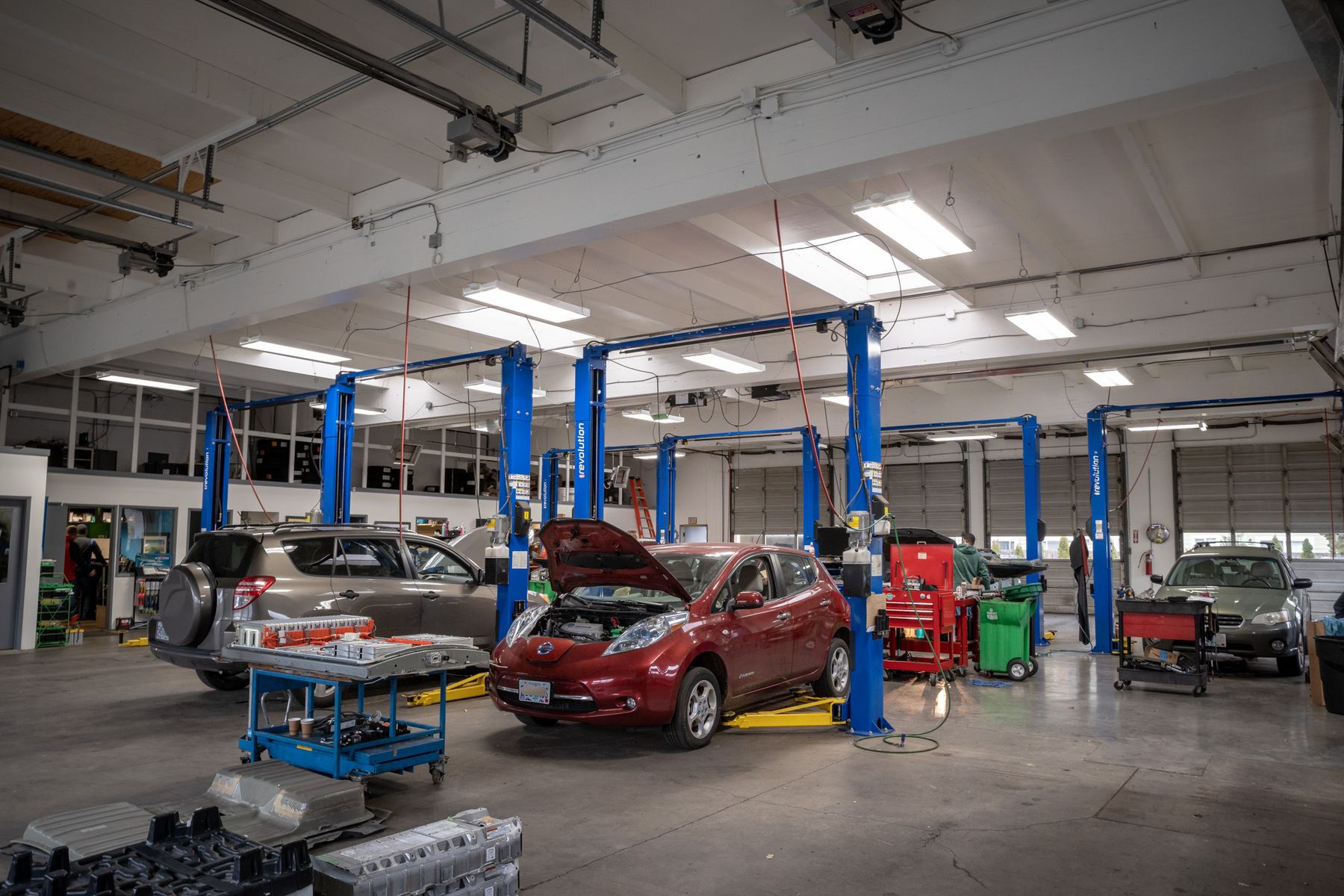
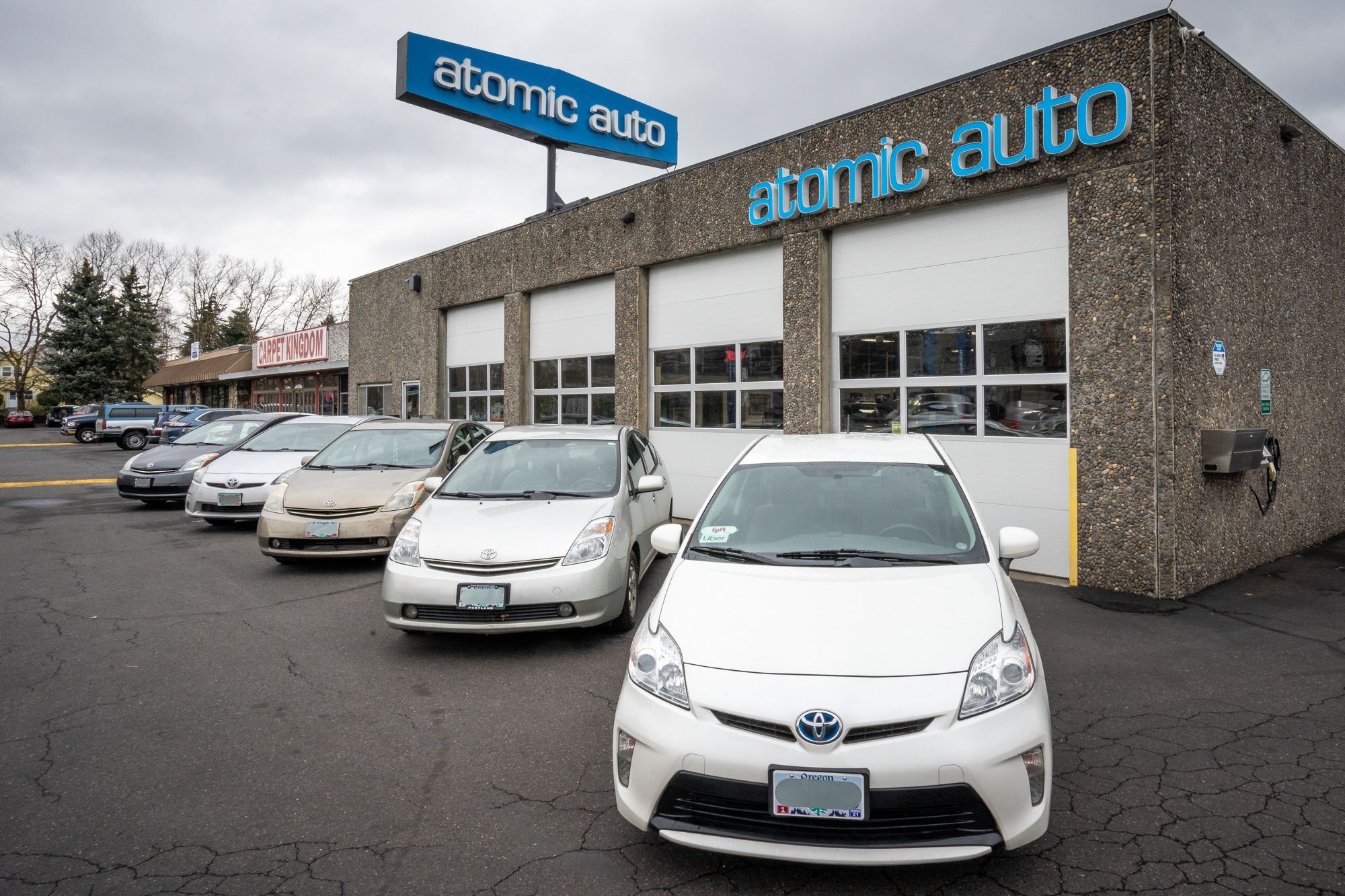


Based on 547 real P0A80 repair orders at Atomic Auto in Portland, OR, spanning 2016 to 2026.
This is the in-depth companion to our overview, P0A80 — Replace Hybrid Battery Pack.
What P0A80 actually means
P0A80 is the code your hybrid sets when the high-voltage battery pack has deteriorated past the point where it can do its job. In plain terms: one or more cells inside the pack has weakened or died, the battery management system noticed the imbalance, and it set the code to tell you the pack needs attention.
On a Prius, this is the code behind the “Check Hybrid System” warning and the red triangle. The car often still drives, but the gas engine runs more, fuel economy drops, and the battery state-of-charge bar starts swinging wildly between full and empty. That swing is the tell. A healthy pack holds a narrow charge band. A failing one can’t.
Here’s the part most people get wrong: P0A80 almost never means the entire battery has gone all at once. It usually starts as one module out of the pack’s many that has failed and dragged the rest out of balance. In our repair orders we see it written plainly by our techs: “failing module 8,” “failed module 7,” “dead module.” The whole pack throws the code, but the failure starts local. That distinction shapes everything about the fix.
What we actually find when P0A80 sets
Across 547 P0A80 orders, the failures fall into a consistent set of patterns. These are the cars themselves talking.
A weak or dead module imbalancing the pack
This is the core of nearly every P0A80. The pack is a series of modules. When one drops in capacity or develops high internal resistance, it can no longer keep pace with the others on charge and discharge. The management system reads the spread between the strongest and weakest blocks, and once that spread crosses a threshold, P0A80 sets.
We confirm it by reading individual block voltages with Techstream (or equivalent), not a basic code reader. A basic reader sees “P0A80” and stops. We watch each block’s voltage under load and on charge and find the outlier. When one block sags far below the others, that’s your failed module. We’ve documented this down to the specific block: module 7, module 8, whichever one gave out.
Corroded battery ECUs and wiring connectors
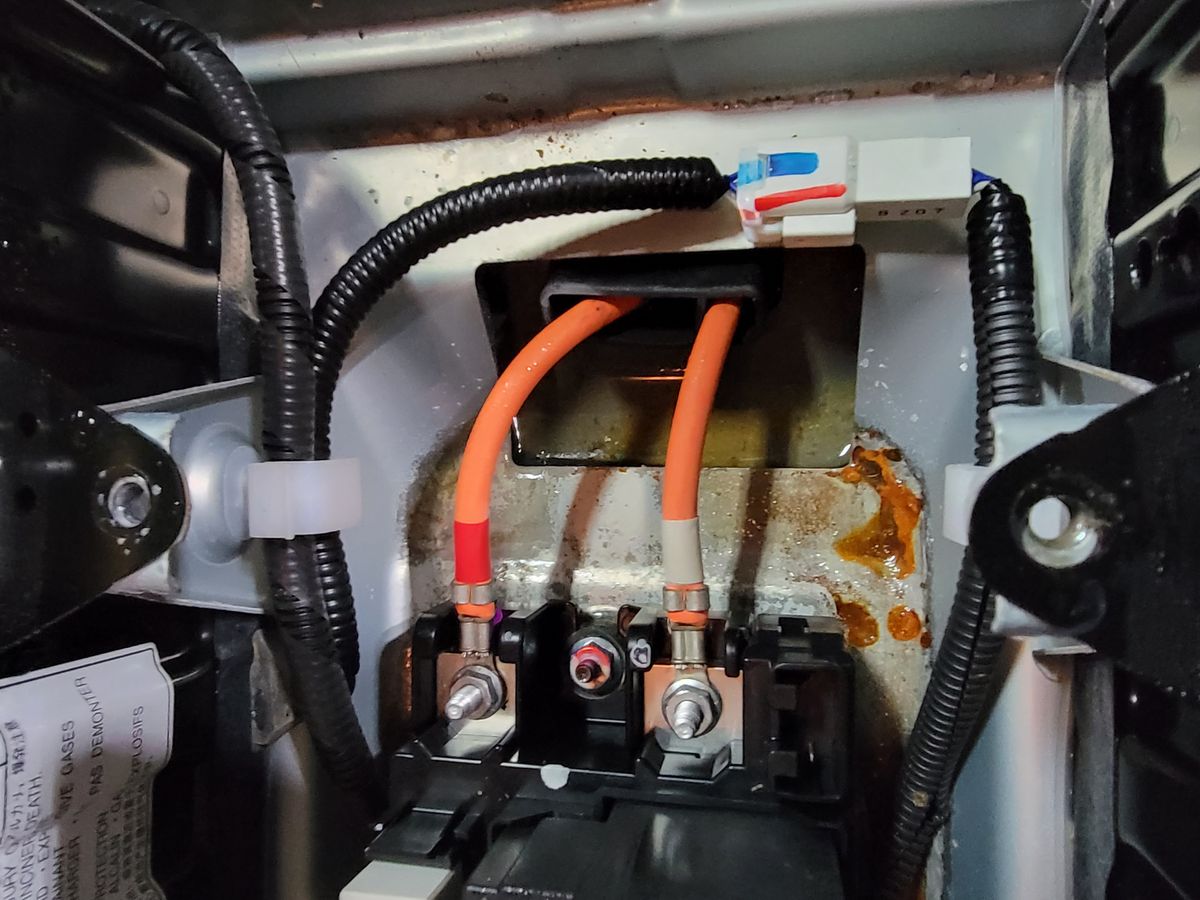
The high-voltage battery ECU and the wiring connectors inside the pack live in a sealed, warm environment, and over a decade-plus they corrode. We routinely find green corrosion on the battery ECU terminals, on the module sense-wire connectors, and on the bus-bar bolt connections that tie the modules together. Corroded connections add resistance, throw off the very voltage readings the management system relies on, and can trigger or worsen P0A80 on their own. On every P0A80 job we inspect the ECU and the connectors; when we find corrosion we clean or replace the affected parts. Replacing a battery and leaving a corroded ECU or connector in place is one of the surest ways to see the car come back.

Water intrusion — a wet-climate problem we see often
Here in the Pacific Northwest, the failure we trace again and again is water finding its way into the hatch and battery-tray area. We’ve pulled packs to find standing water in the tray and a damp spare-tire well. That water corrodes the HV connectors — the sense-wire harness connector at the battery ECU and the cooling-fan connector especially. As one of our techs put it, the corrosion eventually destroys the connector terminals, the fan quits, and the warning lights come on. When we find it, the real fix isn’t just the battery — it’s sealing the leak so the next pack doesn’t suffer the same fate. It’s also why hybrid-battery warranties, ours included, exclude water damage.
Paired codes that point at the same pack
P0A80 rarely shows up alone. In our orders it travels with a sub-code (P0A80-123) and frequently with P0B3D (a specific dead-block code), P3017 (weak block), or P3000 (general hybrid battery system). When we see P0A80 with P0B3D, the pack has a confirmed dead block — the diagnosis is short and certain.
Cooling problems that shorten pack life
The pack is air-cooled by a fan that pulls cabin air through it. That fan clogs with dust and pet hair over years. A blocked cooling path runs the pack hot, and heat is what kills modules. On our battery jobs we remove, inspect, and clean the HV battery cooling fan as part of the work. We’ve also traced related hybrid faults — like P0A93 on the inverter coolant pump — that ride along with an aging cooling system. If the fan that’s supposed to protect the new pack is clogged, the new pack ages early too.
Aftermarket and reconditioned packs that fail again
This is the warning we repeat most. We’ve seen cars come in with a recently installed aftermarket or “reconditioned” pack already throwing P0A80 again. Reconditioning — shuffling used modules to balance a pack — is a band-aid; it doesn’t last. The cheap pack is the expensive pack, because you pay for it twice.
Why one bad module means the whole pack is near the end
This is the most important thing to understand about P0A80, and it’s why we steer customers toward replacing the complete pack rather than chasing one module.
Every module in your pack is the same age. They were built together, installed together, and have lived the exact same life — the same miles, the same heat cycles, the same charge and discharge, the same Portland winters and summers. When one module fails, it’s not bad luck that singled out one cell. It’s the first of a set that are all near the end of their service life. The one that failed simply got there first.
Swap in a single module and you’ve put one young cell into a pack of tired ones. The new module is stronger than its neighbors, the imbalance returns, and the next-weakest module sets P0A80 again — often within months. We’ve watched it happen. That’s why a single-module repair is a false economy: you pay to open the pack now, and you pay to open it again soon.
Replacing the whole pack — every cell at once — resets that clock. Every module is new, balanced, and the same age again, and the repair carries a real warranty. It costs more up front than chasing one module, and it’s the repair that actually lasts.
Sub codes and paired codes worth knowing
| Code seen with P0A80 | What it means | What it tells us |
|---|---|---|
| P0A80-123 | Battery deterioration sub-code | Confirms pack-level deterioration, points to block testing |
| P0B3D | Specific dead battery block | A block is gone — diagnosis is confirmed |
| P3017 | Weak battery block | A block is marginal, failing soon |
| P3000 | Hybrid battery system, general | Broader pack/management fault, test blocks |
| P0A93 | Inverter coolant pump performance | Cooling-system issue alongside the battery |
If your shop can’t tell you the sub-code or the individual block voltages, they don’t have the right tool for this job.
How we diagnose P0A80
Step 1: Full scan, not a code read. We pull P0A80, every sub-code, every paired code, and freeze-frame data with Techstream-level tools. The paired codes start narrowing it immediately.
Step 2: Block-level voltage test. We read each battery block’s voltage and watch the spread between strongest and weakest, on charge and under load. The failed module is the outlier. This is the step a basic shop can’t do and the reason guesses are expensive.
Step 3: Inspect the ECU and the connectors. We check the battery ECU, its terminals, the module sense-wire connectors, and the bus-bar connections for corrosion and heat damage. Corroded connections corrupt the readings the whole diagnosis depends on, so they get cleaned or replaced before we trust any numbers.

Step 4: Inspect the cooling path and check for water intrusion. We pull and clean the HV battery cooling fan, check airflow, and look for water in the battery tray and spare-tire well. A pack that overheated or sat in water tells us why the module died and what to fix so the next one lasts.
Step 5: Recommend the repair. Based on the pack’s condition and age, we walk you through the options below — and in nearly every case, why a complete pack is the repair that lasts.
Your repair options
Option 1 — Complete OEM battery (what we recommend)
We install a complete Toyota OEM high-voltage battery: every cell new, balanced, and the same age again. As covered above, this is the repair that actually lasts, because it resets the clock on the entire pack instead of leaving a set of tired, same-age modules in place. It’s backed by Toyota’s 4-year / 48,000-mile warranty (which does not cover water damage — relevant on any car that’s had flooding under the seats).
Option 2 — All-module OE rebuild
When a full assembly isn’t the right fit, we rebuild the pack with all-new individual Toyota OE modules in your existing case, plus fresh sense-wire and bus-bar connections and an ECU if corrosion calls for it. The key word is all. We don’t shuffle in a couple of used modules and call it balanced — that’s the same-age trap that brings the car back. Every module is replaced with OE Toyota cells, and it carries the same 4-year / 48,000-mile warranty path.
We steer customers to OE Toyota cells either way. The shop has watched aftermarket and reconditioned packs fail and re-throw P0A80, and we won’t put one in.
Quick reference: P0A80 repair scope
| Path | What it replaces | Why we recommend it | Warranty |
|---|---|---|---|
| Complete OEM battery (recommended) | The entire pack — all new OE Toyota cells, plus ECU if corroded | Every cell is the same age again; resets the clock and actually lasts | 4yr / 48k |
| All-module OE rebuild | Every module in your existing case, OE Toyota cells | Comparable cell quality when a full assembly isn’t the fit | 4yr / 48k |
| ECU / connectors (as found) | Corroded battery ECU, sense-wire and bus-bar connectors | Restores clean voltage readings; prevents a comeback | — |
When P0A80 tends to hit
In our 547 orders the pattern is clear. The overwhelming majority are Toyota Prius (Gen 2 and Gen 3 lead), followed by Toyota Camry Hybrid, then Prius C, Prius V, and Lexus hybrids (RX450h, CT200h). It’s a Prius-family code first and foremost.
Mileage at failure ranges widely but most cluster between 150,000 and 210,000 miles. We’ve replaced packs as low as ~108,000 and as high as ~215,000. Age matters as much as mileage — these cells degrade on a calendar as well as an odometer, which is why a low-mileage older Prius is not immune.
What you should know before you go to a shop
P0A80 is a pack problem, not automatically a “your car is totaled” problem. The pack can be replaced with OE parts and warrantied. Don’t let anyone scare you toward scrapping a good Prius over one code.
Ask whether they read individual block voltages. If the diagnosis is “the scanner says P0A80, so it’s the battery” with no block-level data, that’s a guess. The block test is what separates a real diagnosis from a parts-cannon.
Understand why a whole pack beats one module. Every module is the same age and has lived the same life. Replacing one puts a strong cell among tired ones and the code returns. A complete pack is the repair that lasts.
Be skeptical of cheap reconditioned packs. We’ve seen them re-throw P0A80 within months. Reconditioning shuffles used cells; it doesn’t fix the underlying aging.
Ask about the cooling fan, the ECU, the connectors, and water intrusion. A proper P0A80 job cleans the HV cooling fan, checks the battery ECU and wiring connectors for corrosion, and looks for water in the battery area. Skipping any of them is how a fresh pack ages early or a car comes back.
Insist on OE Toyota cells and a real warranty. Our OE module and complete-pack repairs carry a 4-year / 48,000-mile warranty. Get the terms in writing, and note that water damage is excluded — worth knowing if your car has ever had wet carpet.
Why this code needs a hybrid specialist
A general shop can read P0A80. Far fewer can read the individual battery block voltages that tell you which module failed, check the battery ECU and connectors for the corrosion that brings cars back, and find the water intrusion that determines how long the next pack lasts. Getting it wrong is expensive in both directions — scrapping a car that needed one repair, or installing a cheap pack that fails again.
Atomic Auto has diagnosed and repaired 547 P0A80 cases across a decade, the large majority of them Prius. Every detail in this article — the module-level failures, the corrosion we find, the case for a complete pack, the warranty — comes from our own repair orders. Real cars, real fixes, real outcomes.
If your Prius is showing P0A80, we can help. For the quick overview, see P0A80 — Replace Hybrid Battery Pack.
Atomic Auto is an independent hybrid and EV repair specialist in Portland, Oregon. We work on Toyota, Lexus, Honda, Kia, Nissan, and other hybrid and electric vehicles.