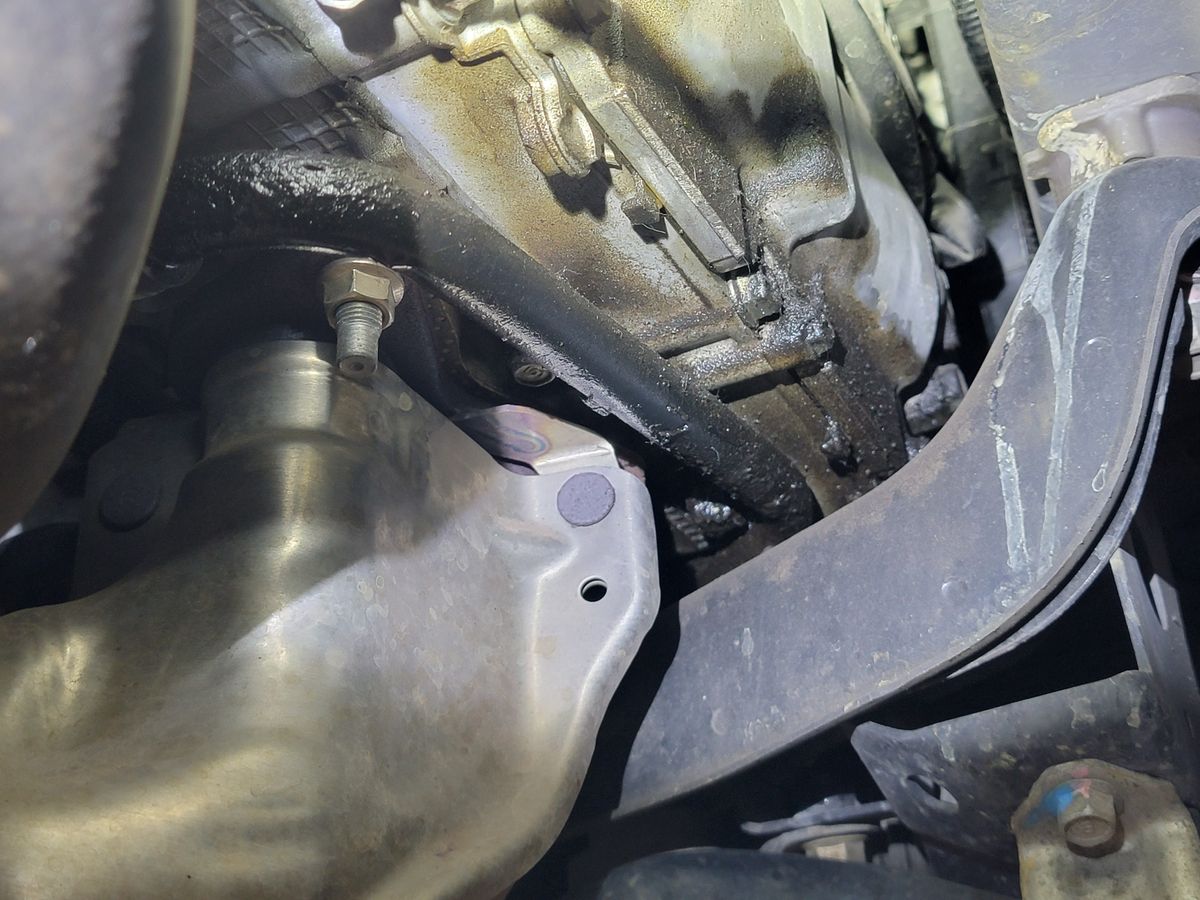
Is Your Toyota Leaking Oil or Just Seeping?
If you’ve noticed oil spots under your Toyota or dark stains on your engine, you might be wondering: is this a serious oil leak that needs immediate repair, or just normal seepage? Understanding the difference can save you from unnecessary repairs—or help you catch a real problem before it causes engine damage.
At Atomic Auto, we follow Toyota’s official diagnostic guidelines (TSB T-SB-0008-20) to accurately diagnose oil leaks on all Toyota and Lexus vehicles, including Prius, Camry, RAV4, Highlander, Tacoma, 4Runner, and more.
What’s the Difference Between an Oil Leak and Oil Seep?
Oil Leak (Needs Repair)
A true oil leak is identified by pooling fluid with visible droplets that drip. Signs include:
- Oil droplets forming on bolt heads or sensors
- Visible dripping from gasket mating surfaces
- Oil puddles under your vehicle after parking
- Rapid oil level decrease between oil changes
Action needed: Oil leaks should be repaired promptly to prevent engine damage and may be covered under Toyota’s powertrain warranty.
Oil Seep (Monitor Only)
A seep is a thin film or coating of oil on the exterior of a component. Characteristics include:
- Darkened or damp appearance (but not wet)
- Dust or dirt accumulation in the area over time
- No visible droplets or dripping
- Oil level remains stable between services
Action needed: Seepage is considered normal at mechanical joints and doesn’t require immediate repair. We document it and monitor at each service interval.
Common Areas for Oil Leaks and Seeps
On Toyota vehicles, we commonly inspect these areas:
- Valve cover gasket – Often the first gasket to show age
- Oil pan gasket – Check the mating surface for droplets vs. film
- Oil pressure sensor – Small component that can develop leaks
- Timing cover – Seepage here is common on high-mileage vehicles
- Rear main seal – More serious if leaking
- Transmission pan – Check for ATF leaks on automatic transmissions
- Differential – Especially on 4WD vehicles like 4Runner and Tacoma
How We Properly Repair Oil Leaks
When a genuine leak is confirmed, proper repair technique is critical. At Atomic Auto, we follow Toyota’s repair procedures:
For Gasket/O-Ring Sealed Joints:
- Clean – Remove all old gasket material from sealing surfaces
- Inspect – Check for pitting, grooves, or surface damage
- Prepare – Degrease surfaces completely and allow to dry
- Install – Use new OEM or OEM-equivalent gaskets
For Silicone Sealant (FIPG) Joints:
- Clean – Remove ALL old sealant completely
- Inspect – Verify surfaces are free of imperfections
- Prepare – Clean with appropriate solvent, allow to dry
- Apply – Install new sealant and reassemble within 3 minutes
- Cure – Wait at least 2 hours before adding oil
Which Toyota Models Does This Apply To?
This diagnostic approach applies to virtually all Toyota vehicles from 2000-present, including:
- Hybrids: Prius, Prius Prime, Prius V, Prius C, Camry Hybrid, RAV4 Hybrid, Highlander Hybrid
- SUVs: RAV4, Highlander, 4Runner, Sequoia, Land Cruiser, FJ Cruiser, Venza, C-HR
- Trucks: Tacoma, Tundra
- Cars: Camry, Corolla, Avalon, Yaris, 86, Supra, Celica, Matrix, Solara
- Vans: Sienna
When Should You Bring Your Toyota In?
Schedule an inspection if you notice:
- Oil spots on your garage floor or driveway
- Burning oil smell while driving
- Low oil warning light
- Needing to add oil frequently between changes
- Visible wet spots on your engine
At Atomic Auto in Portland, we specialize in Toyota and Lexus vehicles, including hybrids. We’ll properly diagnose whether you have a leak that needs repair or normal seepage that just needs monitoring—and we’ll document everything for your records.
Schedule your oil leak inspection today →
Photos from our shop