
Short version: A 2007 Prius wouldn’t start and set U0293 after another shop installed a used steering angle sensor to chase an alignment pull. The bad used sensor was disrupting the communication network and making a working hybrid system look dead. Unplugging it brought communication back — and the original pull turned out to be deformed, separating tires.
| Code | What it means | Most common cause we see | Typical fix |
|---|---|---|---|
| U0293 | Lost communication with the hybrid vehicle control system (the HV ECU) | A faulty part sitting on the communication network — on this car, a bad used steering angle sensor; a dead 12-volt battery or corroded connectors can also cause it | Find and remove or replace the component disrupting the network, then clear codes and retest — not automatically a hybrid battery |
| C1203 | ECM communication fault — the destination data from the HV ECU didn’t match the stored value | The same network disruption from the bad used sensor | Fix the underlying communication fault; on this car the code cleared once the sensor was unplugged |
| C1310 | A malfunction reported in the HV system | Set alongside the communication faults while the network was down | Resolve the communication problem, clear codes, and confirm nothing returns |
| C1345 | Linear solenoid valve offset learning undone — a calibration that gets wiped when the system loses its bearings | Loss of power or communication in the system | Perform the calibration with the scan tool after the underlying fault is fixed |
A 2007 Prius came to us on a flatbed with the shifter display flashing and half the dash lit up. That wasn’t the interesting part. The interesting part was the stack of paperwork that came with it: two previous shops, a new steering angle sensor, a new 12-volt battery, and a quote to replace the hybrid battery for a few thousand dollars. After all of that, the car still wouldn’t start.
The hybrid battery was the wrong place to point the finger, and the codes told us why within the first hour.
It started with a pull to the left
The owner’s original complaint was simple. The car drove fine but pulled left. The first shop ran an alignment, which didn’t fix it, and from there decided the steering angle sensor was bad and replaced it. That’s when things went sideways. After the sensor went in, the car wouldn’t start and set a “no communication” code. The shop disconnected the hybrid battery from the hybrid control module, communication came back, and a hybrid-battery fault code appeared. Their read: the hybrid battery is dead, replace it.
The owner wasn’t sold. They took the car to a cheaper shop to get the battery swapped, and that shop actually did them a favor — they ran the codes, said the hybrid battery looked mostly fine, and didn’t think it was the problem. That’s the point the Prius landed on our lift.
What the scan tool actually showed
The 12-volt battery was dead when the car arrived. We jumped it, and the car still wouldn’t move — PRNDB flashing, several warning lights, and four codes worth paying attention to:
- U0293 — lost communication with the hybrid vehicle control system (the HV ECU).
- C1203 — ECM communication fault; the destination data from the HV ECU didn’t match the stored value.
- C1310 — a malfunction reported in the HV system.
- C1345 — linear solenoid valve offset learning undone, a calibration that gets wiped when the system loses its bearings.
We cleared them and they came right back. On the scan tool, we couldn’t talk to either the hybrid control unit or the HV battery ECU at all. On paper, that looks exactly like a dying hybrid battery. That’s the trap.
The batteries were a red herring
We charged and load-tested the 12-volt battery the first shop had put in. It was fine. Then we looked harder at the one part that got changed right before everything broke: the steering angle sensor. It was a used part. We unplugged it, cleared the codes, and retested.
The codes were gone. Communication came back. A wrong or failed used sensor sitting on the vehicle’s communication network was dragging down the whole conversation between modules — which is what made a perfectly serviceable hybrid system look dead.
From the shop floor: An alignment pull is a mechanical problem. It has nothing to do with electronics, and a steering angle sensor should never have been thrown at it. That one decision is what set this entire chain in motion. When a recently installed part — especially a used one — lands on the network right before a no-start, unplug it, clear codes, and watch what comes back before you condemn anything expensive. It’s the cheapest test you’ll run all day.
Why we replaced the hybrid battery anyway
Here’s the part we want to be straight about, because it’s easy to spin this into a story where we saved the customer from a needless battery. We didn’t, exactly. The reason the car wouldn’t start was the bad used sensor, full stop. But the hybrid pack in this car was the original, 16 years old, well past the ten or so years these Gen 2 packs usually give you, and the HV battery ECU had been tangled up in the no-communication fault. With the car already apart and the pack at the end of its life, replacing it was the right call rather than waiting for it to strand the owner again in six months.
So we installed a Toyota OE hybrid battery (4-year, 48,000-mile warranty), put in the correct steering angle sensor, calibrated the new sensor and the linear solenoid valve, cleared the codes, and road tested. Nothing came back. The old used sensor went home in a box on the passenger seat — the owner asked to keep it.
And then it still pulled left
On the road test, the car still pulled hard to the left, noticeable just creeping across the parking lot. Up on the lift, all four tires told the story: the tread was deformed and starting to separate, and the tires weren’t truly round anymore.
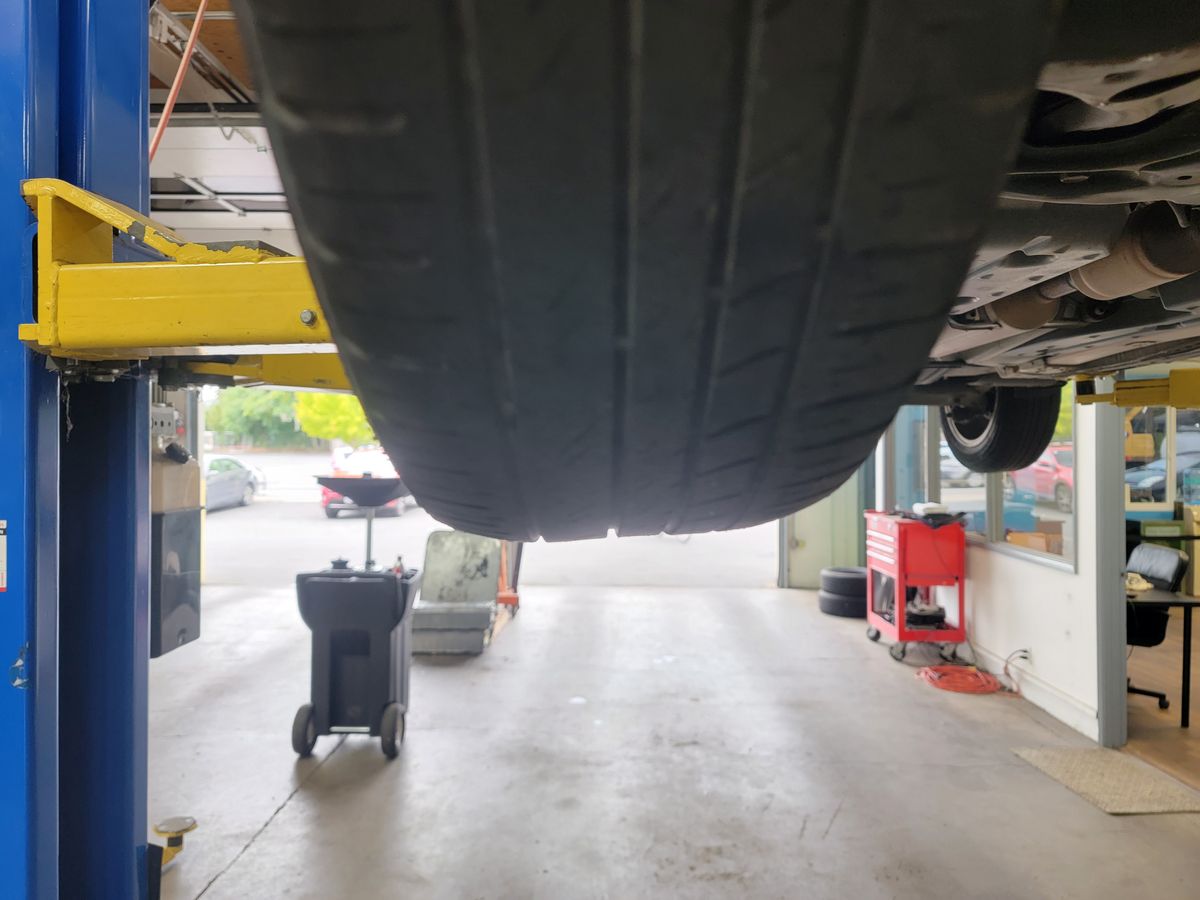
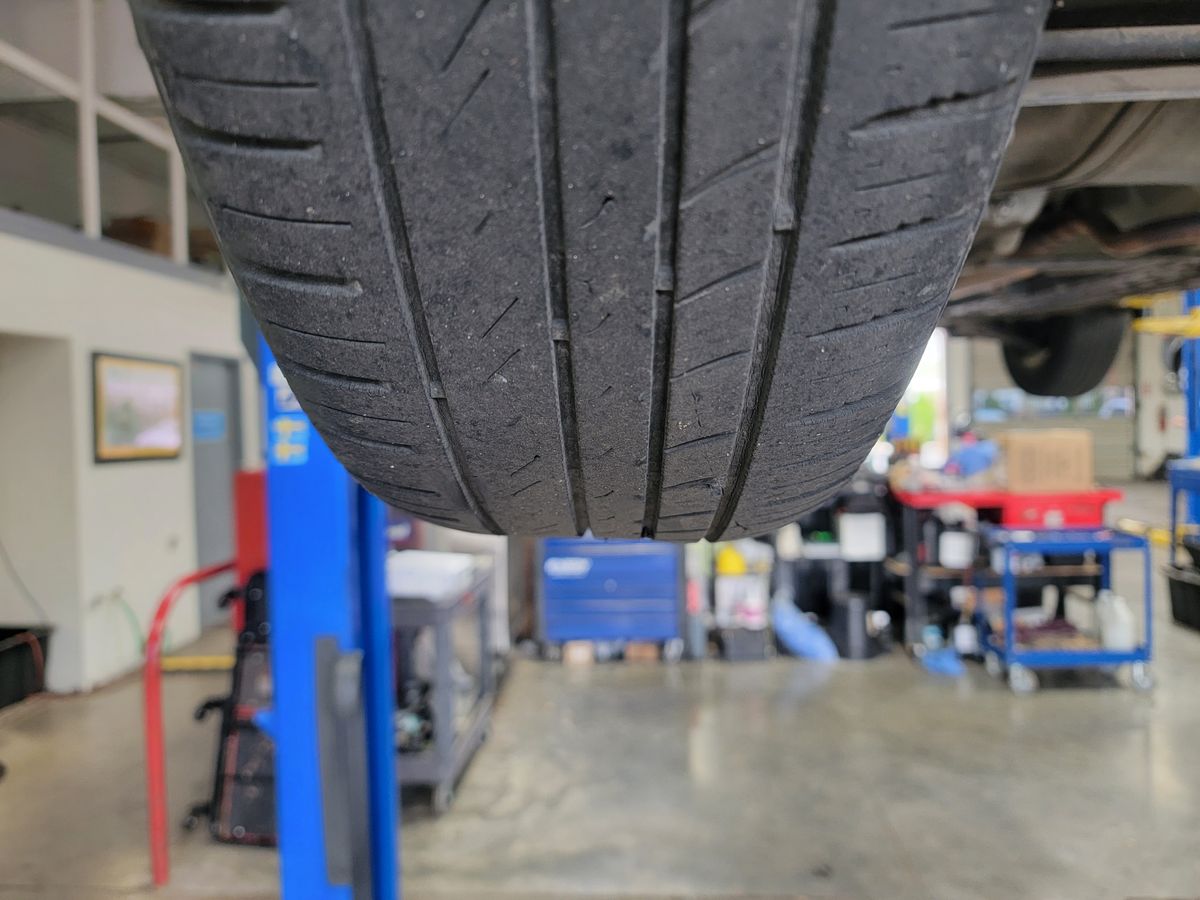
That’s almost certainly the original pull the owner came in with, and tires in that shape usually mean the car took a hit somewhere in its past. Our recommendation was four new tires and then an alignment — the same alignment the first shop had reached for, except now it would actually hold, because the parts underneath were finally telling the truth.
Frequently asked questions
Does U0293 mean my Prius needs a new hybrid battery?
Not on its own. U0293 means a module lost communication with the hybrid vehicle control system. A dying hybrid battery can cause it, but so can a dead 12-volt battery, corroded connectors, or — as on this car — a bad part sitting on the communication network. The code tells you where to look, not what to replace. Confirm the cause before spending hybrid-battery money.
Can a steering angle sensor really stop a Prius from starting?
A correct, working one won’t. But a wrong or failed sensor on the vehicle’s network can disrupt communication between modules, and on a hybrid that can cascade into no-start and a wall of hybrid system codes. Unplugging the suspect part and watching the codes clear is how you prove it.
Why did a used part cause so many problems?
Used electronics are a gamble. If the part is the wrong revision or has an internal fault, it can talk on the network incorrectly and confuse everything else connected to it. The failure doesn’t look like “bad sensor” — it looks like whatever module gives up communicating first, which is why this one masqueraded as a hybrid battery.
Should a steering angle sensor be replaced to fix a pull or an alignment problem?
No. A pull is mechanical — tires, alignment, worn suspension parts, or accident damage. The steering angle sensor reports wheel position to the stability control system; it doesn’t steer the car or set toe and camber. Replacing it to chase a pull treats the wrong system.
My Prius hybrid battery is original and over ten years old. Should I replace it before it fails?
It’s worth planning for. Gen 2 Prius packs commonly last around ten years, and this one was sixteen. If your pack is original and well past that window, budgeting for a replacement — ideally before it leaves you stranded — is reasonable. That’s a different decision than replacing it because a scan tool can’t reach it, which is what was happening here.
What is the linear solenoid valve calibration (C1345) about?
C1345 means the offset learning for the linear solenoid valve was lost, which happens when the system loses power or communication. It’s a calibration we perform with the scan tool after the underlying fault is fixed, not a part you throw at the problem.
Scan reports from this visit
Got a Prius with a hybrid warning light or a no-start nobody can pin down? Book online or text us at 503-969-3134.
Related reading
- Toyota Hybrid Trouble Codes: The Full Guide
- Why Check Hybrid System Doesn’t Always Mean You Need a Hybrid Battery
- Prius water pump code wouldn’t clear: the other shop replaced the part but missed the wire
- 2016 Prius “Head Gasket” That Two Shops Couldn’t Fix Was Really a Warrantied Catalytic Converter
- 2011 Prius Won’t Detect the Key Fob: Two Shops, Two Locksmiths, and the Real Fix
Questions about your car? Text us at 503-969-3134 — it’s the fastest way to reach us.
About the author: Travis Decker is the owner of Atomic Auto in Portland, Oregon, and an ASE Master Technician (L1, L3). Atomic Auto specializes in Toyota, hybrid, and EV service.