

2006 Toyota Prius P0A80 P3000 Warning Lights Fixed
Short version: A donated 2006 Prius came in with warning lights and nine fault codes, including P0A80 and P3000. The codes clustered into three separate problems: a failed battery block inside the high-voltage pack, a stuck three-way valve in the hybrid cooling circuit, and a weak 12-volt battery. All three were repaired - including a Toyota original-equipment high-voltage battery - and no codes returned on the road test.
| Code | What it means | Most common cause we see | Typical fix |
|---|---|---|---|
P3000 | High-voltage battery malfunction | A failed block inside the high-voltage pack (block 4 on this car) | High-voltage battery pack replacement |
P0A80 | Replace hybrid battery pack | Battery pack performance degraded past Toyota’s acceptable threshold | High-voltage battery pack replacement (Toyota original-equipment unit on this car) |
P3014 | Battery block 4 has become weak | A fully failed battery block | Replacing the entire pack rather than individual blocks |
P1116 | Coolant temperature sensor fault in the coolant heat storage system | A failed three-way valve | Three-way valve replacement |
P1121 | Coolant flow control valve position sensor stuck | A failed three-way valve | Three-way valve replacement |
C1241 | Low or abnormally high 12-volt battery voltage | A weak 12-volt battery | 12-volt battery replacement |
C2318 | Low voltage error, power supply malfunction | A weak 12-volt battery | 12-volt battery replacement |
C1259 | High-voltage system regenerative braking malfunction | Set alongside the high-voltage battery fault | Cleared after the battery repairs; did not return on road test |
C1310 | Malfunction in high-voltage system | Set alongside the high-voltage battery fault | Cleared after the battery repairs; did not return on road test |
What the Driver Noticed
The client had been given this 2006 Prius as a donated vehicle. Warning lights came on in February, and a previous mechanic diagnosed a failing high-voltage battery along with problems in the hybrid cooling system. The quoted repair was $3,200. Before committing to that, the client reached out for a second opinion - specifically wanting to know whether that diagnosis was accurate and whether the repair made financial sense on a donated car with just over 99,000 miles.
What We Found
When the car arrived, our technician confirmed multiple warning lights were active and pulled nine fault codes from the car’s diagnostic system:
- P3000 - High-voltage battery malfunction
- P0A80 - Replace hybrid battery pack
- P3014 - Battery block 4 has become weak
- P1116 - Coolant temperature sensor fault in the coolant heat storage system
- P1121 - Coolant flow control valve position sensor stuck
- C1241 - Low or abnormally high 12-volt battery voltage
- C1259 - High-voltage system regenerative braking malfunction
- C1310 - Malfunction in high-voltage system
- C2318 - Low voltage error, power supply malfunction
That’s a long list, but the codes cluster into three separate problems rather than pointing to one catastrophic failure.
The Diagnosis
Our technician worked through the code groups systematically.
The two voltage-related codes - C1241 and C2318 - pointed to the 12-volt battery, not the high-voltage pack. The 12-volt battery in a Prius powers the car’s control systems and communication networks. When it’s weak, it can trigger a cascade of seemingly unrelated warnings, including some that look like high-voltage system faults. Replacing the high-voltage battery without addressing a failing 12-volt battery first is a common and expensive mistake.
The P1116 and P1121 codes pointed to the three-way valve - a component in the hybrid cooling circuit that controls coolant flow between the engine and the heat storage system. The position sensor on that valve was reading as stuck, which is consistent with a failed valve rather than a wiring or sensor issue in isolation.
The remaining codes - P3000, P0A80, and P3014 - did confirm a genuine high-voltage battery problem. Specifically, block 4 inside the battery pack had failed. The previous shop’s call on the battery was correct. But the three-way valve fault and the 12-volt battery failure were separate issues that also needed to be addressed.
The Fix
Three repairs were completed:
1. The 12-volt battery was replaced.
2. The three-way valve was replaced.
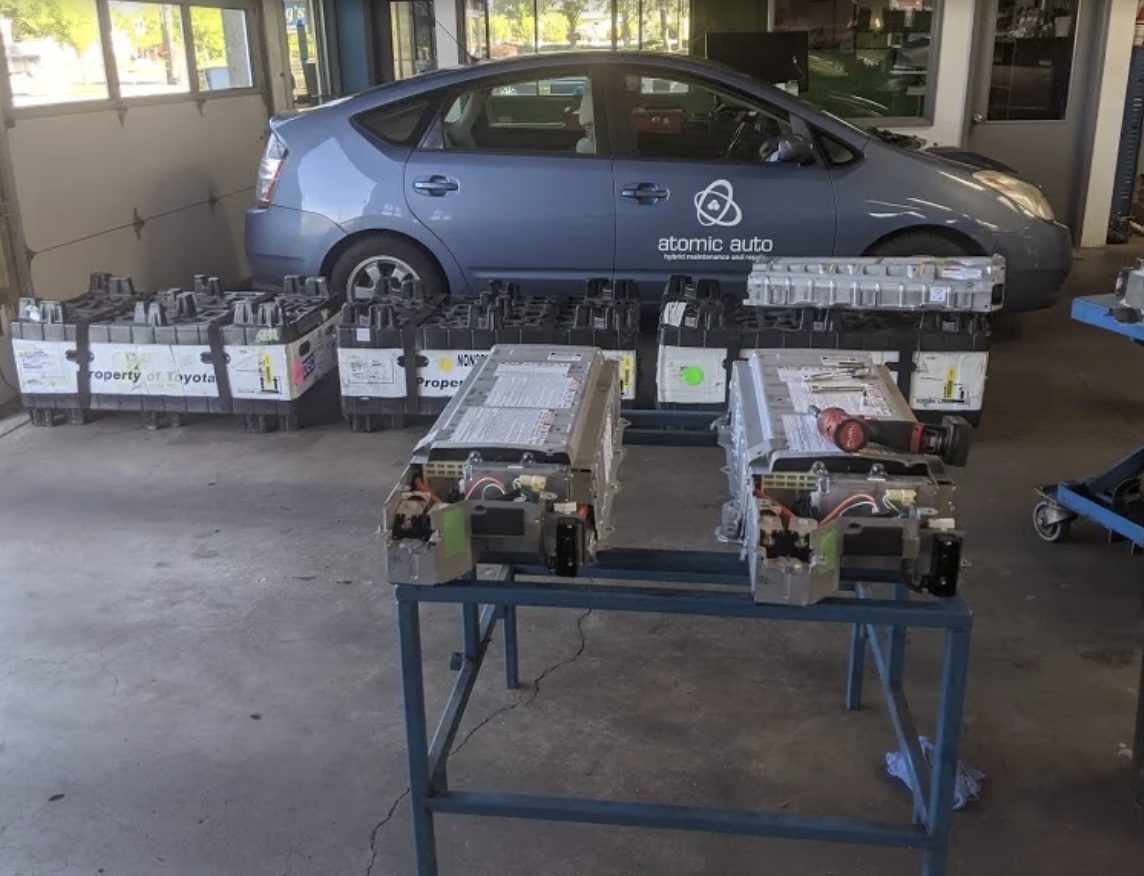
3. The high-voltage battery pack was replaced with a Toyota original-equipment unit. All battery modules were replaced as part of that service.
After all three repairs, the technician cleared the stored fault codes and performed a road test. No codes returned.
What This Means for Your Car
A donated Prius with 99,000 miles and a failed battery block is not automatically a lost cause. The high-voltage battery was genuinely worn out - block 4 had failed, which is a clear indicator the pack had reached the end of its service life. But the three-way valve and the 12-volt battery were separate failures running alongside it, not symptoms of it.
Replacing only the high-voltage pack, as the original quote addressed, would have left two other active faults in place. The 12-volt battery in particular can cause enough electrical noise to make a freshly replaced high-voltage system appear to malfunction.
With all three issues resolved and no codes returning on road test, this Prius is back in working order. At just over 99,000 miles with original-equipment replacement parts, it has a reasonable amount of life left - provided the rest of the car is maintained.
Frequently Asked Questions
Does P0A80 always mean I need a new hybrid battery?
Not always - but on a high-mileage second-generation Prius where an individual battery block has failed (as code P3014 indicates), it usually does. P0A80 is the car’s way of saying the battery pack performance has degraded past Toyota’s acceptable threshold. If only one or two blocks are weak, some shops will replace those blocks individually. When a block has fully failed, replacing the entire pack is the more reliable path.
Why did my Prius throw so many codes at once?
A failing 12-volt battery can trigger a wave of fault codes that look like high-voltage system problems. The car’s control systems depend on stable 12-volt power to communicate, so when that voltage drops or fluctuates, multiple unrelated-looking codes can set simultaneously. On this Prius, two of the nine codes were caused entirely by the 12-volt battery and cleared once it was replaced.
What is the three-way valve on a Prius and why does it matter?
The three-way valve controls how coolant moves between the engine and the heat storage system - a component that helps the Prius warm up faster in cold weather by storing hot coolant from a previous trip. When the valve sticks or its position sensor fails, the car logs coolant system codes (P1116 and P1121 on this vehicle) and the thermal management system can’t operate as designed. It doesn’t immediately destroy the engine, but it’s a real fault that needs repair.
Is a 2006 Prius worth repairing if the hybrid battery has failed?
It depends on the rest of the car’s condition and how it’s being used. At roughly 99,000 miles, a second-generation Prius with a fresh original-equipment high-voltage battery, a new 12-volt battery, and a replaced three-way valve is mechanically in reasonable shape. The repair cost is significant, but a well-maintained Prius at that mileage still has meaningful service life ahead of it. A donated vehicle complicates the math - there’s no purchase cost to recoup, but there’s also no ownership history to rely on.
Can I drive a Prius with the hybrid battery warning light on?
Briefly, maybe - but it’s not advisable. When the high-voltage battery is degraded enough to set P0A80 or P3000, the car is running in a reduced or compromised mode. Regenerative braking may not function correctly (as the C1259 code on this car indicated), which affects both efficiency and the car’s ability to capture energy on deceleration. Continuing to drive can also accelerate damage to other components in the high-voltage system.
Why does the 12-volt battery matter in a hybrid if there’s already a big battery pack?
The high-voltage battery pack powers the electric motor and assists the gas engine. The 12-volt battery does a completely different job - it powers the car’s control modules, communication networks, and accessories. The two systems don’t substitute for each other. A dead or failing 12-volt battery can prevent the high-voltage system from initializing at all, and can cause enough electrical interference to make a healthy high-voltage system appear to have faults.
Scan Reports from This Visit
Related reading
- P0A80 - Replace Hybrid Battery Pack - our general
P0A80explainer. - Toyota Camry Hybrid P0A80 Code Explained - the same code on the Camry Hybrid platform.
- Toyota Hybrid Trouble Codes - our index of the hybrid trouble codes we cover.
- Why Your Prius or Toyota Hybrid Won’t Start: The 12V Battery Explained - more on the 12-volt battery’s role in a hybrid.
Questions about your car? Text us at 503-969-3134 - it’s the fastest way to reach us.
About the author: Travis Decker is the owner of Atomic Auto in Portland, Oregon, and an ASE Master Technician (L1, L3). Atomic Auto specializes in Toyota, hybrid, and EV service.
General information from the cars that come through our bays. Yours is its own case, and we would rather test it than guess.
Keep reading
More in trouble codes and warning lights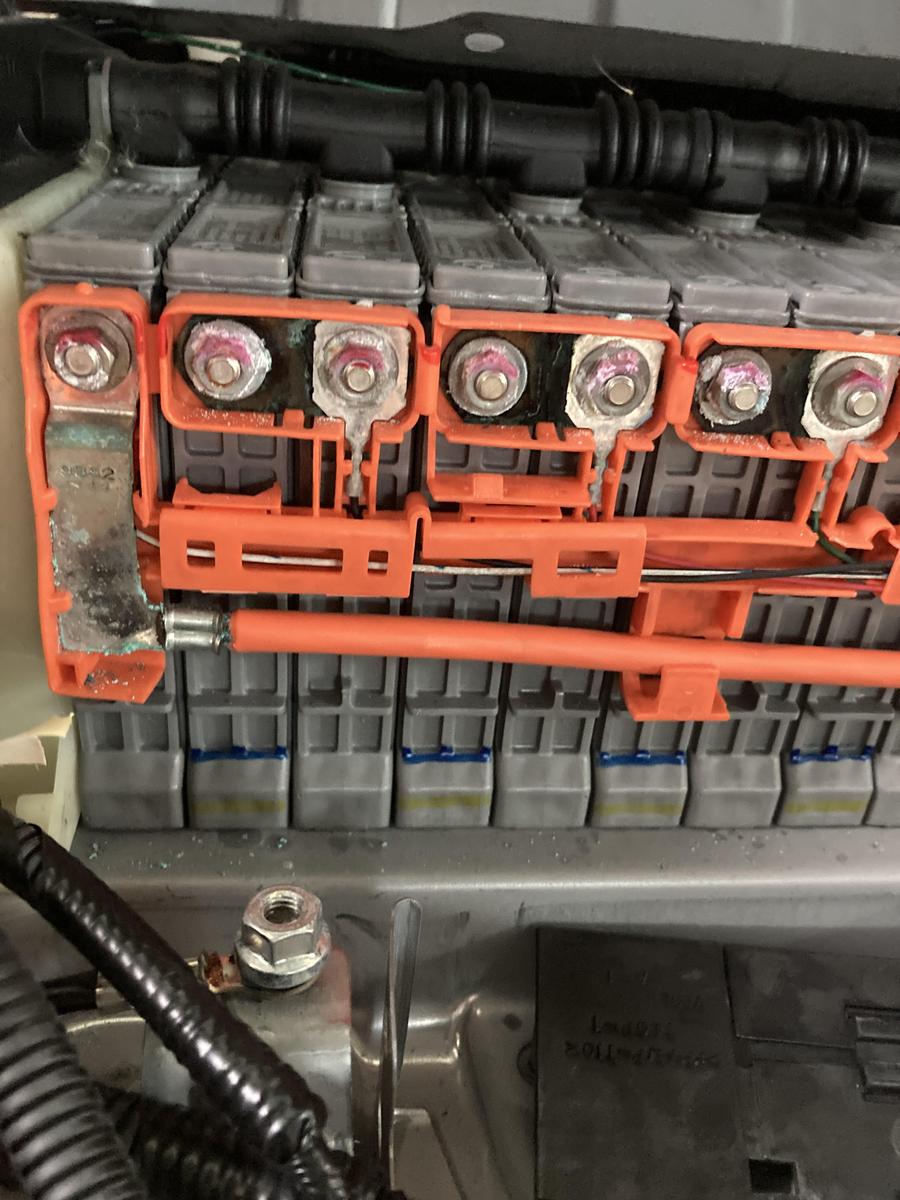

Text us, or book a slot.
A text with a photo of the dash gets you an answer fastest. Booking online holds a day and a time.