
Short version: The message “Cooling performance of the hybrid battery is low” on a 2010–2015 (Gen 3) Toyota Prius means the hybrid battery isn’t staying cool enough. On the cars we see, the most common cause by far isn’t bad cells — it’s a clogged battery cooling fan or blocked intake. The Prius pulls cabin air through a vent behind the rear seat to cool the battery, and that vent collects dust, pet hair, and sometimes rodent nests. Clean the fan and intake and the message usually clears. It’s worth ruling that out before anyone sells you a battery.
What the message actually says
Toyota words this warning a few different ways, and people search all of them:
- “Cooling performance of the hybrid battery is low”
- “Cooling performance of the hybrid battery is low. Consult your Toyota dealer.”
- “Cooling performance of the hybrid battery is low. Visit your dealer.”
- “Maintenance required for traction battery cooling parts”
- “Battery maintenance required, cooling parts available at dealer”
They all point at the same thing: the hybrid battery’s cooling system isn’t moving enough air to keep the pack in its normal temperature range. The message tells you to see a dealer, but this is a repair any competent hybrid shop can diagnose — and often the fix is a cleaning, not a part.
How the Gen 3 Prius cools its battery
The high-voltage battery sits behind the rear seat, and it’s air-cooled. A small electric fan draws air from inside the cabin through an intake vent (behind or beside the rear seat) and pushes it across the battery modules to carry heat away. That intake is a magnet for whatever is floating around your cabin: dust, hair, food crumbs, and — this being Portland — the occasional mouse nest. When the intake or the fan clogs, airflow drops, the pack runs hot, and the car sets the cooling-performance message.
The most common cause: a clogged fan and intake
This is the one to check first, because it’s common and it’s cheap. We pull the lower rear-seat trim, get to the battery fan and its inlet, and very often find the screen nearly covered in debris. We’ve opened intakes packed with dust and pet hair, and more than once found evidence of rodents right next to the fan. The cure is straightforward: clean the fan and the inlet ducting, vacuum out the debris, and add an inlet filter screen so it doesn’t clog as fast next time. The fan itself is usually fine once it can breathe.
The other causes, and why testing matters
A clogged intake is the usual suspect, but it isn’t the only one. The message can also come from:
- A failing cooling fan — the motor itself worn out or seized.
- Genuinely bad cells generating more heat than the system can shed.
- Blocked airflow from an improper battery installation — which brings us to a real example.
A real example: the warning that came back after a battery replacement
A 2014 Prius came to us at about 167,000 miles. The owner had been chasing this warning for a while, and a previous shop had already replaced the hybrid battery. The warning came back anyway.
When our tech pulled the pack, it was warm to the touch — which it shouldn’t be if the cooling system is working. The reason: the replacement battery had been installed with the end plates backwards.
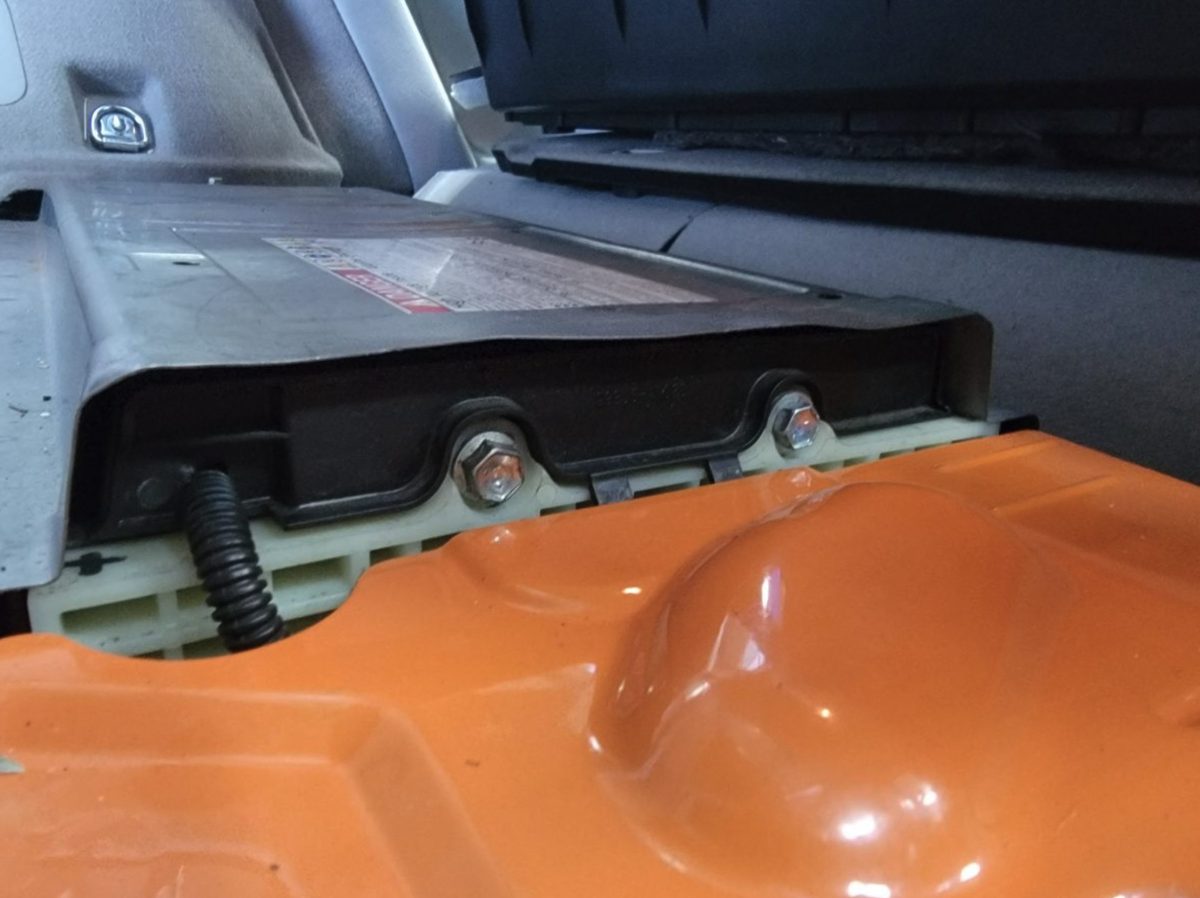
Those end plates aren’t just structural — they direct airflow through the pack, inlet on one side and exhaust on the other. Installed backwards, they block the airflow path completely. The cooling fan was running fine; it just had nowhere to push air. The battery wasn’t failing because of bad cells. It was overheating because it couldn’t breathe.
While we were in there we also found corrosion on connections throughout the pack, several connections over-torqued enough to cause problems, and no filter on the cooling fan inlet.
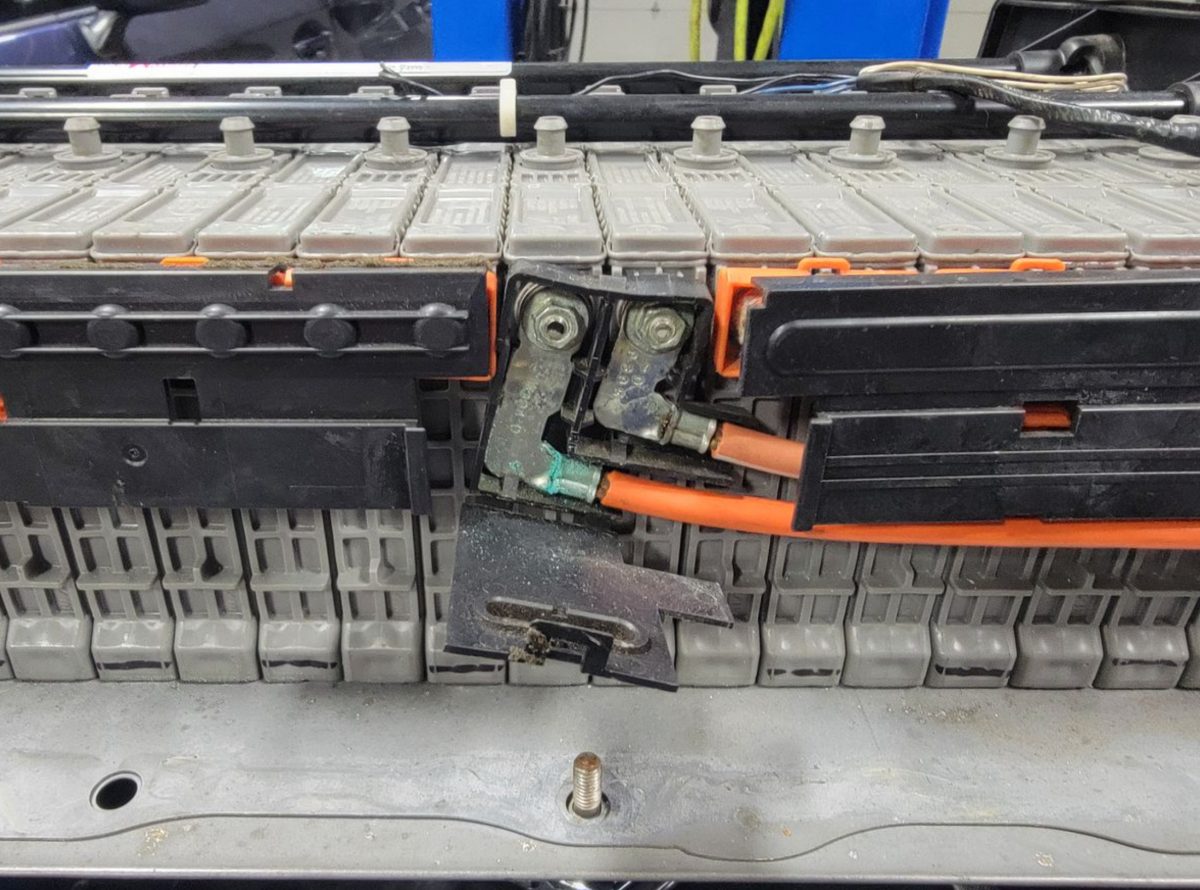
We replaced the battery with a Toyota OEM unit, cleaned out the cooling fan, and installed an inlet filter screen. While the interior was apart we also knocked out some overdue maintenance: the electric water pump, PCV valve, 12V battery, and a throttle-body cleaning.
Is it safe to drive?
You can usually drive a short distance, but don’t ignore it. A battery that keeps running hot ages faster and can eventually drop into reduced power or set harder faults. If the message is on, get the cooling system checked before you rack up more miles — especially in hot weather, when the pack has the least margin.
How we diagnose it
We start where the money is: pull the rear-seat trim and inspect the battery fan and intake for debris, because that’s the most common and least expensive cause. If the airflow path is clear, we test the fan, read the battery module temperatures and voltages to see whether cells are actually failing, and confirm the pack was installed correctly. The point is to find the real cause before replacing anything — not to sell a battery and hope the message stays gone.
From the shop floor: When someone comes in convinced this message means a new battery, the first thing we do is look at the fan intake. A surprising number of these are solved with a vacuum and a filter screen. And if a battery was recently replaced and the message came back, we’re looking hard at the installation before we blame the cells — we’ve seen packs put in backwards, over-torqued, and corroded. Test first. Replace second.
Why we only install new OEM batteries
When the battery really is the problem, we install a new Toyota OEM pack (4-year/48,000-mile warranty) rather than a rebuilt one. This job is a good example of why. We’ve seen too many rebuilt batteries come back — cells that test fine on a bench but fail under real driving, packs with no meaningful warranty, and installations where the “savings” from a cheaper battery turned into a second repair bill. This customer’s previous battery was someone else’s attempt to save money, and they ended up paying twice. Buy once, cry once: a new pack with a real warranty costs more upfront, but you’re not doing it again in two years.
Frequently Asked Questions
What does “Cooling performance of the hybrid battery is low” mean on a Prius?
It means the hybrid battery isn’t being cooled well enough to stay in its normal temperature range. On a Gen 3 Prius the battery is air-cooled by a fan that pulls cabin air through an intake behind the rear seat, and the most common reason for this message is that the fan or intake is clogged with dust, pet hair, or debris. It can also be a failing fan, genuinely bad cells, or airflow blocked by an incorrect battery installation.
The message says to consult or visit my Toyota dealer — do I have to?
No. The message tells you to see a dealer, but any experienced hybrid shop can diagnose it, and the fix is frequently a cleaning rather than a part. We check the battery cooling fan and intake first, because that’s the most common and least expensive cause, before considering anything more involved.
Does this warning mean my hybrid battery is bad?
Not necessarily. “Cooling performance low” is about the battery’s temperature, not automatically its cells. Many of these are solved by cleaning a clogged fan and intake and adding a filter screen. Proper testing tells you whether the cells are actually failing or whether the pack simply couldn’t breathe — don’t replace the battery until that’s confirmed.
Can the message come back after a hybrid battery replacement?
Yes. If the replacement pack was installed with the airflow end plates reversed, the air path through the battery is blocked and it overheats even though the fan runs normally. We’ve also seen it return because the intake was never cleaned or no inlet filter was installed. If your warning came back after a battery job, the installation is the first thing to check.
How do I clean the Prius hybrid battery cooling fan?
Access is behind the lower rear-seat trim, where the fan and its inlet duct sit. The intake screen and ducting get vacuumed out, the fan is cleaned, and an inlet filter screen can be added to slow future clogging. It’s a manageable job for a hybrid shop; if you’re not comfortable removing interior trim and working near the high-voltage battery, have it done professionally.
Why does Atomic Auto install new OEM Toyota batteries instead of rebuilt ones?
Rebuilt batteries mix used cells of varying age and health, and even cells that test fine on a bench can degrade at different rates under real driving. We’ve had too many come back, sometimes within months. A new Toyota OEM battery comes with a 4-year/48,000-mile warranty and is built to last, so you’re not paying for the same repair twice.
Related reading
- Why “Check Hybrid System” Doesn’t Always Mean You Need a Hybrid Battery
- Do I actually need a hybrid battery replacement?
- The Truth About Hybrid & EV Battery Testing
- How We Diagnose Toyota Hybrid Problems: The 6-Step Process
- Mice in Your Toyota! Prevention, Detection, and Solutions
Prius showing “cooling performance of the hybrid battery is low”? Book online or text us at 503-969-3134 and we’ll check the fan before anyone talks about a battery.
Questions about your car? Text us at 503-969-3134 — it’s the fastest way to reach us.
About the author: Travis Decker is the owner of Atomic Auto in Portland, Oregon, and an ASE Master Technician (L1, L3). Atomic Auto specializes in Toyota, hybrid, and EV service.