
Short version: Your hybrid or EV already tests its own battery — the Battery Management System monitors it every second the car is on and will set a warning light if a cell is actually failing. Third-party “battery health” apps can’t do a true load test, so their percentages are guesses; one popular app rated a brand new Toyota battery at 63%. In fact, no test — not even Toyota’s own dealership scan tool — can predict remaining pack life; every test available today confirms present function only. We won’t charge you for a battery health certificate we wouldn’t trust ourselves.
A Guide from the Experts at Atomic Auto
At Atomic Auto, our reputation is built on trust. We believe that if we can’t scientifically validate a test, we shouldn’t charge you for it.
Lately, many of our clients have asked about third-party “battery health” apps and tools. While these tools are popular, they often provide a misleading sense of security. Here is the scientific reality of how battery testing actually works—and why we choose to be honest about the limitations of current technology.
1. Your Car is Already Testing Itself
Every modern hybrid and electric vehicle (EV) is equipped with a sophisticated Battery Management System (BMS). This is a dedicated computer that monitors your battery every second the car is “ON.”
- Continuous Monitoring: The BMS tracks voltage, temperature, and “Coulomb counting” (measuring exactly how much energy goes in and out).
- Self-Diagnostics: If a cell starts to fail or internal resistance becomes too high, the car’s own computer will trigger a warning light (like the “Triangle of Death” in a Prius).
- The Reality: The car is usually much better at detecting its own health than an external app. If the car says it’s fine and is performing as expected, a “98% Health” reading from an app doesn’t actually tell you when the battery will fail.
2. Why Third-Party Apps Are Often Inaccurate
You may have heard of apps like Dr. Prius or services from companies like Recurrent or Vsnew. While these can provide interesting “snapshots” of data, they have significant flaws:
- No Load Testing: To truly know a battery’s health, you must “stress” it. Most apps just look at static data (voltage at rest). This is like checking an athlete’s health by measuring their heart rate while they sit on a couch—it doesn’t tell you how they’ll perform in a marathon. (Dr. Prius does sell test modes that apply load — we cover those in section 4, because they have problems of their own.)
- The “Snake Oil” Factor: Some software in this space has been linked to aftermarket battery manufacturers who have faced massive warranty and safety issues (including fires). At Atomic Auto, we do not trust data from sources that prioritize marketing over battery science.
- Guesswork vs. Science: Many “State of Health” percentages are proprietary guesses. One tool might say 90% while another says 40%. Without a standardized, scientific load test, these numbers are essentially meaningless for predicting remaining life. We used the most common app to test a brand new Toyota battery in one of our cars and it said 63%!
3. The “Gold Standard” (and why it’s rare)
The only way to truly measure a battery’s capacity is a full discharge/charge cycle under load. * The Tesla Method: On a Tesla, this is an overnight process where the car uses its own motors to generate heat, rapidly draining the battery to 0% and then charging it back to 100%. This takes 24 hours and specialized equipment.
- The Hybrid Reality: Most hybrids (Toyota, Ford, etc.) are not designed to perform this self-test. To do it manually, we would have to remove the battery and place it on a laboratory-grade load bench—a process that would cost more than most customers want to spend on a “check-up.”
4. No Test Can Predict Remaining Battery Life
Here’s the part most articles won’t say plainly: there is no reliable test — from us, from a dealership, or from an app — that predicts how much life a hybrid battery pack has left. Every tool that exists answers a different question: is the pack working right now? That’s useful. It is not a forecast.
- Toyota’s Own Scan Tool Can’t Predict It Either: Techstream, the dealership-level software we use, can confirm that a used battery is functioning — block voltages balanced, no fault codes, cooling system doing its job. That is a statement about today. It says nothing about next year.
- Delta SOC Is a Lagging Indicator, Not an Early Warning: Delta state of charge measures the spread between the strongest and weakest blocks in the pack. It sounds like a health meter. It isn’t — and that’s not our opinion, it’s how the scan tool is documented to work. On the Gen 1 Prius, the delta SOC parameter starts at 20% by design — differences under 20% are not displayed at all, so a healthy pack reads 20% and the tool physically cannot show you anything smaller. On the Gen 2 Prius and all later Toyota hybrids, delta SOC reads 0% and stays there; in a published trade case study, it only began climbing once the voltage spread between blocks had already reached about 1.4 volts — a pack that was already failing. By the time delta SOC shows movement, the pack isn’t at risk of failing — it is failing. That’s the documented behavior of the parameter, and it matches what we see in the field: delta SOC confirms a failure. It does not warn of one.
- Resting Voltage Can’t Do It Either: The nickel metal hydride chemistry in most Toyota hybrids has a property called voltage hysteresis, documented in battery research going back to GM’s hybrid program: the voltage a resting NiMH cell shows depends on its recent charge and discharge history, not just its state of charge. The same voltage reading can correspond to a wide range of actual charge states. Any tool that reads voltage at rest — which is what most plug-in readers and app snapshots do — is building a “health” number on a measurement that fundamentally can’t support it.
- What About Dr. Prius’s Load Tests? Credit where it’s due: the app’s paid test modes do put the battery under load, which is more than most tools attempt. The “Life Expectancy Test” force-charges the pack with the engine, then times a partial discharge — roughly the 80% to 40% band — under accessory load in your driveway; the “Full Battery Test” watches voltage behavior during hard acceleration and regeneration on the road. But a few minutes of partial discharge under uncontrolled conditions is not a bench capacity cycle. The engine kicks in mid-test — the developer’s own FAQ acknowledges the algorithm has to compensate for it — readings move with temperature and state of charge, and owner forums recommend repeat runs precisely because the same pack scores differently run to run. The scoring algorithm is proprietary and unpublished, and we’re not aware of any independent validation of it against bench capacity testing. Most fundamentally, even a perfect capacity snapshot is not a lifespan forecast: in published NiMH cycling data, capacity fade and internal-resistance rise happen on different timelines (capacity fades from around 300 cycles; resistance climbs rapidly only after about 700), and the failure that actually strands a pack is usually one weak block giving up, not a smooth slide to empty. As one long-time Prius forum contributor put it: “Battery capacity is not the same as battery lifetime.”
- No App Percentage Has Ever Been Validated: The OBD-II standard defines no state-of-health parameter for hybrid and EV traction batteries, so every percentage an app shows you is that developer’s proprietary computation. Where researchers have checked such numbers against reality, the results are not encouraging: a 2026 fleet study of roughly 1,100 electric vehicles found that BMS-reported state of health barely correlated with independently measured capacity, and vehicles reporting 95%-or-better health actually spanned 71% to 142% of their nominal capacity. Those were lithium-ion EVs with far richer battery data than a NiMH hybrid exposes — and the health number was still noise.
So when someone offers to test a used hybrid’s battery and tell you how long it will last, they are selling confidence, not measurement. What an honest inspection can tell you: whether the pack is working today, whether there are warning lights or stored codes, whether the cooling system is intact — and, from experience with that generation and chemistry, what the realistic failure patterns look like. That last part is judgment, not a number, and it’s exactly what a pre-purchase inspection at a hybrid specialist is for.
5. Our Stance: We Won’t Charge for “Feel Good” Data
We have tested the tools from Autel, Dr. Prius, and others. Because they cannot perform a true load test, we find them scientifically insufficient to provide a guarantee of your battery’s future.
What we recommend instead:
- Don’t overestimate the significance of a MPG decrease: These systems in cars are not as accurate as people think, and most mileage complaints are caused by cold temperatures, low air in tires, or winter blend fuel
- Listen to the Car: If the BMS detects an issue, we have the OEM-level diagnostic tools to tell you exactly which cell is failing and why.
- Trust Experience: We see these cars every day. We know the failure patterns of different generations and chemistries better than any generic algorithm.
- Be Prudent: All batteries have a lifespan. This varies with use, battery chemistry (Nickel Metal Hydride vs Lithium etc) and they will all die eventually. We recommend mentally setting aside some money so that if it fails, you are prepared and have thought about it.
Atomic Auto’s Promise: We will never charge you for a “Battery Health Certificate” that we wouldn’t trust ourselves. If we tell you your battery is healthy, it’s because the science backs it up—not because an app gave us a pretty number.
Frequently Asked Questions
Can apps accurately test hybrid battery health?
No — not with any scientific confidence. Free app readouts are static data — no load on the battery — and while Dr. Prius sells load-test modes, the scoring algorithm is proprietary, results shift with temperature and state of charge, and no independent validation against bench capacity testing exists that we’re aware of. “State of Health” percentages are proprietary guesses: one tool might say 90% while another says 40%. We used the most common app to test a brand new Toyota battery in one of our cars and it said 63%. That is why we find these tools scientifically insufficient to predict when a battery will fail.
What is the best way to test a hybrid battery?
The only way to truly measure a battery’s capacity is a full discharge/charge cycle under load — professional capacity testing. On most hybrids that means removing the battery and placing it on a laboratory-grade load bench, which costs more than most customers want to spend on a check-up. In practice, the best approach is to listen to the car’s own Battery Management System: if it detects an issue, OEM-level diagnostic tools can tell you exactly which cell is failing and why.
Can any test predict how long my hybrid battery will last?
No. Techstream — Toyota’s own dealership-level scan tool — can confirm a used battery is functioning today, but it cannot forecast remaining life. Delta SOC, the metric most often treated as a health check, is a lagging indicator — Toyota’s scan tool documentation shows it reveals nothing until the pack is already failing. The honest pre-purchase check is whether the car has warning lights or fault codes today, how it performs on a drive, and budgeting for eventual pack replacement.
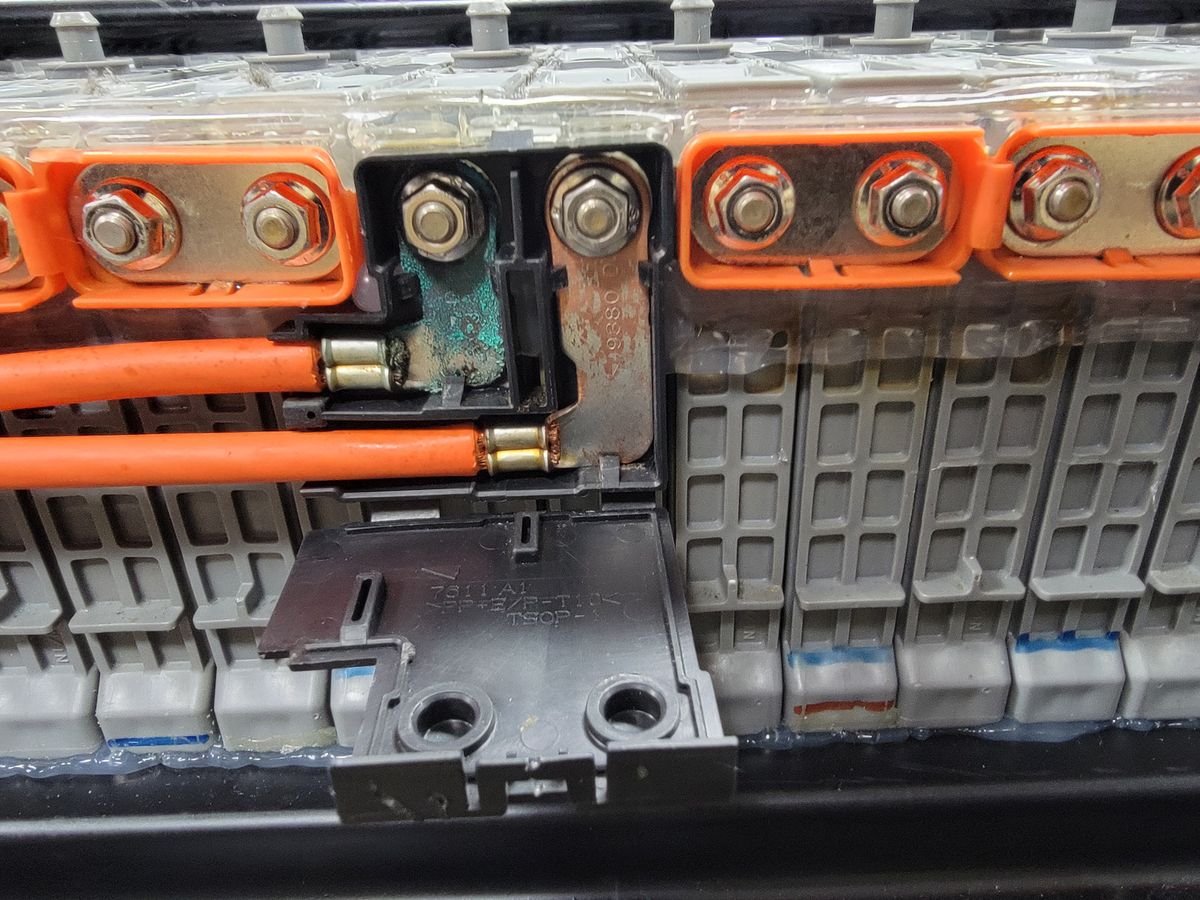
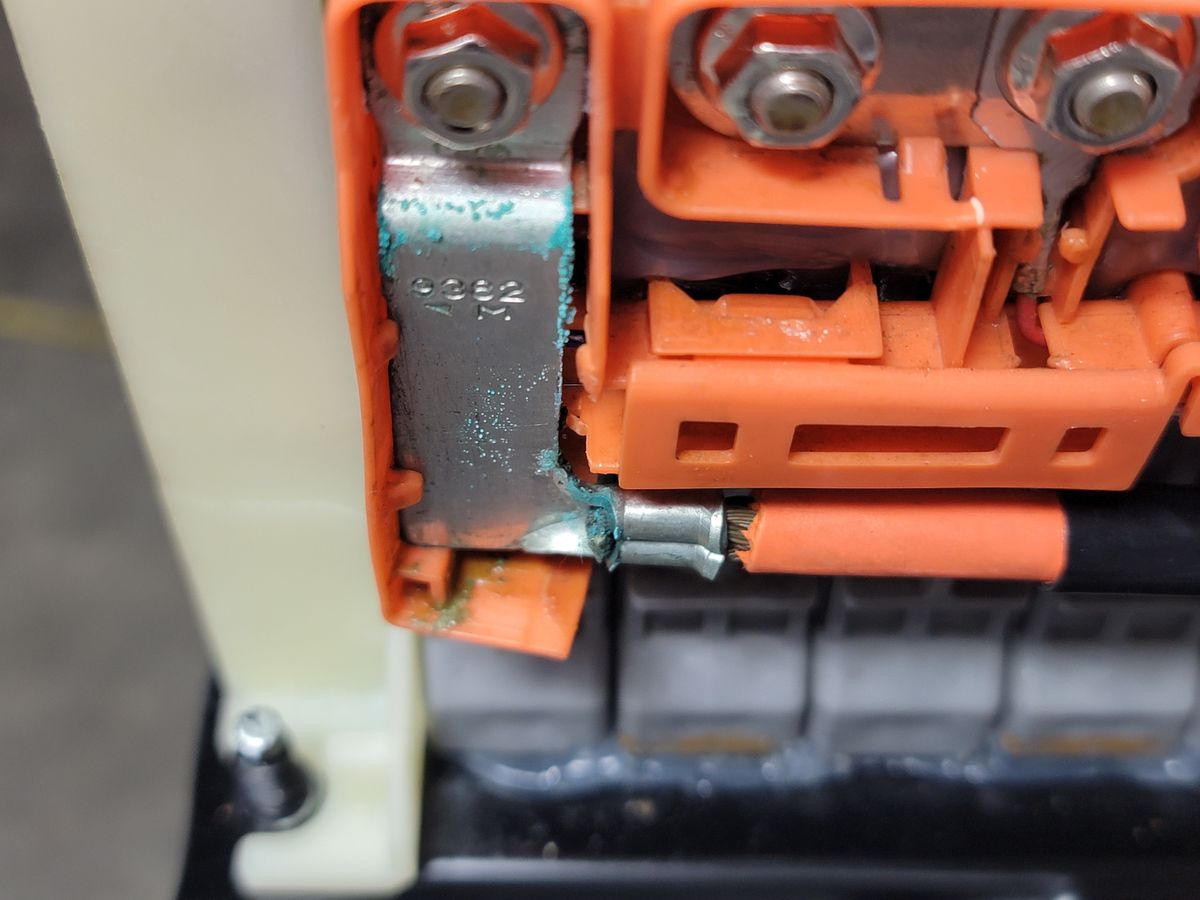
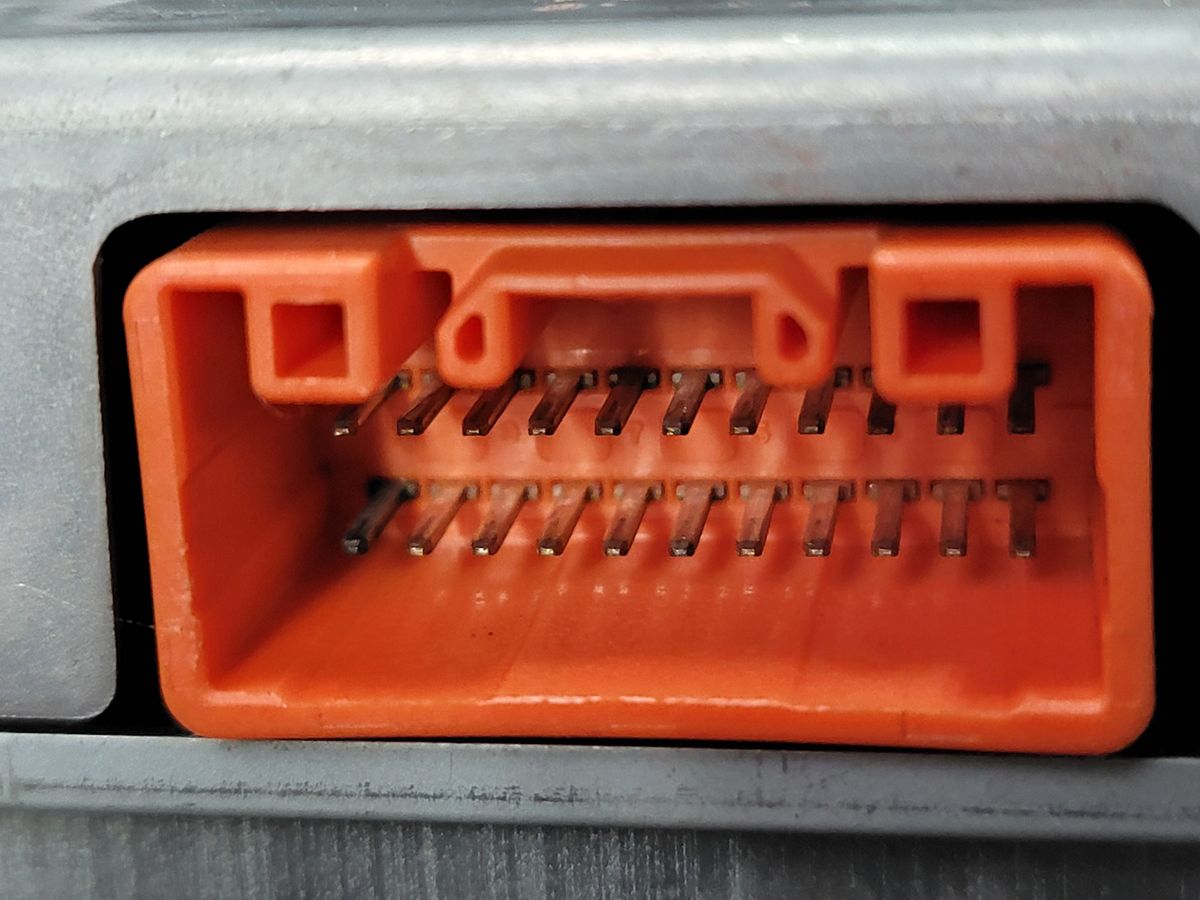
Photos from our shop
Sources
- AutomotiveTechInfo — “Have You Mastered P3006 Diagnosis on the Gen 1 Prius?” (delta SOC PID documentation)
- AutomotiveTechInfo — “Diagnosing Prius Hybrid Battery Pack: Sometimes They Come Back” (2022)
- Verbrugge & Tate, Journal of Power Sources 126 (2004) — NiMH state-of-charge hysteresis
- Fleet study (2026, preprint) — BMS-reported state of health vs. measured capacity in ~1,100 EVs
- Dr. Prius developer FAQ — test procedure and engine kick-in compensation
- Battery University BU-208 — NiMH cycling: capacity fade vs. internal-resistance rise timelines
- PriusChat — “How accurate is the Dr. Prius app?” (owner-reported methodology and limits)
Related reading
- The 2004-2009 Prius Triangle of Death
- Do I Actually Need a Hybrid Battery Replacement?
- Why Check Hybrid System Doesn’t Always Mean You Need a Battery
- Gen 3 Prius HV Battery: Why “Cooling Performance Low” Doesn’t Always Mean What You Might Think
- Is My Prius Battery the Original or Replaced?
Questions about your car? Text us at 503-969-3134 — it’s the fastest way to reach us.
About the author: Travis Decker is the owner of Atomic Auto in Portland, Oregon, and an ASE Master Technician (L1, L3). Atomic Auto specializes in Toyota, hybrid, and EV service.