
Short version: On an older Prius, you can often get a quick hint about whether the hybrid battery is the one the car left the factory with — just by looking at the top of the pack. An original pack usually shows one prominent white label. A pack that’s been replaced often shows multiple labels, and some replacement packs even have a colored case. It takes under a minute and no tools. But it’s a clue, not proof — labels and covers can be reused or swapped, so treat it as a starting point, not a final answer.
Applies to the Gen 1 (2001–2003) and Gen 2 (2004–2009) Toyota Prius with NiMH battery packs.
How can I tell if my Prius hybrid battery has been replaced — or how old it is?
Most people asking this are either shopping for a used Prius or wondering how much life is left in the one they own. There’s no single stamp that spells it out, but you can get a strong read in a few minutes without any tools. Four things tell the story: the labels on top of the pack (a quick visual clue), whether the case is a non-factory color (a sign of an aftermarket or remanufactured pack), the Toyota service history by VIN, and a physical inspection for a firm answer. We’ll walk through each below — start with the quick look.
The quick clue
Here’s the pattern we see in our shop on Gen 1 and Gen 2 Prius NiMH batteries:
- One large white label on the metal top cover — often the original factory pack.
- Multiple labels across the top cover — often a newer replacement pack. That could be a Toyota dealer battery, or a pack an independent shop (like us, or Dave’s Performance Hybrids) installed using genuine OEM parts. Shops usually add their own sticker when they do the work, which is part of why replaced packs tend to carry more labels.
- A colored case — a distinctive orange case is a Dorman pack, and a green case is a Green Bean pack (more on that below).
Why only a clue? Because the outer metal cover can be reused. During a battery job, an installer can keep the old top cover and put it on a different pack, or move labels around. We’ve also seen a “lots of stickers” cover on a battery that turned out to be bad. So the label pattern points you in a direction — it doesn’t close the case.
How to check it yourself (no tools, about a minute)
You can look at the top of your own hybrid battery. It lives behind the rear seat, under the cargo area. Here’s how to see it — and we’d encourage you to, because knowing your own car is a good thing.
Gen 1 Prius (2001–2003): There’s no panel on top of the battery — just carpet. Fold or pull back the cargo-area carpet behind the rear seat and you’ll see the top of the metal battery case.
Gen 2 Prius (2004–2009): There’s a trim panel over the battery, but it isn’t bolted down — it’s clipped in and lifts up by hand. Lift it and you’ll see the top cover.
Look, don’t touch. This part matters:
- Move only the carpet or the clipped-in trim panel. That’s it.
- Never remove the battery’s own metal cover, and never unplug or touch the orange service plug or the orange high-voltage cables. Those carry high voltage. Looking at the top of the sealed case is completely safe; going past that is not.
- If you see water, rust, corrosion, or anything that looks off — stop and have it checked. (We see water intrusion in the Pacific Northwest more than most shops do.)
That’s the whole check: put the carpet or panel back, and you’re done.
Photo comparison
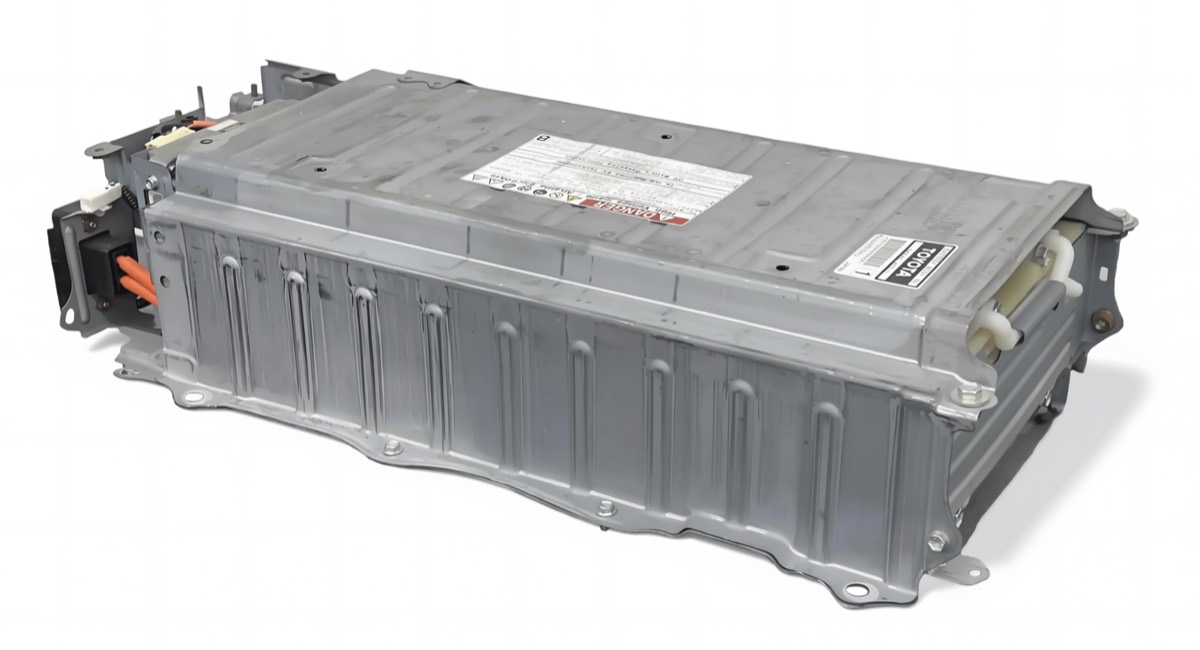
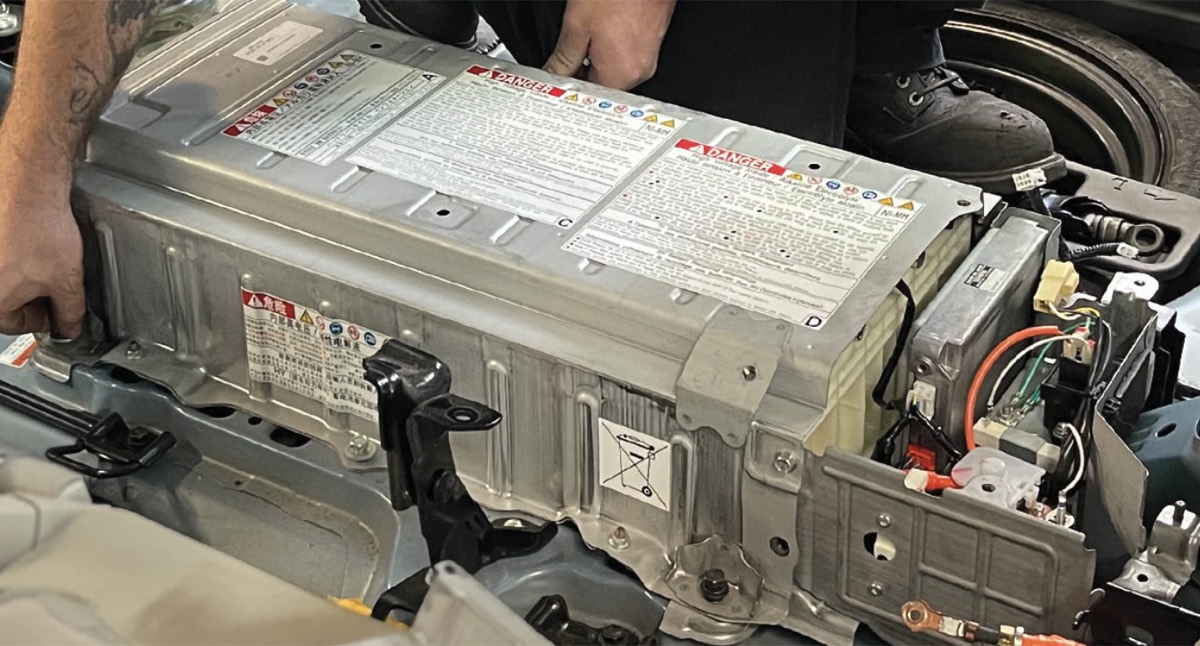
Colored cases — usually aftermarket or remanufactured
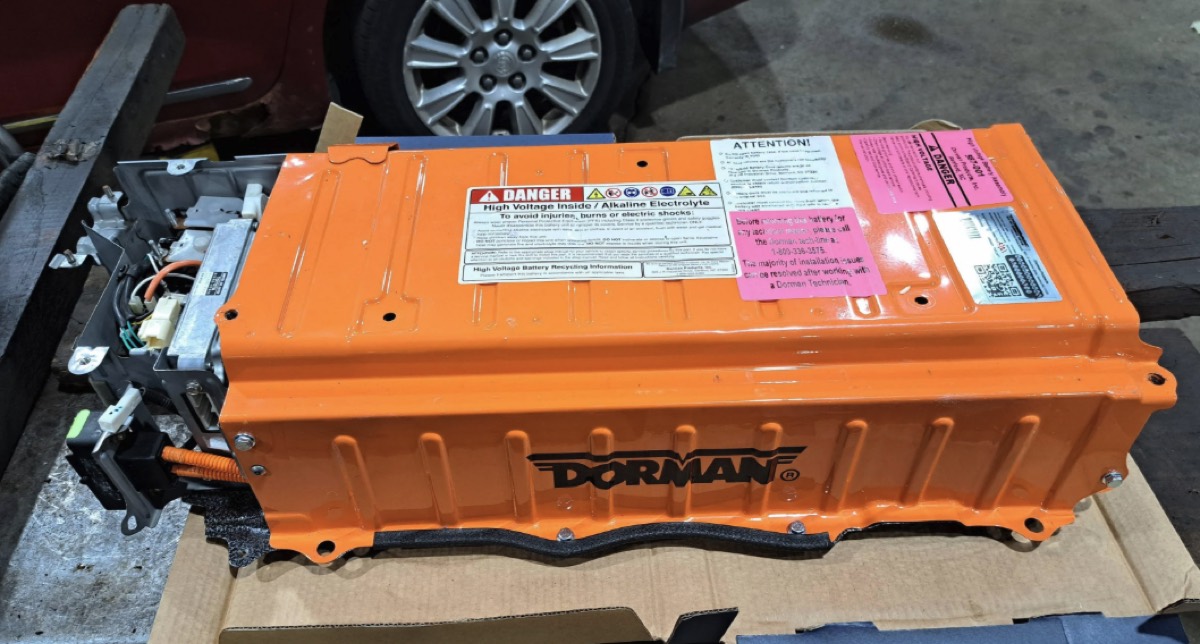
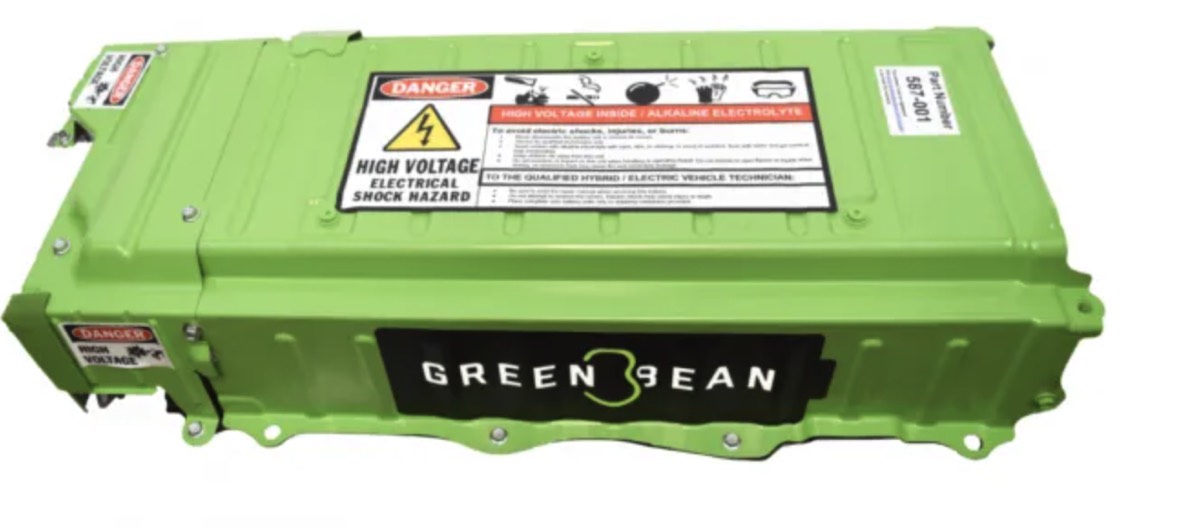
- Orange case: a Dorman remanufactured pack.
- Green case: a Green Bean pack.
If the case itself is painted a non-factory color, you’re almost certainly not looking at the original battery or a Toyota OEM pack.
What you can reasonably infer
- Roughly whether the pack looks original or looks replaced.
- Whether it’s likely an OEM-style pack vs. a colored aftermarket/reman pack.
What you cannot infer from labels or a photo
- The battery’s health or how much life it has left.
- The car’s mileage or the pack’s age.
- Whether the pack is genuinely new, genuinely OEM, or in good condition.
- The full history — covers and labels can be reused or swapped.
Confirming the answer for real
If the label check makes you want a firmer answer, here’s how the history actually gets verified:
1. Service history (by VIN). Start with Toyota’s own records: sign in at toyota.com/owners, add the car by VIN, and check the service history for a hybrid/HV battery replacement entry — or call a Toyota dealer and have them pull it.
A vehicle-history report like Carfax can help too, but read it carefully. Carfax usually just says “battery replaced,” and it often doesn’t tell you which battery — the small 12-volt battery (a $150–$300 part) or the high-voltage hybrid pack (a several-thousand-dollar job). Those are completely different repairs, so don’t assume “battery replaced” on a report means the hybrid battery.
Two more things worth knowing. First, Toyota’s records only show dealer-performed work — if an independent shop or a previous owner did it, it won’t appear, so “no record” does not mean “never replaced.” Ask the seller for receipts. Second, on the used market a battery replacement really only adds value if it was a genuine Toyota / OEM pack with paperwork to back it up. A rebuilt, used, or aftermarket pack generally doesn’t add value — and a colored aftermarket case (like an orange Dorman) usually tells you someone went the cheap route, not that the car got an upgrade.
2. A physical inspection. A technician who works on these can tell a lot more than a photo can — case condition, hardware, corrosion, and whether the pack matches the car.
3. Module date codes. Each module inside the pack carries a manufacture date. Reading them (which requires opening the pack, so it’s a shop job) shows whether the modules are a consistent set — a hint at an original or genuine new pack — or a mix of dates, which points to a rebuilt pack. It’s the most reliable age indicator, but it’s an inside-the-pack check, not something you’ll see from the top.
4. Battery health is a separate question. Whether the pack is original and whether it’s healthy are two different things. A tired original is still original, and a fresh-looking replacement can still be weak. But don’t go looking for a test to settle it: no test predicts how much life a hybrid pack has left, so paying for one as a lifespan estimate is a waste of money. What actually matters is whether the car is throwing warning lights or stored codes and how it drives. We explain why testing can’t forecast lifespan in The Truth About Hybrid & EV Battery Testing.
How long the battery lasts — and planning for it
Hybrid packs don’t last forever, but they do last a long time: in our experience a Prius NiMH battery typically goes 10–20 years. That’s the good news when you find a genuine Toyota / OEM replacement pack — if the car has already had one quality OEM battery put in, it’s likely not something you’ll need to think about again for a long time.
Because they do eventually wear out, here’s the same advice we give our own customers: if your budget allows, mentally set aside a little money each month toward an eventual battery. Then if the day ever comes, it’s a planned expense instead of a financial strain. Everyone’s finances are different — this is just prudent budgeting, not a sign yours is about to fail.
Frequently asked questions
How do I know if my Prius battery has been replaced?
Look at the top of the pack: an original tends to show one large label, while a replaced pack usually has several labels or a non-factory colored case (orange for Dorman, green for Green Bean). Then confirm with the Toyota service history by VIN and, if you want certainty, an inspection. No single clue is proof on its own.
How can I tell how old my Prius hybrid battery is?
You can’t read the exact age from the outside. The most reliable indicator is the module date codes inside the pack, which a shop reads when it’s opened. From the outside, a single-label original suggests the battery is about as old as the car, while multiple labels or a colored case suggest a newer replacement.
How long does a Prius hybrid battery last?
There’s no guarantee, but in our experience a Prius NiMH pack typically lasts 10–20 years. So if a car has already had a genuine Toyota/OEM battery installed, it’s likely not something you’ll need to think about again for a long time. Because they do wear out eventually, we suggest setting aside a little money each month if your budget allows, so a replacement down the road is a planned expense rather than a strain.
How can I tell if a used Prius has a new or original battery?
Before you buy, look at the top of the pack (one label vs. several), check for a colored aftermarket case, and ask the seller for battery paperwork. Then get a pre-purchase inspection: service history, a physical look at the pack, and whether the car shows any warning lights or codes. Don’t count on a “battery test” to tell you how long it’ll last — nothing can.
Does one sticker prove my Prius has the original battery?
No. A single label is a common sign of an original pack, but covers and labels can be reused, so it’s a clue rather than proof. Service history and an inspection confirm it.
Do multiple labels prove I have a new Toyota battery?
No. Multiple labels often mean the pack was replaced, but they don’t prove it’s new, genuine OEM, or healthy — and a replacement could have come from a Toyota dealer or an independent shop. It’s a hint to look closer.
Can a rebuilt or used battery have a similar cover?
Yes. Many rebuilt packs reuse an original metal case, so from the outside they can look almost like an OEM pack. That’s exactly why the label pattern isn’t proof. A distinctive colored case — Dorman’s orange or Green Bean’s green — is the easier tell that a pack is aftermarket/reman.
Can you tell battery health from the stickers?
No. Labels say nothing about the battery’s condition, capacity, or remaining life — and no test really forecasts remaining life either. The useful signals are warning lights, stored codes, and how the car drives.
Can I send you a photo?
A clear, straight-down photo of the top of the battery can help us tell you whether a closer look is worthwhile — but a photo is a screening step, not a diagnosis.
Which Prius years does this apply to?
This page covers the Gen 1 (2001–2003) and Gen 2 (2004–2009) Prius with NiMH battery packs. Newer Prius generations are built and packaged differently.
Do I need to remove or disconnect anything?
No. On a Gen 1 you pull back the carpet; on a Gen 2 you lift the clipped-in trim panel. You never remove the battery’s cover, and you never touch the orange service plug or orange high-voltage cables.
Related reading
- Do I actually need a hybrid battery replacement? — why we install new OEM, not rebuilt
- Thinking about a used Prius?
- The Truth About Hybrid & EV Battery Testing
- The 2004–2009 Prius “Triangle of Death”
- P0A80 — Replace Hybrid Battery Pack
A note on what this page is: The label check is a preliminary visual clue only. It is not a warranty, a diagnosis, a confirmation that a battery is new, original, genuine OEM, or healthy, and it is not a complete vehicle-history report. Covers, labels, cases, and modules can all be changed. For a real answer, confirm with service history and a professional inspection.
About the author: Travis Decker is the owner of Atomic Auto in Portland, Oregon, and an ASE Master Technician (L1, L3). Atomic Auto specializes in Toyota, hybrid, and EV service.