
Prius EGR Cleaning: When We Do It, and Why It Won’t Save Your Head Gasket
Short version: On a Gen 3 Prius, we do EGR cleaning when the car tells us the EGR system is the problem: a P0401 or P219A code, or a misfire that shows up only when the EGR valve opens. We don’t do it as prevention. The idea that a dirty EGR causes the Gen 3 head gasket to fail is a myth. Our records show cleaned cars that blew a head gasket anyway.
We pulled every closed repair order in our shop system where a technician wrote about the EGR system on a 2010–2015 Prius or Prius V. There are about 121 of them. This page is what those notes say.
What the EGR system does, in our tech’s words
EGR stands for exhaust gas recirculation. One of our technicians explained it this way on a 2010 Prius with over 300,000 miles:
This system takes gases going through the exhaust and channels them back through the intake system to reburn them and help clean the emissions from the tail pipe. Over time, in this case 300+k miles, the system can get plugged up.
On the Gen 3 Prius, the exhaust gas runs through an EGR valve, a cooler, and a pipe. Then it goes into small ports in the intake manifold, one for each cylinder. Those ports are where the carbon builds up.
When a clogged EGR is the real problem
A clogged EGR causes trouble you can feel. The car misfires, usually under light to medium load, and the check engine light comes on. The codes we see most on these cars:
- P0401: insufficient EGR flow. This was the most common code in our EGR notes, on about 31 repair orders.
- P219A: air-fuel ratio imbalance. Our tech’s note on a 2015 Prius V says it plainly:
P219Awill set when any EGR ports in the intake manifold are clogged. - P0300 to P0304: misfire codes, random or on one cylinder.
The odd part is which cylinder misfires. When some ports clog, the exhaust gas still has to go somewhere, so it piles into the cylinder whose port is still open. That’s the cylinder that misfires. On one 2010 Prius with a P0304 code, our tech pulled the intake manifold and found:
Removed intake manifold and found cylinders 1, 2 & 3 ports completely clogged. Cylinder 4 was the only one getting EGR flow.
The misfire was on the one cylinder that was still clear. That’s why swapping spark plugs and coils often doesn’t fix it. On a 2015 Prius V, another shop had already replaced the plugs and the cylinder 1 coil before the car got to us. The ports for cylinders 2 and 3 were completely plugged.
How we tell an EGR misfire from a head gasket misfire
On a Gen 3 Prius, a misfire usually comes from one of two causes: clogged EGR ports or a failing head gasket. The repairs are nothing alike, so we test before we recommend anything.
The first thing we check is whether the EGR valve was open when the misfire happened. The car records that in its freeze frame data, and we can watch it live on a road test. On the 2010 Prius with the P0304 code, the answer was clear:
Engine is misfiring badly while EGR is open and disappears when it is closed.
When the EGR valve was closed at the time of the misfire, we look elsewhere. On a 2015 Prius with a cylinder 1 misfire, our tech wrote:
According to freeze frame data, EGR valve was not open at the time, so the issue is not the common clogged EGR ports in the intake manifold.
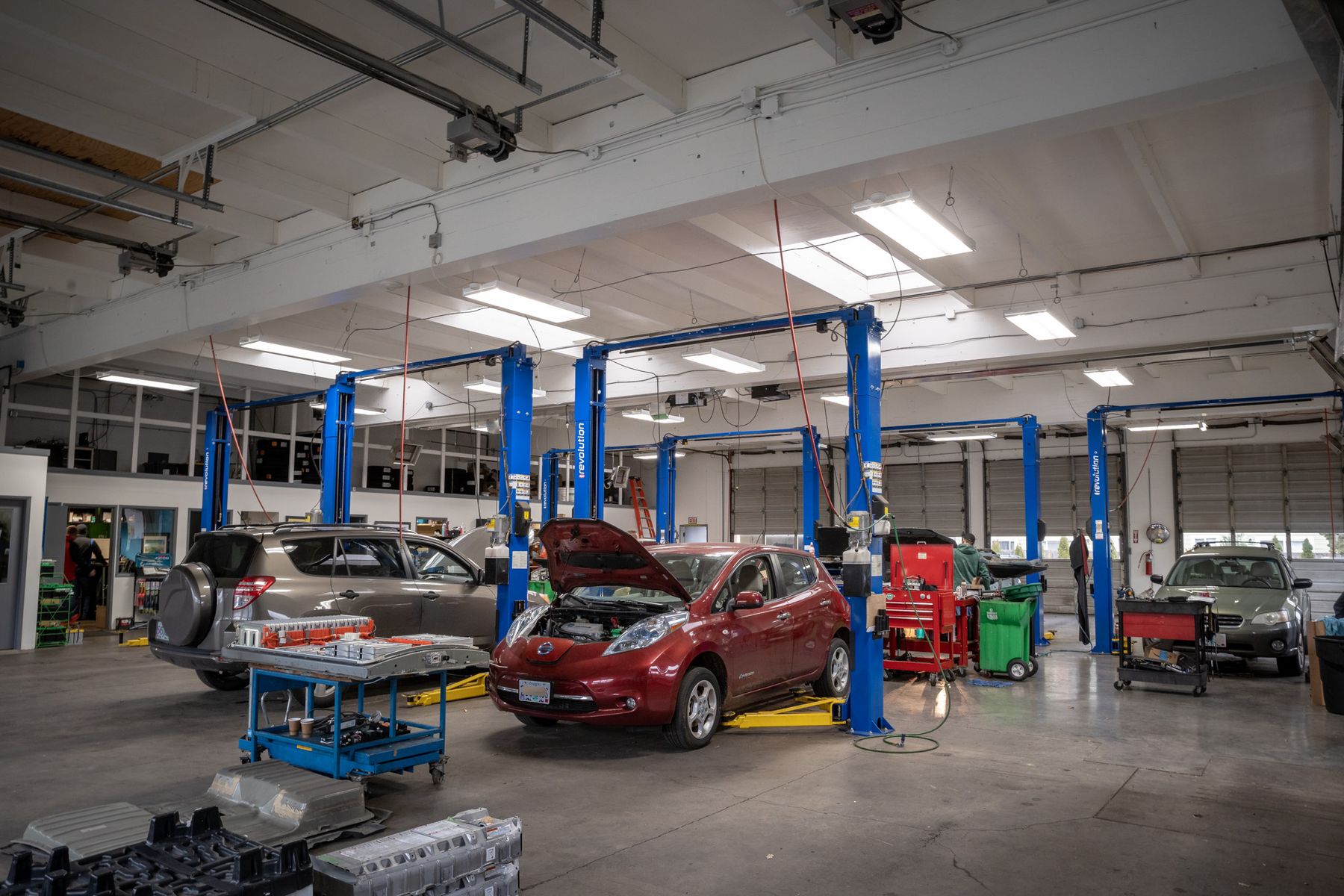
The next step on that car was a combustion leak test on the cooling system. That’s the test that tells us if the head gasket is letting exhaust gas into the coolant. If you’re seeing a rattle on cold start and losing coolant, start with our page on Gen 3 Prius head gaskets.
What an EGR job actually involves
A spray can and a quick clean of the valve doesn’t fix a clogged Gen 3. The carbon is in the intake manifold ports and the pipe, not only the valve. Our tech said it this way on a 2010 Prius:
Due to experience with these vehicles and the mileage, if we were to do just the valve, the problem will still persist. The EGR cooler and intake manifold will have to be removed and cleaned before installing a new valve.
Our usual job is to replace the EGR pipe assembly and the EGR valve, and remove and clean the intake manifold. Sometimes the cooler gets replaced too. On some cars, cleaning the ports and pipe is enough. On a 2011 Prius with a P219A code, our tech found two ports plugged, cleaned the passages and the pipe, and then:
The vehicle drove well on the freeway, with no misfires when the EGR was opening or closing, and no other fault codes set.
Most of the cars in our EGR notes were well past 100,000 miles. The middle of the range was about 166,000 miles.
Why we don’t clean the EGR to prevent head gasket failure
You’ll read online that a clogged EGR makes the Gen 3 head gasket fail, and that cleaning the EGR every so often will save the engine. Some shops sell EGR cleaning as a regular service for that reason. We don’t. It’s a myth, and our own records don’t back it up.
We looked at every Gen 3 car in our system where we confirmed a failed head gasket. On most of them, the EGR came up only because we checked it while chasing the misfire. We found four cars that had full EGR work done at our shop and still blew the head gasket later, between about 194,000 and 370,000 miles. On one 2010 Prius we replaced the EGR parts, cleaned the intake, and replaced the water pump on the same visit. Nine months later the car was back with misfire codes, and our tech wrote:
I performed a hydrocarbon test, and the coolant reservoir was pressurized with combustion gasses from a failed head gasket.
Four cars aren’t proof on their own. But if a clean EGR protected the head gasket, those four should have been the safest cars we had. They weren’t.
Look at it from the other side, too. If clogged EGR ports caused head gasket failures, every Gen 3 we’ve seen with a blown head gasket would have clogged ports. That isn’t what we find. When we have a Gen 3 apart for a head gasket job, we haven’t seen a clogged EGR on one of them.
What we do for prevention on a Gen 3 is the electric water pump, replaced between 100,000 and 150,000 miles, and fresh engine coolant. An engine that overheats can blow a head gasket no matter what else is going on. Toyota master tech The Car Care Nut has a good video on why Toyota head gaskets fail. He doesn’t name the EGR as a cause either.
If you’re buying a used Gen 3 Prius
An EGR cleaning on the service record isn’t a reason to worry, and it isn’t head gasket insurance either. Ask about the water pump and the coolant. Our guide to buying a used Prius covers what else to check, and you can send us the ad and the Carfax before you go look at the car.
Frequently asked questions
Does EGR cleaning prevent Prius head gasket failure?
No. We’ve had cars get a full EGR job at our shop and still fail the head gasket later. And when we have an engine apart for a head gasket job, we haven’t found the EGR ports clogged. We clean or replace EGR parts when the car shows an EGR problem, like a P0401 code or a misfire that only happens when the EGR valve is open. For prevention, we recommend replacing the electric water pump between 100,000 and 150,000 miles and keeping the engine coolant fresh.
What are the signs a Prius needs EGR cleaning?
A check engine light with P0401 or P219A, or misfire codes, usually under light to medium load. The car may shake or hesitate. The way to know is to check whether the EGR valve was open when the misfire happened. A shop can see that in the freeze frame data and on a road test with a scan tool.
Can I just clean the EGR valve?
On a high-mileage Gen 3, usually not. The carbon builds up in the intake manifold ports and the EGR pipe, not only the valve. If you clean the valve and leave the ports clogged, the misfire usually stays.
Is a misfire on a Gen 3 Prius always the head gasket?
No. Clogged EGR ports are the other common cause, and they’re a lot cheaper to fix. That’s why we test before we recommend a repair. See our page on Gen 3 Prius head gaskets for the head gasket side.
My Prius has about 150,000 miles and no warning lights. Should I get the EGR cleaned anyway?
No. If there’s no EGR code and no misfire, we don’t take the intake apart. At that mileage, the things we’d ask about first are the electric water pump, the engine coolant, the spark plugs, and the PCV valve.
Should the PCV valve be replaced too?
Yes. We recommend replacing the PCV valve about every 100,000 miles. If the intake manifold is already off for an EGR job, we replace it on the same visit.
Should I install an oil catch can?
We don’t install oil catch cans. A can that vents to the air puts crankcase gases into the atmosphere, which federal emissions rules prohibit. Sealed cans are a legal gray area, and no catch can we know of is approved for the Prius. We’d rather keep the factory system working than add a part that can make it less effective.
Will a fuel additive clean out the EGR?
We don’t recommend fuel additives or induction cleaning services for this. When a Gen 3 has clogged EGR ports, the carbon is packed into the intake manifold ports and the EGR pipe, and the manifold has to come off to clean them. For the fuel injectors, we find that a top tier gasoline already has the cleaners the engine needs.
Questions about your car? Text us at 503-969-3134 — it’s the fastest way to reach us.
About the author: Travis Decker is the owner of Atomic Auto in Portland, Oregon, and an ASE Master Technician (L1, L3). Atomic Auto specializes in Toyota, hybrid, and EV service.
General information from the cars that come through our bays. Yours is its own case, and we would rather test it than guess.
Keep reading
More in maintenance and service Known issues by vehicle2010-2015 (Generation 3) Toyota Prius Head Gaskets
 Trouble codes and warning lightsPrius P1121 Code: The Thermos Bottle in Your Gen 2 and the Valve That Runs It
 Maintenance and serviceToyota Prius Catalytic Converter Theft: Which Years Are Targeted, and How a Cat Shield Helps
 Maintenance and serviceMice in Your Toyota! Prevention, Detection, and Solutions
Text us, or book a slot.
A text with a photo of the dash gets you an answer fastest. Booking online holds a day and a time.