
Short version: A 2009 Highlander Hybrid set P0AA6 and wouldn’t start after a leaking sunroof left standing water in the back floorboards. The codes pointed at the hybrid battery, but the cells were fine — water had pooled in the bottom of the battery case and corroded the system main relay block. We replaced the corroded terminals and relay block, sealed the water leaks, and the Highlander was a hybrid again.
| Code | What it means | Most common cause we see | Typical fix |
|---|---|---|---|
| P0AA6 | High-voltage system isolation fault — high voltage found a path toward the metal body it should never touch | On this car, water pooled in the bottom of the HV battery case corroding the connectors at the system main relay (SMR) block | Replace the corroded terminals and SMR block, drain and clean the case, and fix the water leak itself |
| P3004 | Power cable malfunction — covers the high-voltage cabling and the system main relays | On this car, the same corroded SMR-block connectors from water intrusion | The relay-block repair above; the code stayed away after the terminals and SMR block were replaced |
| C1259 | A fault in the hybrid system’s regenerative (braking) circuit | Set alongside the HV faults caused by the corroded relay block | Cleared after the relay-block repair and leak sealing; no codes returned on the road test |
| C1310 | A general malfunction reported in the HV system | Same water-intrusion corrosion at the relay block | Same repair; no warnings or codes after several hours of run time and a road test |
A 2009 Toyota Highlander Hybrid landed in our lot with the key in the drop box and a note that summed up the problem better than most scan tools could. The owner had parked it for about a week, the sunroof had been leaking, and the back seat floorboards were holding standing water. They dried out the carpet hoping the trouble was a simple short. No luck. The hybrid system warning stayed on and the car wouldn’t start.
At 166,000 miles, the easy assumption on a Highlander Hybrid is that the high-voltage battery is finally tired. The codes even leaned that way. But the story the car was telling started with water, not with the pack, and that distinction is the difference between a relay-block repair and a much larger bill.
The codes pointed at the battery
We pulled the car in and scanned it. Several warnings were lit, with four codes that matter on a hybrid:
- P0AA6 — high-voltage system isolation fault. The car detected that high voltage had found a path toward the metal body it should never touch. In plain terms, the insulation that keeps the HV system sealed off from the chassis had dropped, and the computer flagged it as a safety problem.
- P3004 — power cable malfunction. This covers the high-voltage cabling and the system main relays: a blown HV fuse, a disconnected service plug, relays stuck open, or an open in the main resistor circuit.
- C1259 — a fault in the hybrid system’s regenerative (braking) circuit.
- C1310 — a general malfunction reported in the HV system.
We cleared them. P3004, C1259, and C1310 came right back the instant we retested. That kind of hard, immediate return tells you the fault is present and physical, not a ghost from a dead battery sitting too long.
Here’s where experience saves a customer money. An isolation fault plus power-cable and HV codes, on a high-mileage hybrid, is exactly the picture a lot of shops use to justify a battery quote. But we already knew this car had a water leak, and on this generation of Toyota hybrid, water has a specific place it likes to collect: the bottom of the high-voltage battery case, right where the system main relay block lives. Water plus high voltage plus a metal body is precisely what sets a P0AA6. So before condemning anything, we took the pack apart and looked.
What we found inside the battery
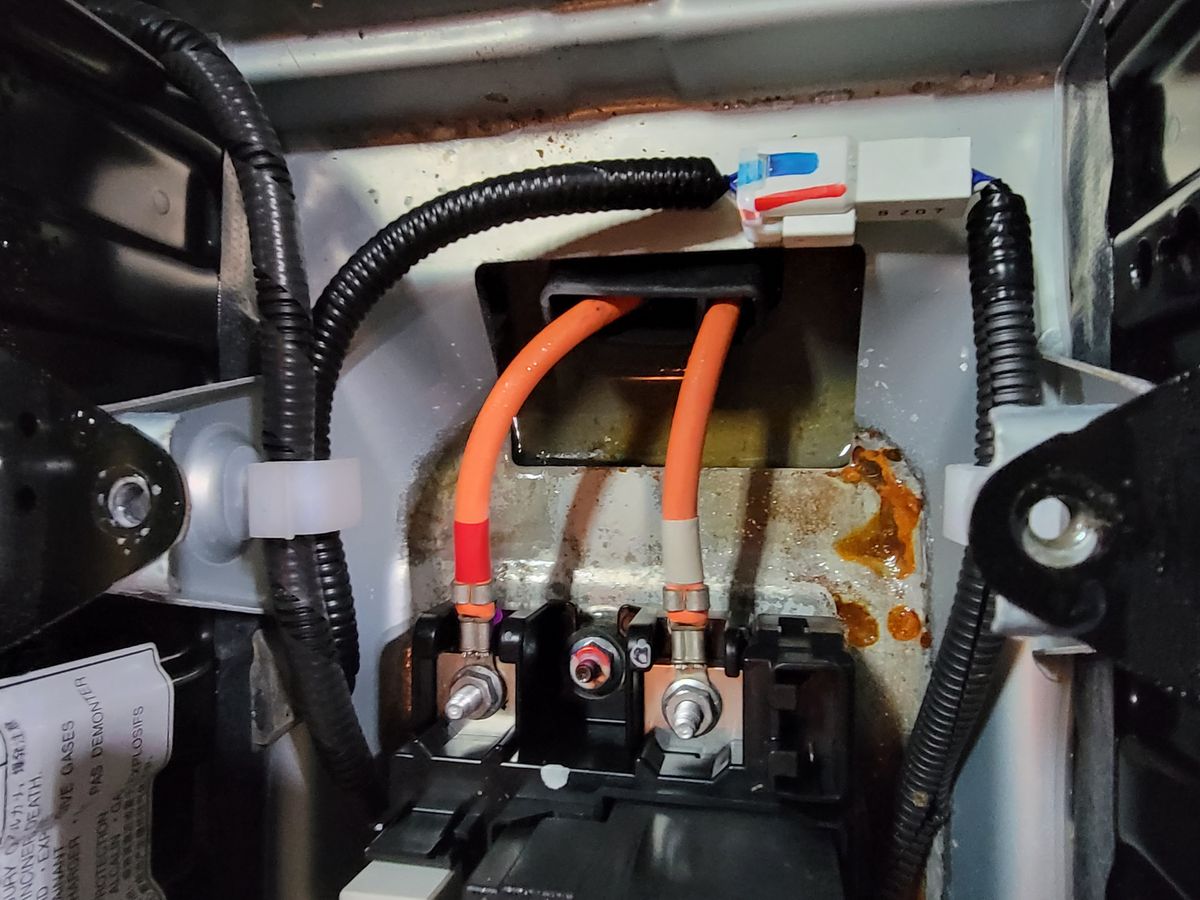
Water had been sitting in the bottom of the battery case. Two of the connectors at the system main relay (SMR) block were badly corroded, the kind of green-and-white buildup that only comes from moisture working on energized terminals over time. That corrosion was the leak in the insulation the P0AA6 was screaming about. It wasn’t a worn-out pack. It was a clean, healthy battery with a corroded electrical junction sitting in a puddle.
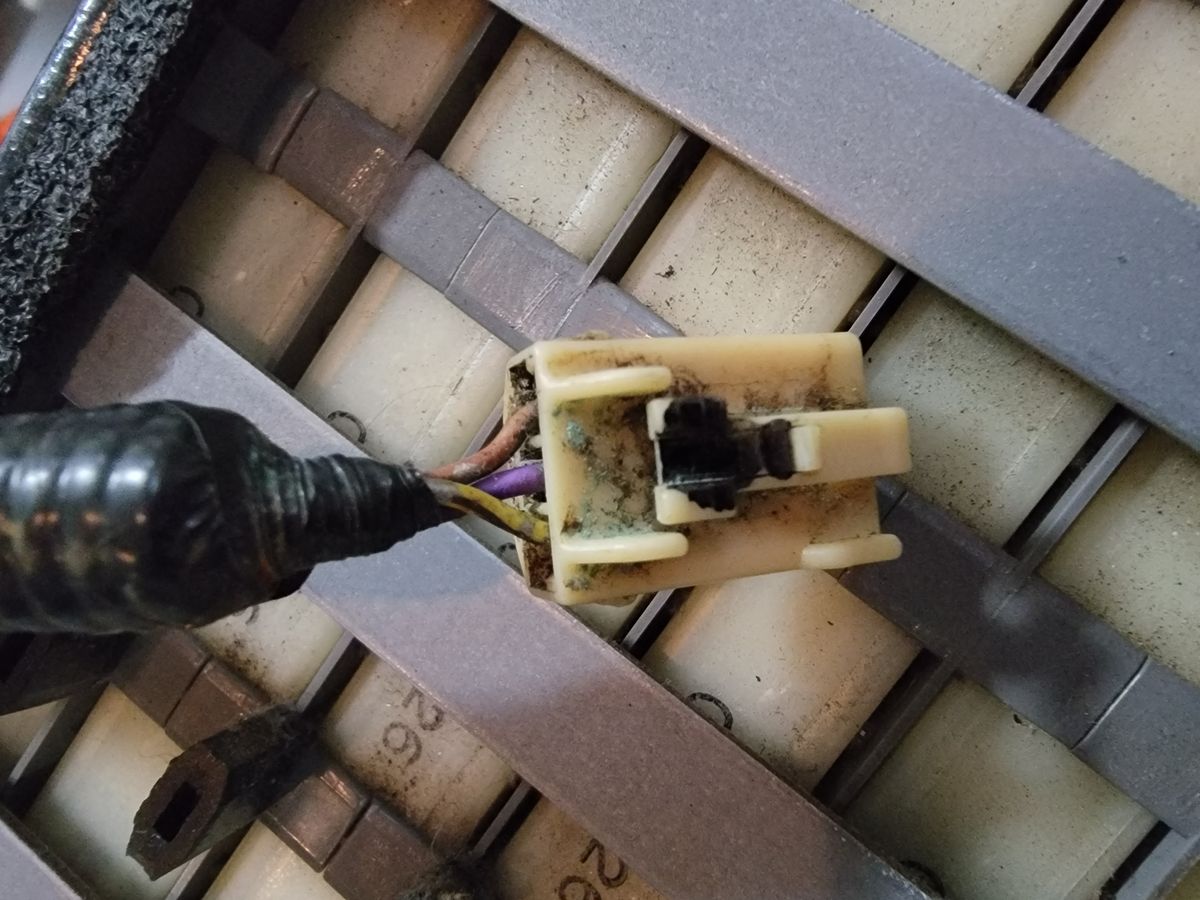
We replaced all seven terminals across the two affected connectors along with the SMR block itself, drained the water, and cleaned the area. To keep a future leak from doing the same damage, we drilled several small drain holes in the bottom of the battery case so any water that gets in again has somewhere to go instead of pooling around the relays.
From the shop floor: When a hybrid throws an isolation fault and the owner mentions water — a leaky sunroof, wet carpet, a windshield that was just replaced — chase the water before you price a battery. On these Toyota hybrid packs the relay block sits at the low point of the case, so it’s the first thing to corrode and the first thing to set P0AA6. Opening the battery to look costs a fraction of replacing it, and nine times out of ten the cells are perfectly good.
Fixing the actual problem: the water
Replacing corroded terminals fixes the symptom. If you stop there, the water comes back and so does the corrosion. The real repair was finding every way water was getting into this Highlander and shutting them off.
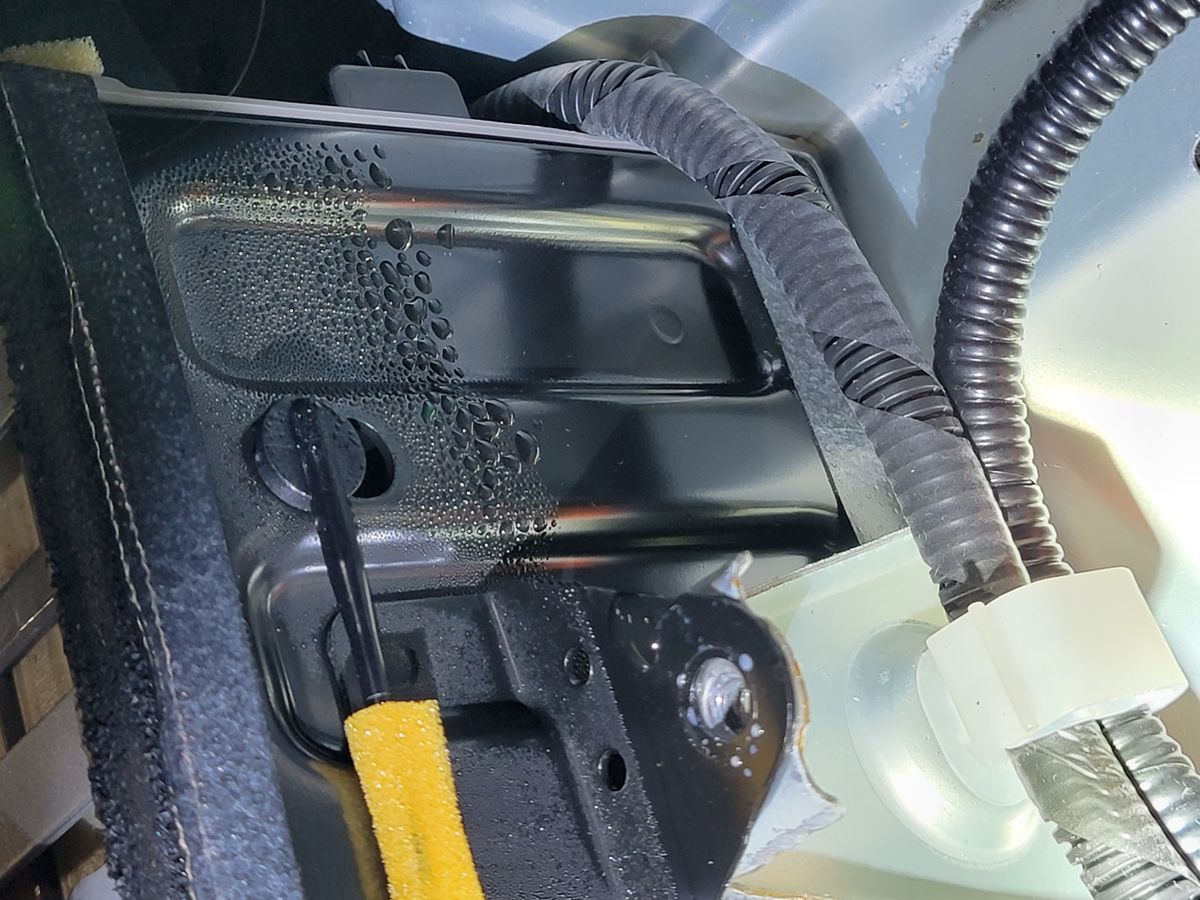
On this generation the usual suspects are the sunroof drains and the body plugs behind the rear bumper, and this car had both working against it. We drilled drainage holes under the front sunroof drain pockets so they’d clear properly, then blew out the HVAC box drain tube while we were in there. At the back, we pulled the six body plugs behind the rear bumper that commonly leak or go missing, cleaned them up, reinstalled them, and sealed each one with body seam sealant.
With the relays repaired and the leaks sealed, we reassembled the battery and the interior, cleared the codes, and ran the engine in the shop for several hours to make sure nothing came back. Then we road tested about six miles. No warnings, no codes. The Highlander was a hybrid again.
One honest caveat we gave the owner: sealing the known leak points doesn’t guarantee water can never find another way in. We told them to keep an eye on the carpet, and if water keeps showing up inside, the next stop is a dedicated water-leak specialist to track down whatever is left. The drain holes we added to the battery case are insurance for exactly that scenario.
A couple of small things while it was here
The owner had already pulled the second-row seat out before dropping the car off, which is part of the teardown for this job anyway, so we knocked a couple of hours off the normal labor. The TPMS light was also on with two sensors not reporting; we checked and adjusted the tire pressures and noted the sensors for a future visit. Little stuff, but worth being straight about what got touched and what didn’t.
Frequently asked questions
Does P0AA6 mean my hybrid battery is bad?
Not by itself. P0AA6 is a high-voltage isolation fault, which means the system detected voltage leaking toward the chassis. A failing battery can cause it, but so can water in the battery case, corroded connectors, a damaged HV cable, or a failing component like an AC compressor or inverter. On this Highlander the cause was water and corrosion at the relay block, and the cells themselves were fine. Confirm the source before paying for a pack.
How does water get into a hybrid battery?
On many Toyota hybrids the high-voltage battery lives under or behind the rear seat, and the low point of its case sits below leak paths like the sunroof drains and the body plugs behind the rear bumper. When those drains clog or the plugs go missing, water runs down and pools right where the relay block and connectors are. That’s why a leaking sunroof can end up setting a hybrid system warning light.
Can a leaking sunroof really stop my car from starting?
On a hybrid, yes. The water doesn’t have to touch anything obvious. If it reaches the high-voltage relay block and corrodes the connections, the car’s safety system will detect the isolation fault and refuse to power up the hybrid system. The fix is electrical and structural, not just drying the carpet.
Why drill holes in the battery case?
So water has an exit. The factory case can trap water at the bottom where the relays sit, which is what caused the corrosion in the first place. Adding small drain holes means that if water ever gets in again, it drains out instead of pooling around live terminals. It’s cheap insurance on an expensive component.
Is it safe to keep driving a Highlander Hybrid with a hybrid system warning light?
Treat a hybrid system warning, especially one tied to an isolation fault, as a stop-and-check. The car may go into a reduced-power limp mode or refuse to start, and an isolation fault specifically means high voltage is going somewhere it shouldn’t. Get it diagnosed before driving it further.
My carpet got wet. Should I worry about the hybrid battery?
It’s worth a look. Wet floorboards on a hybrid with the battery mounted in back are a warning sign, not just an interior nuisance. Catching a leak early and clearing the drains can save the relay block and the battery from corrosion. If the carpet is wet and a hybrid warning is on, mention the water when you bring it in.
Read the full guide: Toyota Prius & Hybrid P0AA6 Code Explained — what P0AA6 means, the common causes, and why it is often not the battery.
Related reading
- Toyota Hybrid Trouble Codes
- Toyota Prius & Hybrid P0AA6 Code Explained
- 2008 Toyota Prius P0AA6 High-Voltage Leak Diagnosis
- 2007 Prius P0AA6 voltage leak after reconditioned battery failed
- 2007 Prius Warning Lights Door Locks Water Leak Fix
Hybrid warning light after a leak, or a no-start nobody can explain? Book online or text us at 503-969-3134.
Questions about your car? Text us at 503-969-3134 — it’s the fastest way to reach us.
About the author: Travis Decker is the owner of Atomic Auto in Portland, Oregon, and an ASE Master Technician (L1, L3). Atomic Auto specializes in Toyota, hybrid, and EV service.